The Specificity Is the Point
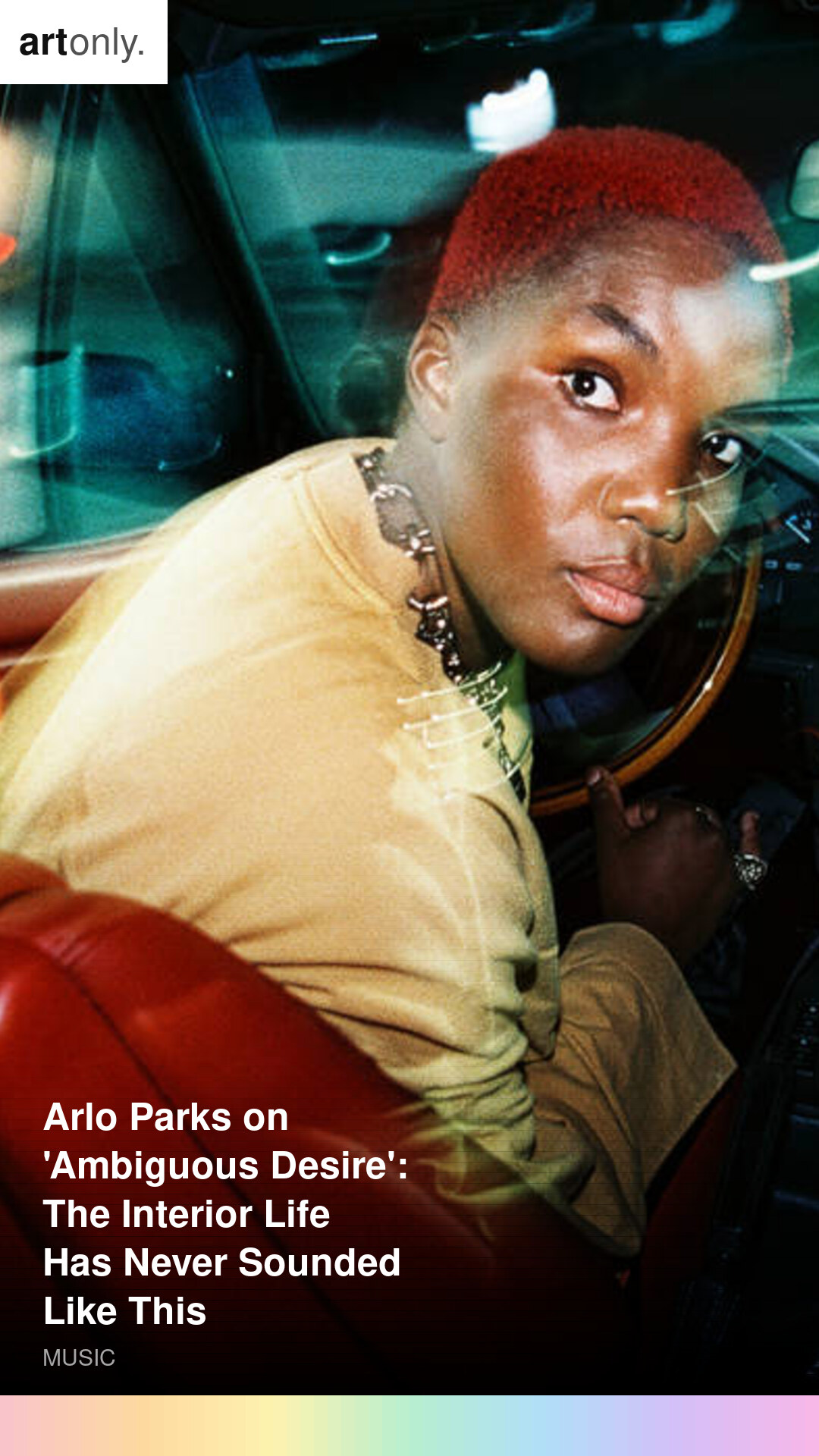
Arlo Parks writes songs the way a novelist writes minor characters: with the kind of concrete, idiosyncratic detail that signals these are real people in real rooms at real hours of the night, not composite archetypes assembled for lyrical convenience. On Ambiguous Desire, her third album released April 3 via Transgressive Records, you will encounter Maria standing on a dancefloor holding both her heels, sequins on her jeans. You will hear about Joey guarding his decks. You will find Daniyel on loudspeaker while a car skims tarmac in dry heat. These details are too odd to be invented and too precise to be generic. That precision is not a stylistic habit. It is Parks's core argument about what a song can do.
She was signed at 17, won the Mercury Prize for Collapsed in Sunbeams at 20, opened for Billie Eilish and Harry Styles before she could legally drink in the United States, and watched her debut become one of those rare records that seemed to crystallize something about how a specific generation understood interiority, vulnerability, and the texture of being young and uncertain and alive. My Soft Machine in 2023 divided listeners, the direction felt different, the tone more complex, the emotional stakes harder to locate quickly. But the artists who take division seriously are the ones worth following. Parks is one of those artists.
A New Sound, the Same Precision
Ambiguous Desire is a departure from the acoustic and folk-adjacent arrangements of her earlier work. The guitars are gone. In their place: breakbeat rhythms, UK garage textures, four-on-the-floor kicks, modular synths, and the influence of the queer club spaces where Parks spent her extended stay in New York, from Larry Levan's Paradise Garage to the night scenes around Greenpoint and Williamsburg. Producer Baird, who has worked with Brockhampton and Kevin Abstract, built the album's sonic architecture in his downtown loft, and the result is a record that sounds like the inside of a club at 1 a.m. and the inside of someone's head at the same time.
But here is the thing about Arlo Parks: the production can change as radically as it wants, and the songwriting remains instantly, unmistakably hers. That is not a function of genre or instrumentation. It is a function of perspective. Parks writes from a position of radical emotional honesty that is also formally controlled. She does not wallow. She observes. The difference matters enormously. A songwriter who wallows is performing feeling for the listener. A songwriter who observes is sharing an experience the listener recognizes but couldn't articulate. Parks is consistently in the second category.
Therapy-Inflected and Culturally Exact
Parks's emotional vocabulary has been described as therapy-inflected, and that is accurate but not quite sufficient. Yes, she uses the language of contemporary emotional literacy, the vocabulary of self-awareness, of naming feelings rather than suppressing them, of sitting with discomfort rather than running from it. That language is the lingua franca of her generation in a way it was not for previous ones, and Parks writes in it fluently. But what elevates her above the many songwriters working in the same register is that she never mistakes naming the feeling for exploring it.
On Senses, featuring Sampha in a long-overdue collaboration, she admits: I treat myself with this impatience I would never give a friend. That is not a line from a therapy session. That is a line from someone who has processed their therapy into art, who has taken the insight and found the form that makes it land harder than it ever could as an observation. The Sampha outro deepens it further: the clarity lies in the direction of pain. Together they create a dialogue about self-knowledge that reaches something the album returns to repeatedly.
What If I Say It? slows everything to the speed of someone genuinely stuck: Tired of being angry, tired of being brave. Parks has built the album around that moment, the moment when you have done all the work and still do not know what to do next. It is a deeply specific condition, and she has written the album that captures it.
The Dancefloor as Emotional Space
The key creative shift on Ambiguous Desire is that Parks has located the dancefloor not as an escape from interiority but as another theater of it. The club is not where you go to not feel things. It is where you go to feel them in company, in motion, under the kind of social permission that anonymous darkness provides. Blue Disco establishes this from the opening track, a soft, synth-bass-driven scene setter that describes a club in granular detail. Heaven captures what Parks calls the longing for the night to not end. Get Go imagines the perpetually heartbroken reveller who just keeps dancing as the music pulses.
This is sophisticated cultural observation. Parks understands something about contemporary queer social spaces that a less attentive writer would miss: that they are not simply hedonistic, not simply political, but genuinely communal in a way that most other social spaces are not. The older queer ravers she describes in her interviews, people in their 50s and 60s who found renewed community in the club, appear in these songs as background figures who carry as much narrative weight as the foreground relationships. Parks peoples her songs generously.
What This Album Represents
Ambiguous Desire is the work of a 25-year-old artist who has processed enormous early success, a cancelled tour, years of intense public attention, and extended solitude in New York, and has come out the other side with a clearer sense of what she wants to make and why. The sonic shift is real. The emotional stakes are higher. She is asking harder questions and finding less tidy answers, and that is exactly the right direction.
The Mercury Prize defined what people expected of Arlo Parks. My Soft Machine complicated those expectations. Ambiguous Desire, with its clubs and named strangers and modular synths and Sampha and the persistent question of whether desire can ever be fully understood, redefines them again. This is an artist in control of her own arc. That is increasingly uncommon. It is worth paying close attention.