The Problem With Awards
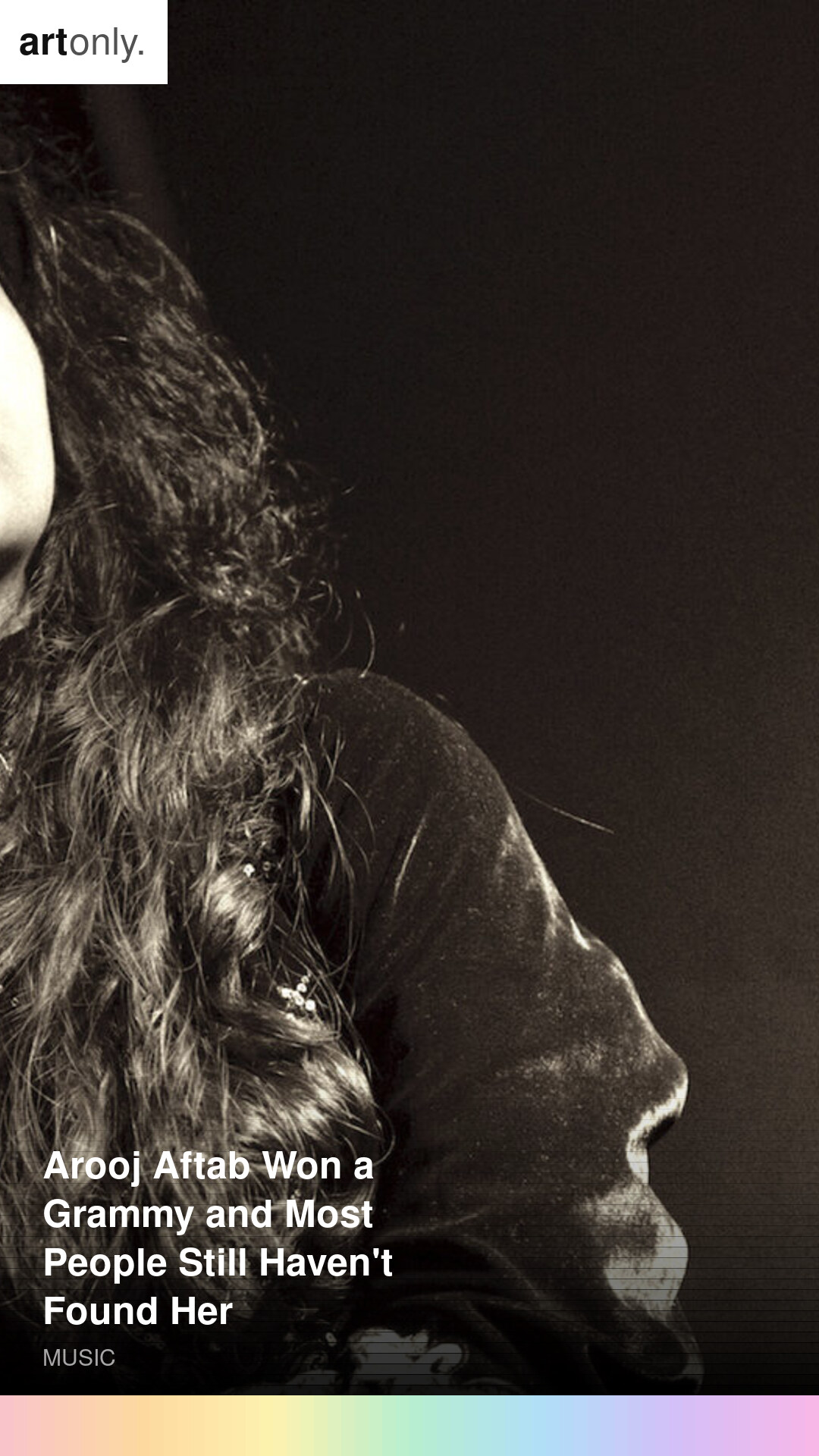
The Grammy for Best New Artist is a statement about commercial visibility and cultural centrality; the Grammy for Best Global Music Performance is a different kind of statement, and Arooj Aftab winning it for 'Mohabbat' in 2022 was one of those award moments where the institution accidentally did the right thing. I say accidentally not to diminish the recognition but to note that the Recording Academy's track record on this kind of music doesn't inspire confidence in intentionality.
Arooj Aftab is a Pakistani-American musician, born in Lahore, raised in Riyadh, based in New York, who makes music that occupies a space between South Asian classical traditions, jazz, and an ambient dreaminess that resists all of those categorizations. Vulture Prince, the album from which 'Mohabbat' comes, is one of the more genuinely singular records of recent years: it exists in its own acoustic world, operates by its own rules about time and melody and arrangement, and rewards the kind of listening that contemporary streaming culture actively discourages.
The album was recorded in part as a response to the death of her younger brother Maher. The grief is present in the music without being announced. It's there in the quality of the restraint, the way the arrangements don't rush, the way her voice is placed in the recordings with a care that suggests each sound is being held rather than just produced. Something about this music treats its own material as precious.
The Origin of the Album
Aftab had been working toward a different record before Maher died. She described the early intentions as something edgier, more movement-oriented, a grown evolution of her meditative previous work that might give listeners something they could dance to. When her brother died in the middle of that writing process, the record became impossible to continue. She had to stop entirely.
What she returned to was different in temperature and intention. The title Vulture Prince had already been chosen, but it acquired new meaning through the loss. The album that ultimately emerged is dedicated to Maher's memory and operates as a meditation on different kinds of loss, the relationship that ends, the moment that cannot be recovered, and the one loss that underlies all the others.
Knowing this origin does not change the music, but it explains the quality of the restraint. This is not minimalism as an aesthetic choice in the abstract. It is the sound of someone who has learned, through specific and recent experience, what matters and what doesn't. The arrangements carry that knowledge.
What Urdu Sounds Like in This Context
Aftab sings mostly in Urdu, a language whose classical poetry tradition is one of the great literary traditions of the world and which carries an enormous weight of aesthetic and emotional history. The Urdu poetry she draws from, classical ghazal forms, devotional verse, gives her music an anchorage that goes beyond anything available in contemporary English-language song.
But the music doesn't require knowledge of Urdu to be felt. The melodic structures she uses are doing emotional work that registers across language barriers. There are moments of pure vocal line, Aftab's voice unaccompanied or with minimal accompaniment, that carry something I can only describe as direct, like a communication that goes around rather than through the intellect.
The production is sparse in ways that feel decisive. There are trumpet lines by Mazen Elsayed that drift through the music like smoke, appearing and disappearing without warning. The rhythm, when it's present, is gentle enough to feel like breath. The negative space in these recordings is as carefully considered as the sounds themselves.
The Architecture of 'Mohabbat'
The winning track deserves specific attention. Mohabbat translates from Urdu most directly as love, but the word carries shades of longing, devotion, and attachment that the English equivalent flattens. In classical ghazal poetry, mohabbat is rarely a satisfied condition. It is the state of wanting, the awareness of the gap between the lover and the beloved, who may be divine, human, or impossible.
Aftab's arrangement places her voice at the center with minimal harmonic support. The tempo is slow enough that each phrase arrives as a deliberate choice rather than a momentum-carried necessity. Elsayed's trumpet enters and exits without announcement, functioning less as accompaniment than as a secondary voice that sometimes echoes and sometimes contradicts what the vocal line is doing. The interaction between them does not resolve.
This refusal of resolution is the song's formal argument and its emotional truth. The classical poetry Aftab draws from is built around desire that does not expect satisfaction. The beloved is always slightly out of reach. The longing is the point, not a stage toward arrival. 'Mohabbat' builds this logic into its structure: the song does not end so much as it stops, still in motion, still reaching.
After the Grammy
I keep thinking about what happened after the Grammy, which is to say, not much happened. The award didn't produce the mainstream breakthrough that it might have for a different artist in a different genre. The audience for Aftab's music grew, but slowly, through the same organic process of genuine enthusiasm and personal recommendation that had built it before the award.
This is entirely correct. Her music belongs to a tradition that doesn't benefit from mainstream amplification, the pop machine would have no idea what to do with it, and attempts to make it more accessible would likely cost more than they'd gain.
The Grammy did accomplish one thing: it introduced Aftab's name and Vulture Prince to a segment of listeners who would not have found it otherwise, a portion of whom followed the recommendation into the album and found something they needed. For an artist whose music operates at the frequency of genuine emotional necessity rather than entertainment, that kind of audience growth, slow, organic, composed of people who arrived because they were ready for the music, is the right kind.
The people who find Vulture Prince tend to find it at specific moments in their lives when they need something that very few other things can provide. I found it that way. I expect most of the people who find it will.
The Exchange
Some music is for certain moments. This is one.
Vulture Prince exists in a state of preserved grief, not fresh grief, not resolved grief, but grief that has been transformed by time and love and the act of making something from it. This is what art does when it's working: it takes the raw material of experience and finds the form that the experience needed, that gives it somewhere to live outside of the person who carried it.
Aftab found the form. The music holds the grief. It lets it breathe, lets it expand into the space of the listening, lets it be felt by people who are carrying their own grief and need somewhere to put it. That's the exchange. That's why the music matters.
The third album in a discography is often where an artist either consolidates their established approach or risks something new. Aftab risked something new and had the risk transformed by circumstances beyond her control into something she couldn't have planned. The result is a record that sounds like it was always going to exist in exactly this form, which is the surest sign that the form found the right material.