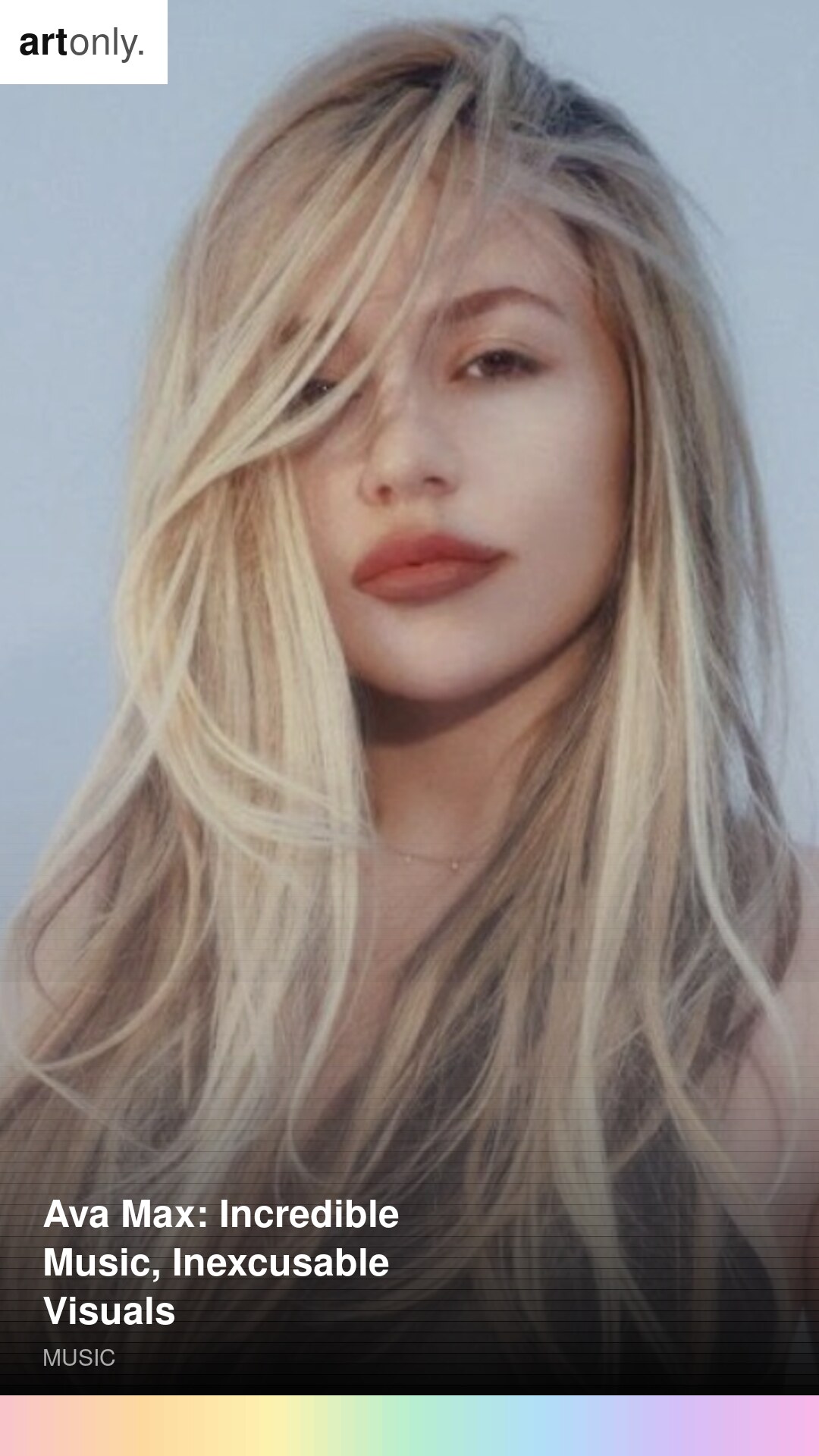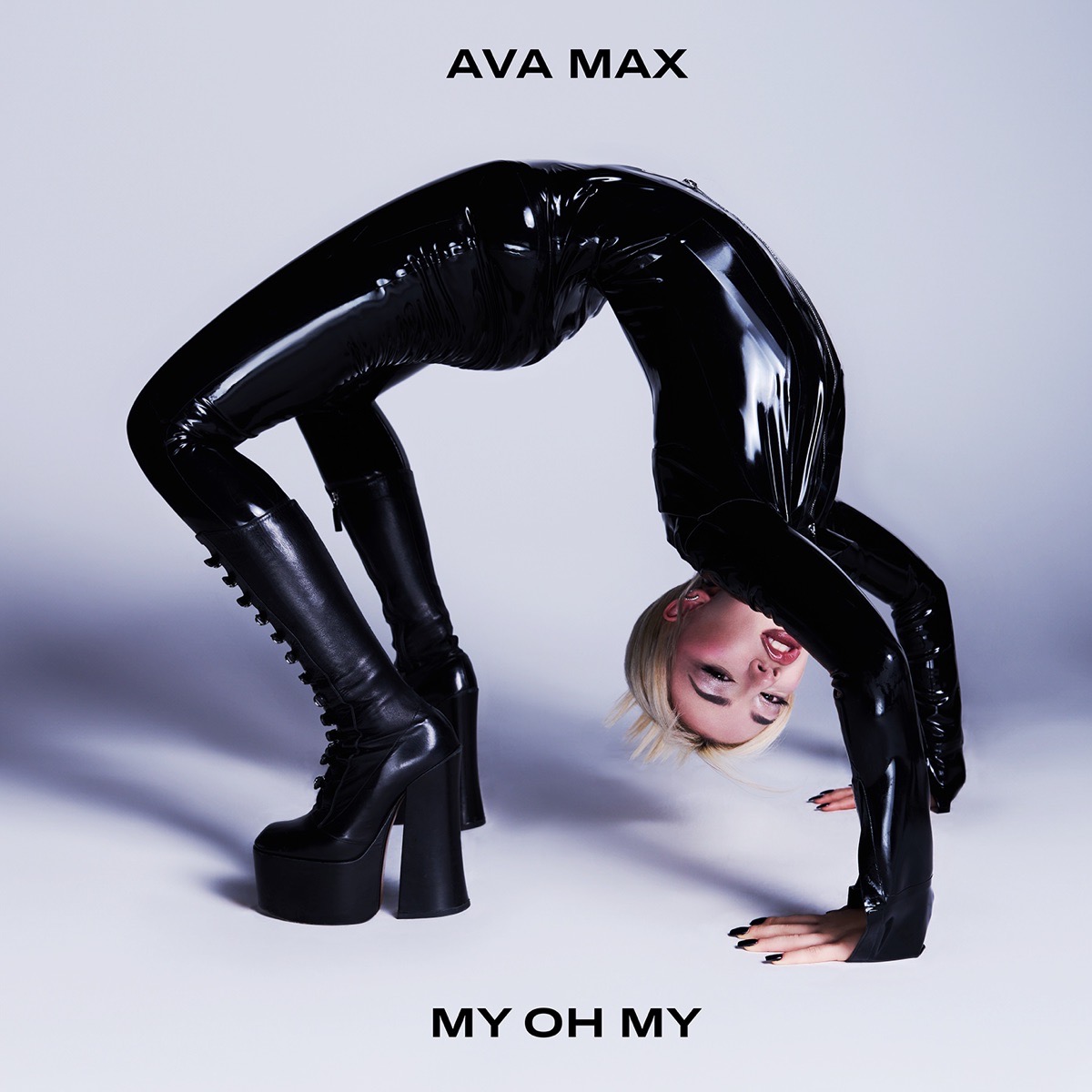
Let us start with what Ava Max gets right, because she gets the most important thing right: the music.
Sweet but Psycho is a perfect pop song. Not good. Not catchy. Perfect. It has the structural precision of peak Max Martin, the melodic hooks of early-2000s Britney, and a chorus that embeds itself in your brain with the efficiency of a military operation. It topped charts in over 22 countries. Kings and Queens is an anthem in the most literal sense. Every Time I Cry is sophisticated pop songwriting disguised as simplicity. The woman can write, sing, and deliver pop music at the highest level.
She is the closest thing we have to the golden age of pop princesses. The era of Britney Spears at her imperial peak. Christina Aguilera before the jazz detour. Shakira when Whenever Wherever was inescapable on every radio station on the planet. Ava Max makes music that belongs in that lineage, music that is unashamed of being pop, that embraces melody and drama and the pure physical joy of a song that makes you want to move.
So why does she feel like a guilty pleasure instead of a celebrated artist?
The answer is not the music. The answer is everything around it.
The Visual Problem
Ava Max's music videos are, to put it diplomatically, not operating at the level of her music. To put it less diplomatically, they are actively undermining one of the most talented pop vocalists of her generation.
The videos tend to look cheap when they should look expensive, generic when they should look distinctive, and dated in a way that has nothing to do with charming retro aesthetics and everything to do with uninspired creative direction. The concepts rarely match the energy or ambition of the songs. The styling oscillates between interesting and baffling. The choreography, when present, feels like an afterthought rather than a statement.
This matters more than it should, but it matters. In pop music, the visual is not separate from the sonic. It is an extension of it. Britney understood this. The Toxic video was not incidental to the song's success; it was inseparable from it. Christina's Fighter video elevated an already powerful track into an event. Lady Gaga built an entire career on the understanding that pop music is a visual medium.
Ava Max's music deserves that level of visual ambition. It is not getting it.
Three Albums, One Unresolved Problem
Her debut, Heaven and Hell, came out in 2020. It introduced her voice and her instinct for a hook at the highest level. Diamonds and Dancefloors followed in January 2023, more personal in its lyrical content, more deliberate in its sonic references to eighties synth-pop, and promoted by six singles including Maybe You're the Problem and Million Dollar Baby. Don't Click Play arrived in August 2025, this time with a wider production team, moving away from longtime collaborator Cirkut toward fresher voices. Three albums. Three different creative configurations. The visual problem persisted through all of them.
The production on Don't Click Play is genuinely ambitious. Dance-pop and electropop with production from Pink Slip, Inverness, and David Stewart gives the record a harder, cleaner edge. The songs are there. The visual execution remains stuck at a tier below where the music is operating.
The Promo Catastrophe
Beyond the videos, the broader promotional strategy around Ava Max has been consistently puzzling. Album rollouts that feel disjointed. Single choices that do not always highlight her strongest material. Social media presence that oscillates between overproduced and undercooked. A general sense that the team around her does not fully understand what they have.
What they have is a pop star. A real one. Not a singer-songwriter who can do pop when needed, not a social media personality who also makes music, but a genuine pop star with the voice, the songs, and the instinct for the genre. This should be obvious to anyone involved in her career. The packaging consistently fails to communicate it.
The result is that Ava Max occupies a strange cultural position. Her songs are everywhere. They perform well on streaming platforms. They chart. They get stuck in people's heads. But she is not treated as an A-list pop artist by the industry or the public, and the gap between her musical output and her cultural positioning is almost entirely a failure of visual and promotional strategy.
What Pop Maximalism Actually Requires
Pop maximalism is not about budget alone. Gaga's early videos were not always expensive. What they were was specific. They had a logic. A Bad Romance video and a Telephone video feel like they came from the same brain, from the same set of convictions about what pop spectacle should demand of an audience. The visuals made an argument. They had a point of view.
Ava Max's catalog of songs has a point of view. Her voice has a point of view. The visual world around the music does not. That absence is the problem, and it is a solvable one.
What She Deserves
Ava Max deserves a creative director who understands that pop maximalism requires visual maximalism. She deserves music videos with budgets and concepts that match the ambition of her songwriting. She deserves a promotional team that positions her as what she is: a throwback to pop's most exciting era, updated for the present.
She does not deserve to be a guilty pleasure. There is nothing guilty about excellent pop music. The songs are too good for the visuals that accompany them, and that imbalance is doing real damage to a career that should be operating at a much higher altitude.
Someone needs to fix this. Give Ava Max a Dave Meyers video. A Bardia Zeinali treatment. A visual collaborator who hears these songs and thinks big, because the music is already there. It has been there from the beginning.
The talent is not the problem. It never was. The music has been waiting for the visuals to catch up since 2018. The wait is getting embarrassing.