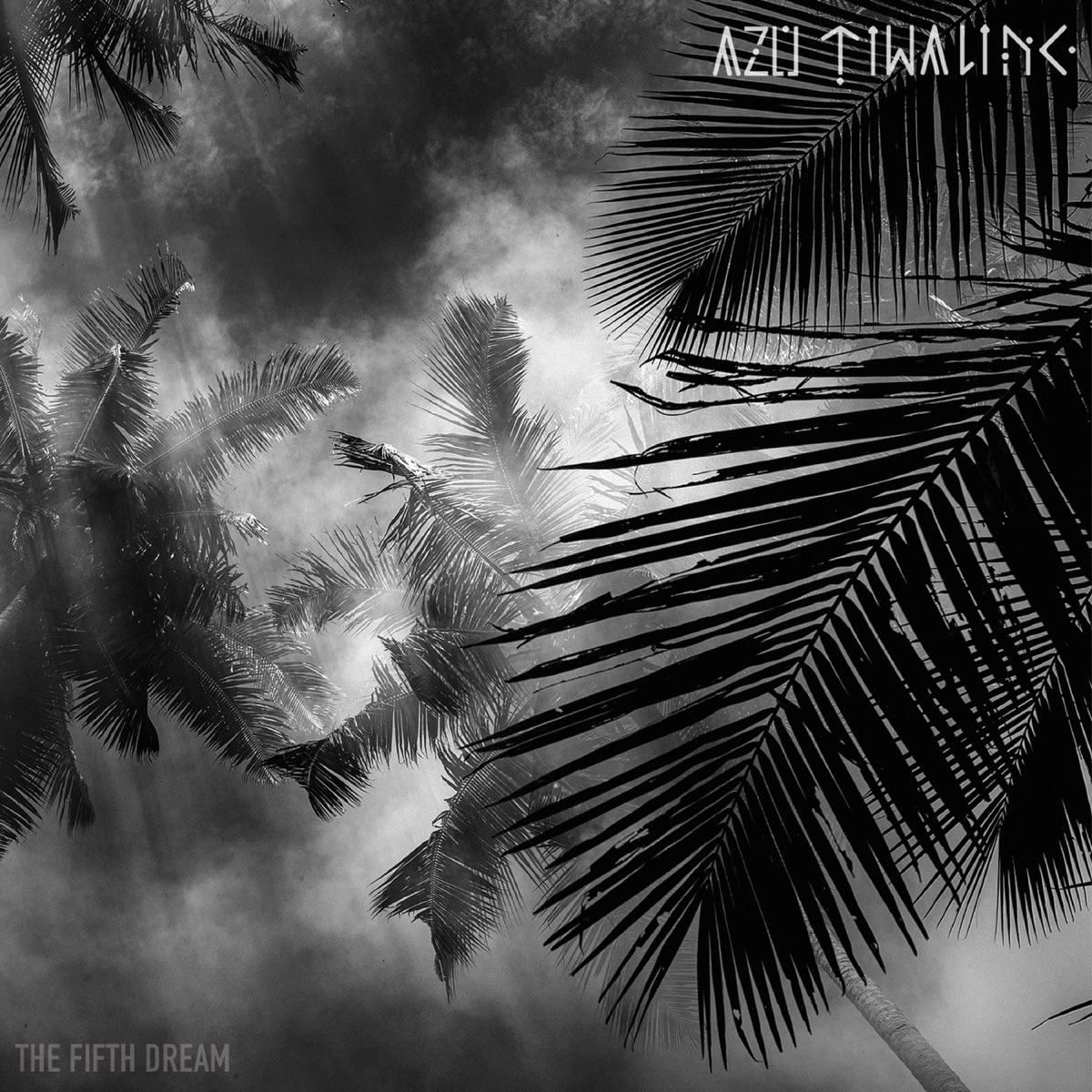
Azu Tiwaline is a French-Tunisian producer who decided, somewhere along the way, that the question what is dub techno had a different answer if you asked it in El Djerid instead of Bristol. Her work braids Berber rhythm, Saharan trance, and the kind of low-end physics you only get from sound systems built by people who care. She emerged in 2020 with an acclaimed debut for Livity Sound. More records followed on I.O.T. Records. The clubs that book her tend to be the ones with proper rigs.
THE FIFTH DREAM, her 2023 LP on I.O.T. Records, is the obvious starting point. Mei Long is the entry track, eight minutes of slow, deliberate bass pressure that does not so much build as it accumulates. Golden Dawn opens the record with desert horizon and ends up somewhere closer to a sub-bass meditation. Long Hypnosis is exactly that. Antennae Opening is the one where the rhythm finally relaxes into trance.
What She Is Making
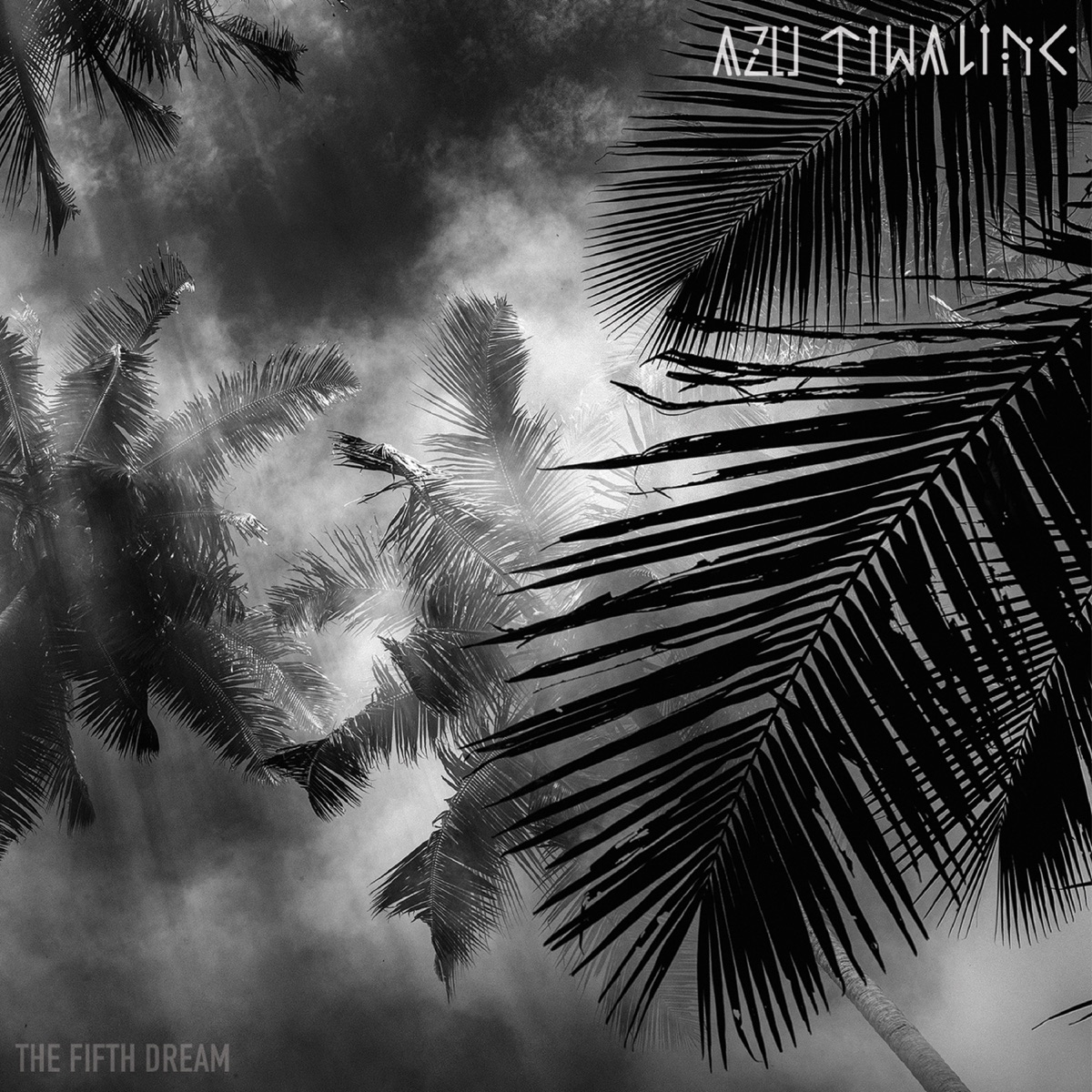
The word she uses for it is electro-dub but the word does not quite cover what is going on. Eight of the album's nine tracks were made in collaboration with Franco-Iranian percussionist Cinna Peyghamy, and that collaboration is the key to understanding the album's rhythmic logic. Peyghamy plays tombak, a goblet drum central to Persian and Middle Eastern music. The tombak patterns on The Fifth Dream do not sit underneath Tiwaline's electronics the way a drum machine would. They sit beside them, in conversation, sometimes slightly against them.
Reptilian Waves works in a register most techno producers cannot reach because they have never been in the desert at three in the morning. The field recordings she made in El Djerid, in South Tunisia where she lives, are woven throughout the album, and they are not decorative. They are structural. The desert is not a backdrop. It is a rhythm section.
Let The Night Start, her collaboration with Paul St. Hilaire, sits at the genuine intersection of King Tubby and El Djerid, two places nobody else thinks belong on the same map. They do. St. Hilaire is a dub veteran whose voice carries the weight of Jamaican sound system culture, and when that culture meets Tiwaline's desert electronics, the result is not a fusion. It is a recognition. Both traditions are built on similar physics: the manipulation of low frequency to create altered states, the use of space and delay as compositional tools, the understanding that a sound system is not a delivery mechanism for music but a physical environment that music creates.
The Dub Lineage and Where She Fits
Dub, in its original Jamaican form, was about removing and revealing. Lee Scratch Perry and King Tubby discovered that stripping a track down to its component parts, isolating the bass, pulling the vocal back into reverb, dropping instruments in and out with a mixing desk, created something more powerful than the original recording. The absence was musical. The space was compositional.
Bristol took that logic and added distortion and darkness. Sheffield took it and added industrial weight. Tiwaline takes it and adds the specific quality of desert acoustic space, where sounds travel differently, where silence is not absence but presence, where the wind is already a texture.
Her use of modular synthesis connects to this lineage at a technical level. Modular synthesis, at its best, produces sounds that are not obviously electronic, that carry organic irregularity, that breathe. Paired with Peyghamy's percussion and with field recordings of an actual landscape, the album sounds alive in a way that most studio productions, however well-crafted, do not.
Why It Matters Now
Dance music is currently very loud and very fast. Azu Tiwaline is making music that is loud and slow and patient and somehow more physical than anything tearing around at 160 BPM. She is also one of the few producers actively building a vocabulary out of where she is from rather than where the trend is. That is a rarer thing than it should be.
The specificity of El Djerid in South Tunisia, a desert region near the Algerian border known for its salt lakes and its particular quality of light and silence, is not incidental to the music. It is the music's primary source material. Most producers who reference non-Western geography do so metaphorically, adding an instrument or a scale to signal cultural origin. Tiwaline records where she lives. The landscape comes through the subwoofer because it is literally in the recordings.
The Sound System Logic
Tiwaline's work is built for specific rooms. The clubs that book her are described in every profile as venues with proper rigs, meaning large-format speaker systems with genuine sub-bass capability, systems where the frequencies she is working with can be felt in the body rather than just heard by the ear. This is not an aesthetic preference. It is a compositional requirement. Music built around sub-bass is physically incomplete without the physical component. It is like painting a picture that is only visible in a specific kind of light.
This connects her directly to the dub tradition, which was always a sound system music first and a recorded music second. The original dub recordings by Lee Scratch Perry and King Tubby were made to be played on Jamaican sound systems in outdoor dances, where the bass could travel at the volume and the distance those tracks require. The recordings are documents of that experience, not substitutes for it. Tiwaline's records function similarly. The Bandcamp and streaming versions give you the architecture. The club gives you the building.
Time and Patience
The running time of the album's tracks is its own argument. Mei Long runs eight minutes. Long Hypnosis is named for a reason. These are not songs that could be edited for radio without losing their essential character. The duration is structural. The repetition with micro-variation that Tiwaline builds into these tracks is the repetition of ritual, of a thing done again and again not because novelty is unavailable but because deepening is the goal.
Western pop music, and most club music that aspires to crossover mainstream attention, operates on the principle that the listener's attention must be constantly renewed by novel events. A new element every eight bars. A drop every two minutes. Tiwaline works from the opposite principle. Give the listener a single environment and let them inhabit it long enough to change.
Start with Mei Long. Sit with it. The album is doing what it says on the cover, fifth dream, and the slowness is the point.
Allastair Voss