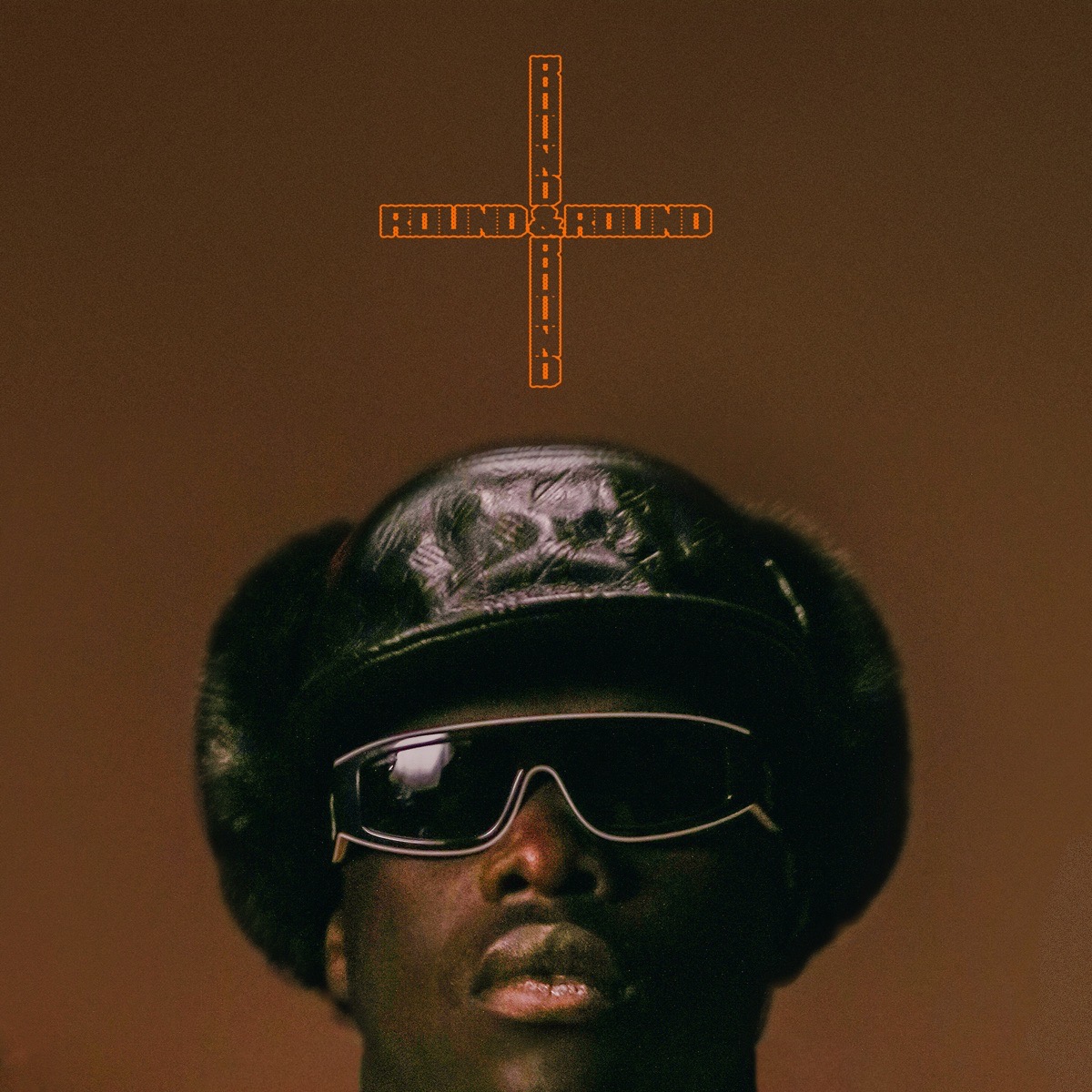
I keep coming back to this. I put on Blawan's recent work and I sit with it in a way that I don't sit with most electronic music, because it's asking me to sit. It's demanding something other than movement, other than the absorbed distraction of the dance floor, other than the pleasant suspension of ambient. It's asking me to think about what it means to hear something that sounds like things ending.
There's something unsettling about how good this is. Blawan, born Jamie Roberts in South Yorkshire, has been making industrial techno since the early 2010s and his trajectory has been one of progressive intensification. Each phase is harder, more demanding, less willing to meet the listener halfway. The recent work is his most extreme and most honest, and honest is the word I keep landing on, because the music feels like an accurate record of something rather than a stylistic position. It sounds like someone who has looked at the current historical moment and made sound from what they saw.
Industrial music has always been about the sounds of labour and violence and mechanical force. The aesthetic was built on that foundation in the 1970s and 1980s, Throbbing Gristle and SPK and Test Dept and all the others who understood that the factory's noise was also a kind of music, and that making it audible in an art context was a form of truth-telling. Blawan's techno inherits this. The kick drums are too heavy. The percussion sounds like machinery at the edge of breaking. The textures are hostile in ways that feel meaningful rather than arbitrary.
South Yorkshire and the Weight of Place
Origin matters here, not as biography, but as sonic inheritance. South Yorkshire is not an abstract location. It's post-industrial England, the geography of closed steelworks and the long aftermath of deindustrialisation. The landscape carries the memory of what it was built to do and then stopped doing. When Blawan makes music that sounds like industrial machinery winding down, he is not borrowing an aesthetic from somewhere else. He is translating a lived material reality into frequency and rhythm. The hostility in the sound is not cultivated. It is the sound of a specific place and what that place did to the people who grew up in it.
This is why the music doesn't feel like pastiche even though it operates within a genre with a long history. The industrial techno revival that Blawan has been credited with spearheading is not a nostalgia project. It doesn't reference the factory as a romantic or political symbol. It inhabits the factory's logic directly, mechanically, without commentary. The kick drum isn't saying anything about labour. It simply sounds like labour, and that is more honest than saying something about it.
The End of Something
I want to be careful about apocalypticism, because the aesthetic of ending is easily applied as posture without any substance behind it, and apocalyptic music has a tendency toward grandiosity that can substitute for actual depth. Blawan's music doesn't feel grandiose. It feels specific. The sense of ending it creates is not the theatrical ending of a dystopian film. It's quieter and more matter-of-fact than that, which is more disturbing. It sounds like the kind of ending that arrives without announcement.
What's ending? I genuinely don't know. The feeling of something late-stage, something running through its last cycles, is there in the production. It's in the way sounds decay before they're finished, in the rhythmic structures that seem to be winding down rather than building up, in the overall temperature of the record, which is cold in the way that specific kinds of hopelessness are cold rather than hot. The EPs, from the brittleness of Woke Up Right Handed to the fractured logic of Dismantled Into Juice to the compressed menace of BouQ, trace a line toward something harder to name. Each release removes something. Comfort. Resolution. The expectation that any of this will let up.
What the Production Is Actually Doing
Blawan crafts these records across multiple cities, between Berlin, Leeds, Paris, and Lisbon. The geography shows in the production. There is a restlessness to the sound design that isn't aimlessness. It's the sonic equivalent of someone who has moved repeatedly and is not quite settled anywhere, who understands dislocation as a permanent condition rather than a temporary state between fixed points. The music doesn't have a home sound. It has an international bleakness, which is its own specific register.
The percussion arrangements are where the real intelligence lives. In most techno the kick drum is a given, the fixed point around which everything else is organised. In Blawan's work the kick drum is a threat. It arrives with weight disproportionate to its placement in the mix, sits too long in the room, refuses to become background. When everything is built around a sound that won't subordinate itself, the music can't become comfortable, because the structural comfort of techno depends on the kick drum being reliable rather than alarming. Taking that reliability away is a technical decision with profound listening consequences.
On Music That Doesn't Comfort
Most music is in some sense consolatory. It offers company, or rhythm to organise your body around, or beauty, or the feeling of being understood. Even sad music tends to console. It names the sadness, and the naming is its own form of comfort. Blawan's music doesn't offer this. It's not trying to make you feel better. It's not trying to make you feel anything in the received sense of feeling as relief. It's creating a sonic environment that is honest about something and asking you to be in that honesty with it.
This is an unusual ask. Most people, understandably, don't go to music for that. Music is where you go to get through the day, or to celebrate, or to process difficult things in a safe container. Music that refuses to be safe is asking something more demanding. I can't put it on every day. I can't put it on when I need something from music rather than having something to give it.
But when I can give something, when I have the surplus of attention and stability to be in difficult music without it becoming too much, Blawan's recent work is where I go. It meets the darkness with something that understands the darkness. That's rarer than it should be.
The Industrial Techno Revival and What It Reveals
The genre descriptor "industrial techno revival" is accurate but undersells the specificity of what Blawan does inside it. The revival as a broad category includes music that uses industrial signifiers decoratively, that applies grit and distortion as texture without the underlying logic. Blawan's work is not that. The industrial elements are not texture. They are structure. The harshness is load-bearing.
This matters because there is a large market in music that sounds difficult without being difficult, that creates the feeling of transgression or extremity while remaining fundamentally easy to consume. It flatters the listener into thinking they are engaging with something challenging. The challenge is cosmetic. Blawan doesn't do this. The actual listening experience is as demanding as the surface suggests it will be. He has earned the credibility that other artists in the genre sometimes claim without earning.
His position in that revival, as one of its central figures, puts him in an interesting relationship to influence. The artists coming after him who sound like him are often using his formal vocabulary without the South Yorkshire logic underneath it. The vocabulary without the logic produces music that sounds hard but isn't, in the way that certain sentences can be syntactically complex without saying anything. What Blawan does is syntactically complex and says something specific. The difference is audible if you are listening for it.
The Right Nights
I keep coming back to this, slowly, carefully, on the right nights.
The music doesn't want anything from you except your honest attention. It isn't trying to be liked. It isn't performing extremity to prove a point. It's simply making sound that corresponds to something real and asking you to sit in that correspondence for as long as you can. Some nights I can sit longer than others. On the nights I can, it changes something. That's enough.