I want to make a case for Elbow, which should not be a difficult case to make but which I find myself having to make more often than I expected. The band occupies a strange position in the British music landscape. Widely loved, genuinely respected, associated in the public imagination with certain feelings about the north of England and the passage of time and the specific gravity of ordinariness. And yet somehow not quite fashionable in the way that the artists who influence artists tend to be fashionable. They're too earnest for that. They mean too much of what they say.
Build a Rocket Boys! is the record I want to talk about here, the 2011 album that I keep returning to in 2024 as an object lesson in what it means to make music that lasts. Not all good records age well. Some music that was excellent at the moment of release turns out to have been excellent partly because of its moment. The sound, the conversation it was joining, the specific mood of the time. When you remove those contextual supports, the thing that remains is thinner than you remembered. Build a Rocket Boys! does not have this problem. It gets heavier, if anything. The themes it's working through, memory, the persistence of childhood experience, the way people leave and the traces they leave behind, these are not date-specific concerns.
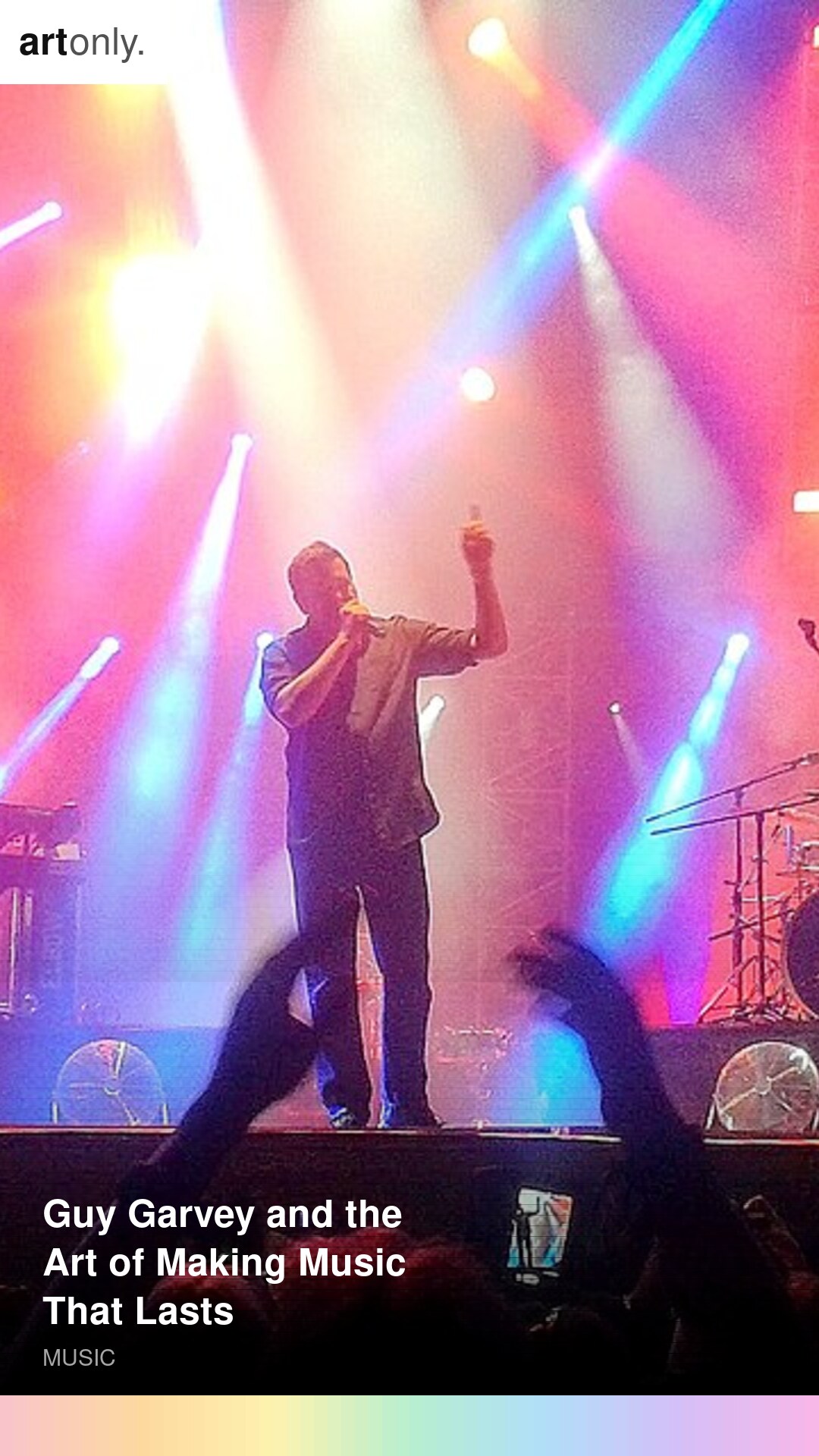
Guy Garvey's Voice as Instrument of Meaning
There are voices in music that communicate information and there are voices that communicate experience, and the difference is hard to articulate but immediately audible. Garvey's voice is in the second category. It's not technically extraordinary in the way that virtuoso vocalists are extraordinary. There's no dazzling range, no pyrotechnics, no moments where you're thinking about the mechanics of what's being done. What it has instead is the quality of being genuinely inhabited. Every word sounds like someone is actually saying it, meaning it, having arrived at it through genuine feeling rather than creative calculation.
On Build a Rocket Boys! this quality is more pronounced than anywhere else. The album is about his childhood and the childhood of his bandmates, about Bury and Manchester and specific streets and specific people, and the specificity is staggering. He's writing about real things, and the voice carries the weight of that realness.
The Album's Architecture
The sequencing of Build a Rocket Boys! rewards close attention. The album opens with "The Birds," an overture that establishes the emotional register before any narrative arrives. It closes with "Dear Friends," which functions as a direct address to the people the album has been circling around all along. Between these bookends, the tracks accumulate meaning through repetition and variation of imagery: childhood streets, departed friends, the particular quality of northern English light.
This is compositional thinking, not just song sequencing. Elbow approaches the album as a unit of meaning, not a collection of individual tracks. Very few bands operating at their commercial scale do this with the seriousness they bring to it. The payoff is that the record, experienced beginning to end, delivers something larger than the sum of its parts. A particular emotional state that the individual tracks gesture at but only the full sequence achieves.
On Making Music That Lasts
Music that lasts tends to have certain properties: emotional depth that doesn't depend on novelty, structural intelligence that rewards repeated listening, and a quality of being genuinely about something rather than performing the gesture of being about something. Elbow has all of these, and Build a Rocket Boys! has them in their most concentrated form.
The production, by Craig Potter and the band, is cinematic in the best sense. Large when it needs to be large, small when it needs to be small, never mistaking scale for emotion. The orchestral elements that appear throughout the album are used with restraint. They arrive when they've been earned. The result is music that moves you at the moments when moving is appropriate and not before. This is a kind of emotional intelligence that is rarer in epic-scale production than you'd hope.
I play this album at moments that require something capable of holding real weight. It hasn't failed that test yet. I don't think it will. That's what it means to last.
I want to name the specific thing that Elbow does that almost nobody else manages at scale, which is to make music that values ordinary experience. Not elevated or heroic or tragic experience, but the weight of daily life, the texture of long relationships, the specific quality of memory that belongs to a particular person in a particular place. The political dimension of that choice is easy to miss. We don't have much music that treats the ordinary as worthy of this kind of attention, this scale of production, this quality of arrangement. Most music in this register reaches for the universal, the dramatic, the historically significant. Garvey reaches for the specific and ordinary and makes you feel that nothing could be more worthy of being sung about. That's a form of humanism I find genuinely moving every time.
The Bury Specificity
The album's geographic specificity is worth dwelling on. Bury is not Manchester. It is a town twelve kilometers to the north with its own distinct identity, its own community memory, its own texture of ordinary life that resists the romantic overlay that Manchester has accumulated through decades of musical mythology. Garvey writes about Bury rather than Manchester because Bury is where the memories actually happened, and the specificity is the point. Anyone from a particular place that has been culturally overlooked in favor of its more famous neighbor will recognize the insistence. You describe the actual place, with its actual streets and its actual people, because the alternative is to betray what you're trying to preserve.
This is the kind of authenticity that cannot be manufactured. It is either there or it isn't. In Garvey's case it is unmistakably there, and it is the quality that separates Build a Rocket Boys! from the many albums that aspire to the same emotional register without having a real place to anchor them.