When Pop Gets Strange
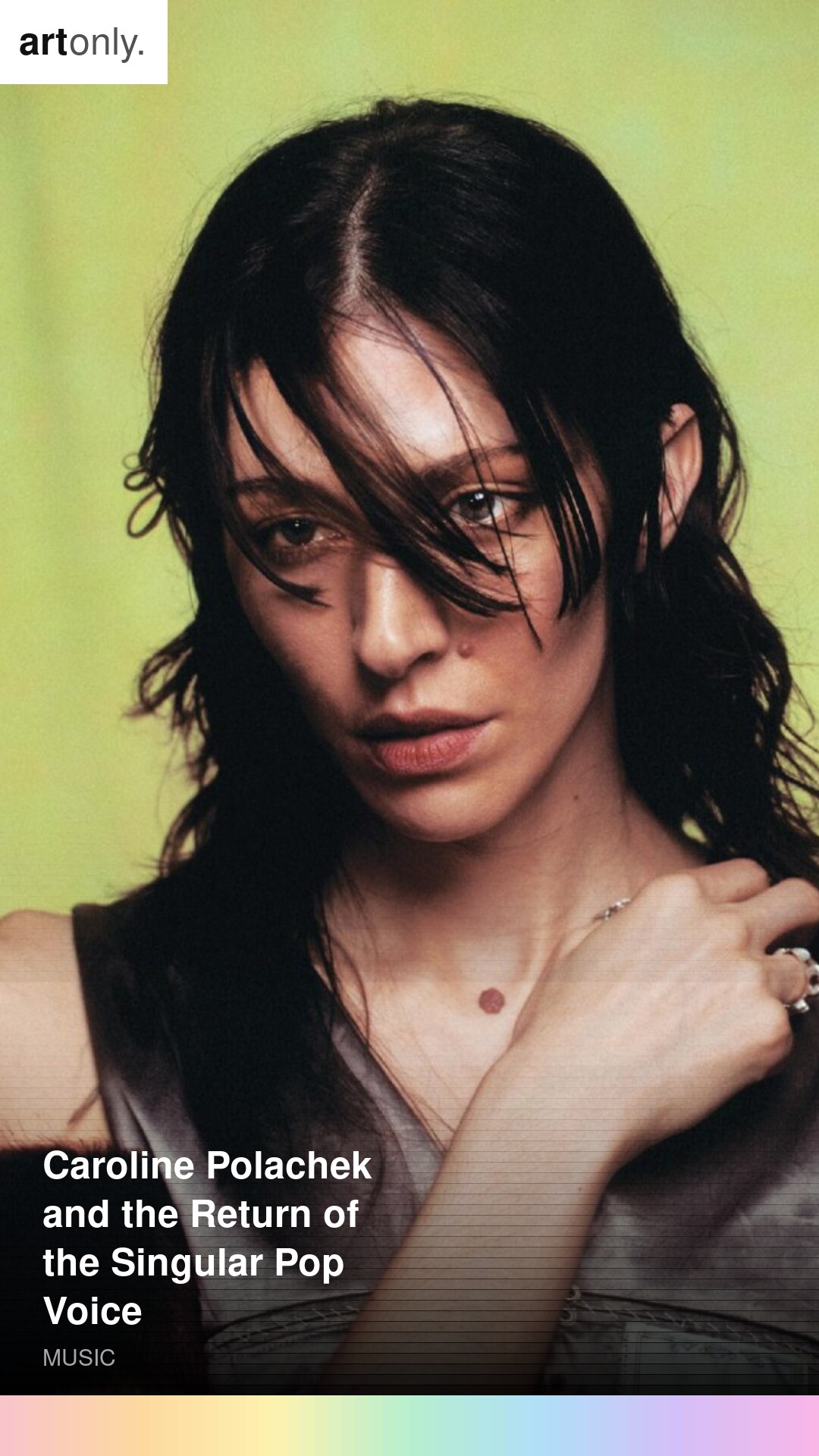
Desire, I Want to Turn Into You is the kind of pop album that makes you remember pop can be art without sacrificing the pleasure of being pop. It's operatic and strange and sometimes genuinely overwhelming, and it sounds like a statement being made at exactly the right volume, not too loud, not hedging. Caroline Polachek spent most of the 2010s being someone who kept getting close to something, with Chairlift and then the solo work, and then she made this record and the something arrived.
Polachek's voice is the instrument that organizes everything. It's a technically extraordinary voice, a range that spans multiple octaves, a control that allows for a kind of expressionistic precision, the ability to move between registers in ways that sound like emotional key changes rather than vocal exercises. On Desire it's deployed with a confidence that feels different from her earlier work, less cautious, more willing to do the alarming thing if the alarming thing is what the song requires.
The record is structured like an experience rather than a collection of songs. It builds from the opening 'Welcome to My Island', a song written as early as 2018 during the Pang sessions, which gives it a quality of long-held arrival, through to the closing tracks in a way that feels curated and intentional. The sequencing is part of the art.
Production and the People Behind It
The album's coherence owes much to a small production circle that Polachek controls with visible authority. Danny L Harle, her longtime collaborator, handles significant portions of the production. Sega Bodega contributes alongside her. The result is a record that sounds expensive in the right ways and handmade in the right ways. No single producer's fingerprint dominates. What dominates is Polachek's vision.
The use of the London Trinity Choir on 'Billions' and 'Butterfly Net' is one of the more audacious choices on the record. Most pop productions that reach for choral arrangements do so to signal grandeur. Here the choir feels more like a textural decision, a way of thickening the sound field in a direction that the synths and guitars alone couldn't reach. The result is music that feels genuinely large without feeling bloated.
Sega Bodega's fingerprints are worth noting specifically because his recent work in the Nuxxe orbit has pushed toward something angular and club-inflected, and Desire absorbs that influence without ever becoming a club record. The absorption is selective. Polachek takes what she needs and leaves the rest.
What Singular Means
I use 'singular' a lot when I write about music and I'm aware of the inflation risk. But Polachek is actually singular in the sense that I genuinely cannot point to another artist who sounds like her, and that's increasingly rare in music that's ostensibly existing within pop's commercial space. The references are present, Kate Bush, obviously, but also opera, flamenco, certain strains of European electronic music, but the combination produces something that doesn't sound like a synthesis. It sounds like its own thing.
'Billions', the duet with Grimes, is the track I keep returning to as evidence of what Polachek does that's unusual. It's technically a pop song but it behaves like neither party has been told the rules. The melodies are unexpected, the arrangement is operatic in scope, the chemistry between the two voices is strange and compelling in ways that transcend the usual guest feature logic. It shouldn't work as well as it does. And then there is 'Fly to You,' which adds Dido to the equation: three voices from three distinct moments in pop's recent history, none of them trying to imitate the others, making something that couldn't exist without all three.
The production across the record involves a range of collaborators but maintains a coherence that suggests Polachek's control over the vision is absolute. The variety doesn't fragment. Every track sounds like it belongs to the same world, even when they're formally very different.
Flamenco, Opera, and the Problem of Genre
Desire refuses genre assignment in a way that goes beyond eclecticism. The Spanish guitar tones that surface across certain tracks are not decoration. They do structural work. Flamenco has its own logic of tension and release, its own relationship between rhythm and melody, and Polachek imports that logic without importing the aesthetic surface. You feel the influence before you identify it.
The operatic dimension is more legible but equally purposeful. Opera allows for emotional excess that pop normally polices. A soprano can sustain a note for ten seconds in a way that feels earned inside the formal rules of opera and would feel indulgent in a different context. Polachek finds a way to unlock that kind of excess within a pop frame, to let the voice do the operatic thing without the music requiring you to process it as opera. That's a specific technical achievement.
The record was released on February 14, 2023, Valentine's Day, which is either a commitment to the romantic theme of the title or a very good joke. Possibly both.
The Audience This Record Found
Something interesting happened with Desire: it found an audience that wasn't necessarily the audience for the kind of pop it superficially resembles. The people who connected most deeply with it seemed to come from indie, from art music, from electronic music, people who weren't necessarily pop listeners but who found in this something that spoke to the parts of their taste that pop normally can't reach.
That crossover is telling. It suggests Polachek's instinct, to make pop music that doesn't smooth away the strangeness, that doesn't choose between accessibility and ambition, was correctly calibrated for a moment when those categories feel more porous than they used to.
I've played 'Ocean of Tears' for people who claim not to care about pop music and watched something happen in their faces. That something is difficult to describe.
I find that very satisfying.
The Long Game
Chairlift released two studio albums and disbanded in 2017. Polachek's first fully solo record under her own name, Pang, came in 2019 and gathered serious critical attention while remaining a niche concern. The trajectory from Pang to Desire is steep enough that the two albums could be from different artists if you weren't paying close attention. They're not different artists. They're the same artist with four more years of precision and four more years of willingness to commit.
The record has grown. I say grown because that's how it feels, as though the album I first heard is not quite the same album that I've been living with for months, as though it has accumulated something through repeated listening that it didn't have the first time. This might be me changing. It might be the music revealing something that was always there. The two possibilities feel, from inside the experience, essentially the same.
Desire, I Want to Turn Into You. The title is the manifesto. The music is the desire enacted. The singular pop voice has arrived. I don't know where she goes from here. I know I'll go with her.