The Problem With Discovery
There's a particular anxiety that comes with writing about an artist before they've fully arrived, a worry that you'll describe what they are before they've figured it out themselves, that the act of naming will somehow constrain what's still in the process of becoming. I'm going to write about Corker anyway, because this project has been living in my head for too long and I have to put it somewhere.
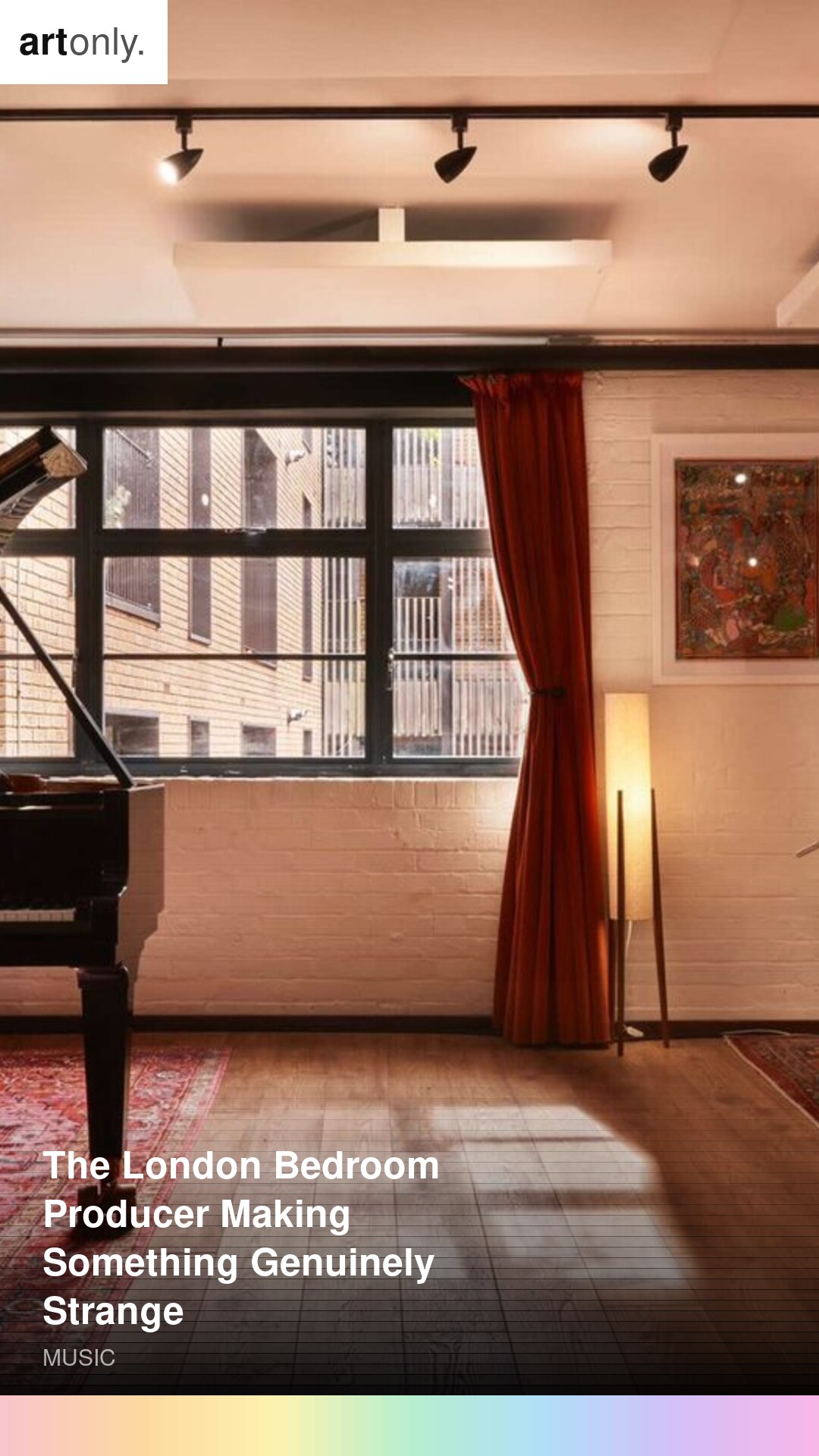
Corker is a producer and multi-instrumentalist working out of a bedroom in East London. This is not a sentence that should generate much excitement given how many bedroom producers are working out of East London right now, and yet the music Corker has been releasing, through a Bandcamp page updated irregularly, through occasional SoundCloud drops, through a small but devoted corner of the internet that has claimed this music as something, is doing things with texture and rhythm that I keep finding surprising.
The reference points are clear enough if you squint: there's UK garage in the structural bones, trip-hop in the atmospherics, something from the library music tradition in the sampling approach. But the combinations feel wrong in productive ways. The textures are slightly decayed, slightly off. Melodies arrive and then leave before they've fully resolved, which should feel frustrating and instead creates a tension that pulls you forward.
What the References Actually Are
The UK garage influence is worth unpacking because it's not the surface-level borrowing that fills a lot of current London production. It's structural. The rhythmic swing of two-step garage, the way the kick and snare occupy unexpected positions in the bar, creating a lurch that both destabilizes and propels, sits in the bones of Corker's tracks without the tracks sounding like garage. The influence has been absorbed and transformed. You feel it rather than hear it.
The library music dimension is stranger and more interesting. Library music, the genre-neutral recordings made from the 1950s through the 1980s to be licensed for broadcast use, developed its own aesthetic logic through its functional requirements. It needed to be evocative without being specific, to suggest moods without committing to narratives that might not match the footage. That logic, of music that creates atmosphere without anchoring itself to a specific story, is exactly what Corker's productions do. The connection is probably not conscious. It may be a parallel development toward the same formal solution.
Trip-hop is the most legible influence and therefore the one I'm least interested in, because legibility is not Corker's primary mode. The Bristol roots of Massive Attack and Portishead, the slow tempos, the heavy sub-bass, the sense of menace underneath something ostensibly beautiful, are present but filtered through enough other material that calling this trip-hop would be reductive.
What Strangeness Costs
I've been playing some of these tracks for people and the response is almost always a pause followed by a question: what is this? Not hostile, not dismissive, genuinely uncertain. The music doesn't give you the signposts you're expecting. You can't immediately locate it in a lineage or a scene. That kind of disorientation is increasingly rare and increasingly valuable.
Corker doesn't seem particularly interested in being discovered in the conventional sense. The releases come without press materials, without contextualizing interviews, without the promotional apparatus that even independent artists have learned to deploy. The music just appears. That restraint either suggests radical confidence or radical indifference, possibly both.
In 2022 that restraint is genuinely countercultural. The complete infrastructure of independent artist promotion, the social media presence, the playlist pitching, the Bandcamp Friday participation, the carefully timed SoundCloud premieres, has become so normalized that its absence reads as a statement. I don't know if Corker intends it as one. The music benefits from it regardless, because it arrives without the framing that tells you how to receive it.
The best track I've heard, a seventeen-minute ambient piece from last winter that has been shared mostly through voice notes and private messages, the kind of underground circulation that happens below the threshold of streaming algorithms, does something in its final five minutes that I'm still trying to understand. The piece builds a kind of sustained dissonance and then, very slowly, resolves it in a way that feels earned rather than inevitable. That distinction matters. Earned resolution means you felt the tension in your body. Inevitable resolution means you were just waiting for something you already knew was coming.
The Bedroom as Studio
There's been a lot of writing about bedroom production as a mode, about what changes when the distinction between domestic and professional space collapses, about how the tools of music-making have become accessible enough that geography and resources are no longer the limiting factors they once were. Most of that writing focuses on the democratization angle, the quantity, the proliferation.
What interests me about Corker is the quality question, the way that a very specific listening environment, a very specific set of tools used in a very specific way, produces music that couldn't have been made in a different context. The smallness of the space is audible in the music. The particularity of how these sounds were found and arranged together is part of the aesthetic, not despite the constraints but through them.
The home studio imposes certain listening conditions on the producer that professional studios don't. You hear the work on consumer speakers, through headphones you sleep next to, in a room that also contains your laundry and your books and your food. That context changes what sounds right. It privileges sounds that can coexist with domestic life, sounds that have a particular intimacy and a particular kind of quietness even when they are loud. Corker's music has this quality. It sounds like it was made in a room with a window.
Staying Underground, Staying Interesting
The artists who remain interesting in the underground register over the long term tend to be the ones who are genuinely indifferent to the terms on which the mainstream would accept them. Not performatively indifferent, not commercially strategic about their indifference, actually uninterested in the negotiation. Whether Corker is one of those artists is impossible to know from the outside at this stage.
What I know is that the music demands the kind of attention that most people don't bring to music they encounter without recommendation. It doesn't announce its qualities. It accrues them through listening. That's not a sustainable distribution strategy and it's a completely sound artistic one.
I don't know what Corker will become. The music might stay in this underground register indefinitely. It might not, there are people paying close attention, and the attention of the right people at the right moment can change the trajectory of an artist's visibility entirely. What I know is that right now, in this particular early-2022 moment, this music is doing something I find genuinely strange and genuinely compelling.
That combination doesn't come along often enough.