Dublin, Actually
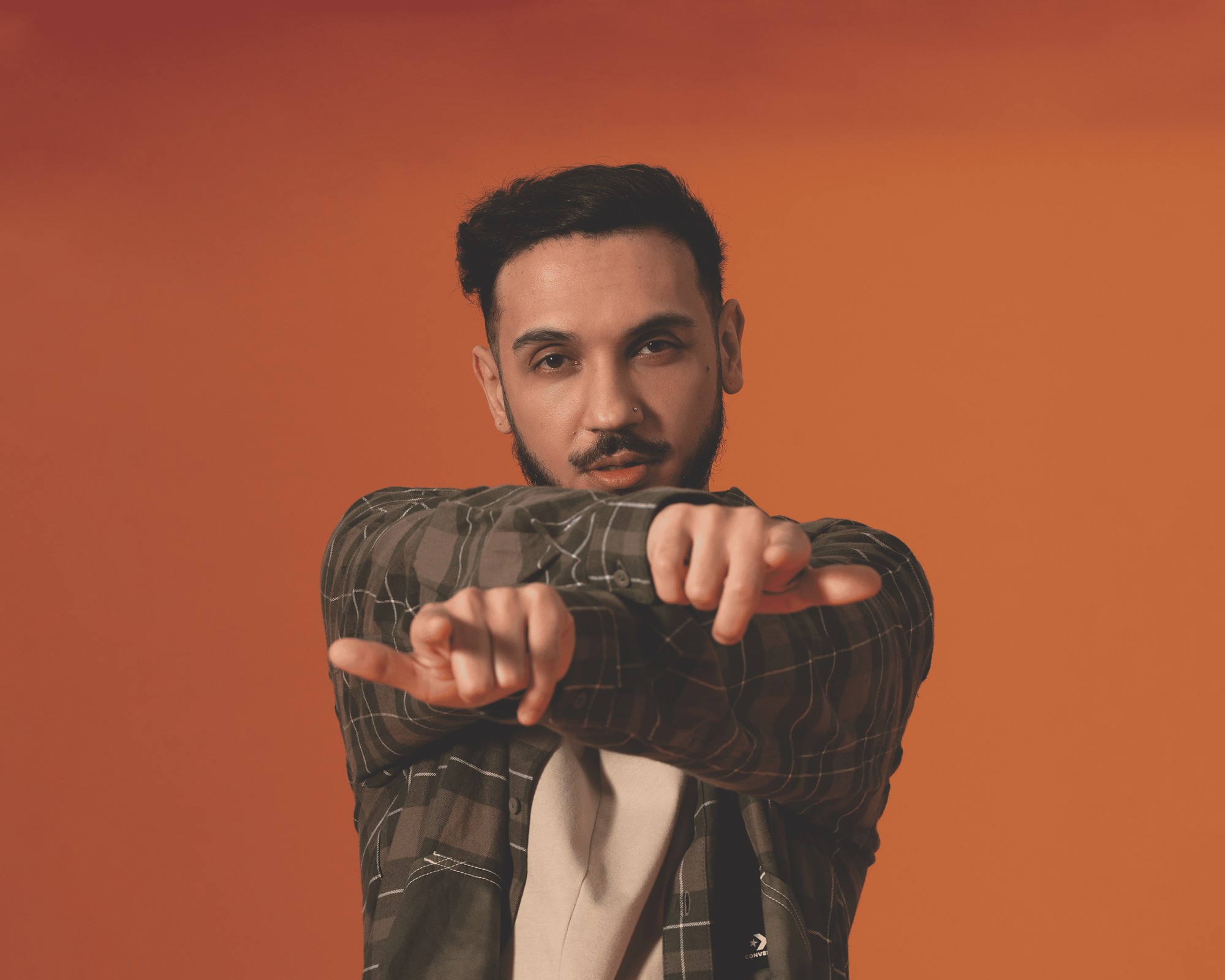
The geography of hip-hop origin stories has a particular grammar: Compton, Atlanta, the Bronx, Brixton, Johannesburg. Dublin does not typically appear in this sentence. Curtisy is working to change the grammar without making the geography into a gimmick. He is making music that is undeniably from Ireland, the cadences, certain cultural references, a relationship to the English language that is distinctly not American, while also being undeniably part of a global conversation about what rap can do structurally.
This is harder than it sounds. The failure mode for non-American hip-hop is either overcorrection toward Americanness, accent affectation, borrowed slang that doesn't land, or overcorrection toward national identity, everything becomes a statement about being from wherever you're from. Curtisy avoids both by simply refusing to make his Irishness a subject. It is a condition, not a thesis.
Gavin Curtis is from Tallaght, a suburb on the southwest edge of Dublin with its own cultural density and working-class history that does not map neatly onto any existing hip-hop mythology. He emerged during the COVID-19 lockdowns, a period that produced a specific kind of introspective music across every genre because introspection was suddenly the only available mode. What distinguished his early work from the flood of lockdown output was precision. He was not processing experience in public. He was editing it.
The influences he has cited, Earl Sweatshirt and Kojaque, are instructive not for what they have in common stylistically but for what they share as a disposition. Both are artists who treat restraint as a compositional choice rather than a limitation. Both understand that withholding information from the listener creates more tension than delivering it. Curtisy absorbed that principle and applied it to a voice and a cultural context that has nothing to do with Los Angeles or even with Dublin's existing music scenes.
The Craft
What he is actually good at is timing. Not just rhythmic timing, the placement of syllables against a beat, but dramatic timing, the sense of when to hit the line that the verse has been building toward. A lot of technically proficient rappers lose this. They fill space because they can. Curtisy leaves space because he understands that the pause before the line is part of the line.
The production he has been working over leans spare: hi-hat patterns with room to breathe, bass that sits back in the mix, occasional melodic fragments that feel borrowed from the emotional register of early Burial without the post-rave melancholy. It creates space for the writing to matter, which it does. He writes like someone who takes the distinction between accurate and true seriously. Accurate is what happened. True is what it meant.
That distinction is doing significant work in his practice. A lot of confessional rap collapses the two categories together, treating the biographical detail as the emotional content. Curtisy separates them. He gives you the detail and then makes you watch him decide what it means. The gap between the thing that happened and the meaning he assigns it is where the interesting music lives. That gap is also where the listener can find themselves inside someone else's story, which is what the best rap has always offered and what most technically competent rap forgets to provide.
The mixtape with hikii, BEAUTY IN THE BEAST released in 2025, extended the collaborative dimensions of the practice. Working closely with a single producer across a full project demanded a different kind of trust and a different kind of argument. The result was music that felt built rather than assembled, which is a meaningful distinction. Built things have internal logic. Assembled things have sequencing.
On "Shoeboxes" and Recent Work
The track Shoeboxes has been doing quiet things on playlists that algorithms still have not fully modelled. It does not announce its hooks. It builds them incrementally, which is a different kind of intelligence than the immediate-or-never pop calculus that dominates how streaming platforms evaluate musical content. The verse structure gives you information slowly, then reconfigures what you understood in the final eight bars. This is a writing trick, but Curtisy executes it with enough sincerity that it doesn't feel like a trick.
The debut album What Was The Question came out in 2024 and received a Choice Music Prize nomination, which in the Irish music landscape represents serious institutional recognition without the accompanying mainstream machinery. That placement is appropriate. The Choice Music Prize tends to identify artists who are doing something worth documenting before the larger conversation catches up. The nomination confirmed what attentive listeners had already established: this was not a promising debut from someone who might develop into something interesting. It was a fully formed position statement from someone who had already done the development in private.
Get A Life!, released on March 20, 2026 via Brook Records, represents a conscious shift in register. The introspection that defined the early work does not disappear but it is no longer the dominant mode. The album orients toward clarity and growth rather than examination of difficulty, and the production choices reflect that, more space, less ambient fog, a sense of forward movement that the earlier records sometimes deliberately withheld. This is not a concession to accessibility. It is an artist trusting that the audience built on the earlier work is ready for a different conversation.
Why Now
There is a broader moment happening in Irish music that does not get covered proportionally to its quality. A generation of artists who grew up with the internet as a native medium and are doing things with genre that older frameworks cannot quite describe. Curtisy is part of this without being a spokesperson for it. He is too busy making the actual work.
The headline tour through 2025, including Whelan's in Dublin, marks a specific transition point. Whelan's is not a large venue. It is a room with a particular Dublin history, a place where a certain kind of serious music has always found its audience. Playing it as a headliner means that the audience already exists in sufficient numbers to fill a room with genuine cultural significance. That is a different situation than building an audience from scratch through streaming numbers and algorithmic placement.
The reason Irish hip-hop sounds like a natural law right now, and not like a regional novelty or a genre exercise, is that the artists making it are not trying to make Irish hip-hop. They are trying to make the best music they can with the materials available to them, which happen to include a particular accent, a particular geography, and a particular set of cultural references that have not been processed through this form before. The freshness is a byproduct of specificity, not a goal in itself.
Curtisy is the clearest example of this principle at work. The music sounds like it could not have come from anywhere else, and it also sounds like it is in conversation with everything that has come before it in the global history of the form. Both of those things are true simultaneously. That is the only condition under which a local music becomes a universal one.
Follow @itscurtisy. Listen before the rooms get too big to be interesting.