
The Overthinking Romantic
Dijon Duenas makes R&B for people who think too much about feeling. There is a particular listener who has spent so much time analyzing their emotions that they've developed a kind of emotional vertigo. They feel things but can't quite trust the feeling, can't locate themselves inside it without reaching for language to describe what's happening. This listener is underserved by most contemporary R&B, which tends to assume that feeling is sufficient and direct and that the music's job is to amplify it. Dijon assumes the opposite.
His music is for people who want to feel something and also want to understand what they're feeling, simultaneously, in real time. This is a difficult service to provide. He provides it.
The territory Dijon occupies has a literary analogue: the narrator who is trying to be a reliable witness to their own experience while knowing that reliability is impossible, who keeps attempting honest testimony anyway. This narrator is everywhere in American fiction and almost nowhere in contemporary R&B. Dijon brings this sensibility into song form without making the songs feel like essays. They're still songs. They hit on first listen. The analytical register lives in the texture, in the gaps, in the way a lyric approaches a feeling from several angles before settling on the least sufficient one.
Absolutely and the Art of the Honest Witness
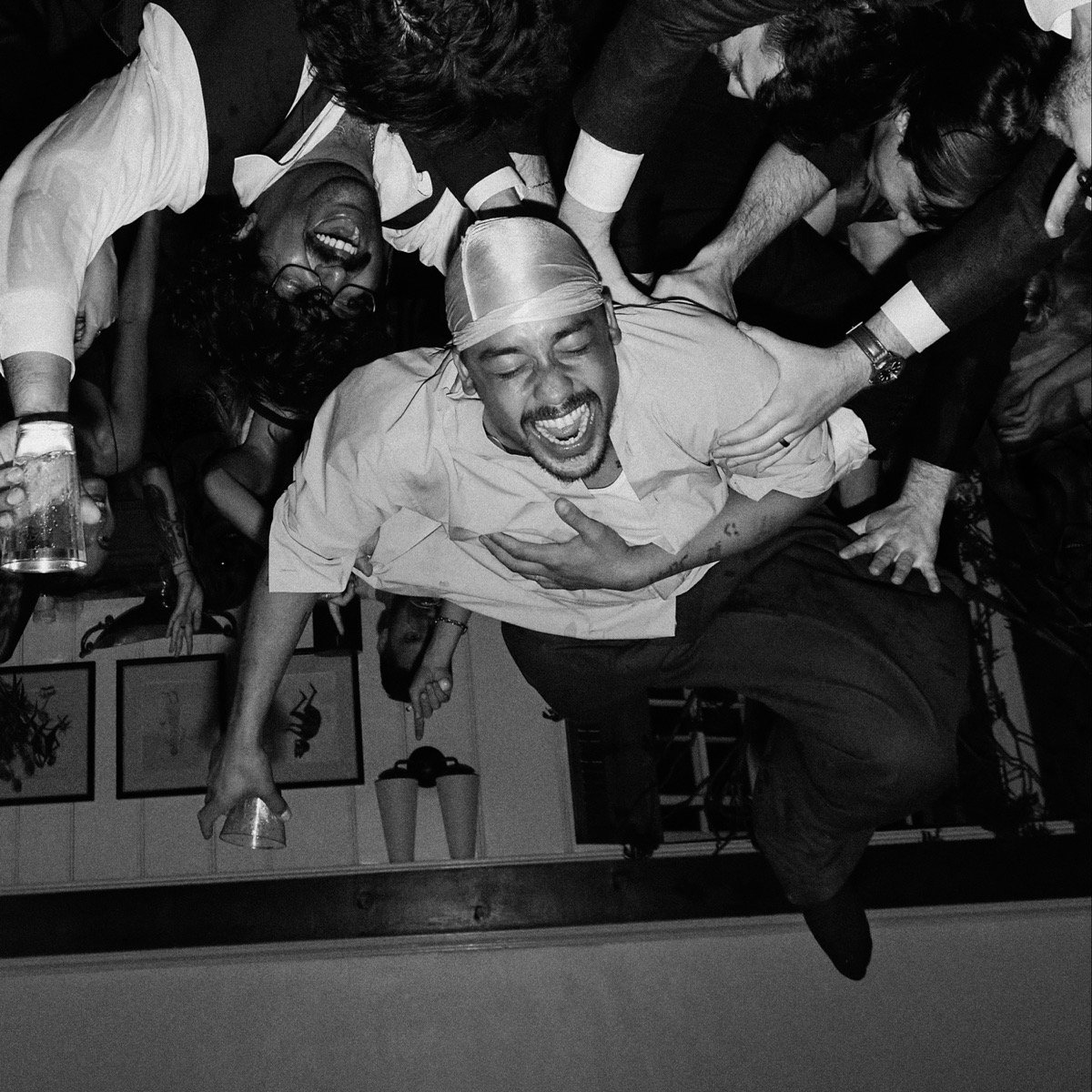
The 2021 album Absolutely is the record that established what Dijon is actually doing. It doesn't disguise its literary debts. The writing is conscious of itself as writing, aware of its own constructedness, occasionally reflexive about the act of trying to communicate emotional truth through language. This could be precious. It isn't. It's saved by sincerity: the feeling underneath the craft is real, and the craft is in service of the feeling, not the other way around.
The guitar work is worth remarking on. Acoustic, mostly, played with a lightness that refuses to be decorative. The guitar on a Dijon record sounds like someone thinking aloud, not performing. The restraint is the point. When restraint is the instrument, everything that breaks it matters more.
The album title is the word uttered when someone has been truly understood. Not as agreement but as recognition. The music positions itself as the space where recognition happens, where a listener encounters something that articulates what they couldn't quite say. That's a specific and ambitious goal for a debut album and Dijon achieves it across eleven tracks.
The Voice
The voice is a falsetto vehicle with a range that he manages with precision. He doesn't oversell the notes. He finds the pitch where the word and the melody and the breath converge and stays there. This is a kind of faith: the faith that the right note, held correctly, communicates more than any run or riff. This is harder to execute than its apparent simplicity suggests. Most singers can't do it. The ones who can tend to make the records that last.
There is a specific intimacy that falsetto creates when used without affectation. It strips the voice of its natural authority, places it in a more vulnerable register, creates the sense that the singer is reaching for something rather than possessing it. Dijon uses this quality deliberately. The voice that comes through is one that wants to understand as much as it wants to be understood.
Production as Argument
The production on Dijon's work is not minimal in the way that some spare acoustic R&B is minimal, where sparseness reads as aesthetic posture without necessarily being an argument. On his records, every decision has a reason. A piano enters a track at the precise moment when the emotional weight requires additional support. A background vocal appears as counterpoint to something the main vocal said two bars earlier.
The musicians he works with respond to the material rather than layering over it. There is space in the recordings, and the space is used, not wasted. A held note breathes. A chord progression arrives at its resolution without rushing. This kind of control in the studio is what separates records that age well from records that don't. The ones that rush don't survive repeated listening. The ones that breathe do.
The arrangements tend toward the intimate even when they expand. A string section enters near the end of "Rodeo Clown" and rather than lifting the track into cinematic territory, it deepens it, adding weight to what the voice is already carrying. This is the opposite of using orchestration as emotional shortcut. It's orchestration as amplifier of what was already there.
Why Dijon Now
There is space in the current R&B landscape for music that treats the listener as someone capable of complexity, someone who wants to sit with ambivalence rather than resolve it prematurely. Dijon occupies this space without being alienating. The songs are songs. They work on first listen. They reveal more on the fifth.
The moment in music for this kind of artistry is better than it has been in some years. The appetite for music that requires something from the listener, that meets intelligence with intelligence, has grown. Los Angeles, where Dijon is based, has produced a cohort of artists working in similar territory, and the conversations happening between them, in studios and on stages, are producing some of the most considered R&B of this decade.
Put Absolutely on. Read something difficult afterward. Notice how the two experiences rhyme.
The difficulty Dijon courts is the right difficulty. Not the difficulty of abstraction or noise or formal experimentation, but the difficulty of being precise about complicated emotional states. His music asks you to pay attention to the distinction between what you feel and what you think you feel, between the story you're telling yourself about an experience and the experience itself. That kind of attention is uncomfortable and rare and worth practicing. The records are the practice.
The R&B that Dijon makes is for listeners who have been let down by less patient music. It rewards the patience it asks for, which is not a small thing to be able to say about any record in any genre.