When Frank Ocean went silent, he left a crater in popular music. Not just a gap in the release schedule, but a void of sensibility: that specific intersection of vulnerability, experimentalism, and emotional precision that made Blonde feel less like an album and more like an event in the lives of everyone who heard it.
Artists have been trying to fill that space ever since. Most have failed, not because they lack talent but because they approach the problem wrong. They imitate the sound, the breathy vocals, the sparse production, the lo-fi textures, without understanding that what made Frank special was never the sound. It was the thinking.
Dijon understands the thinking.
Not a Clone
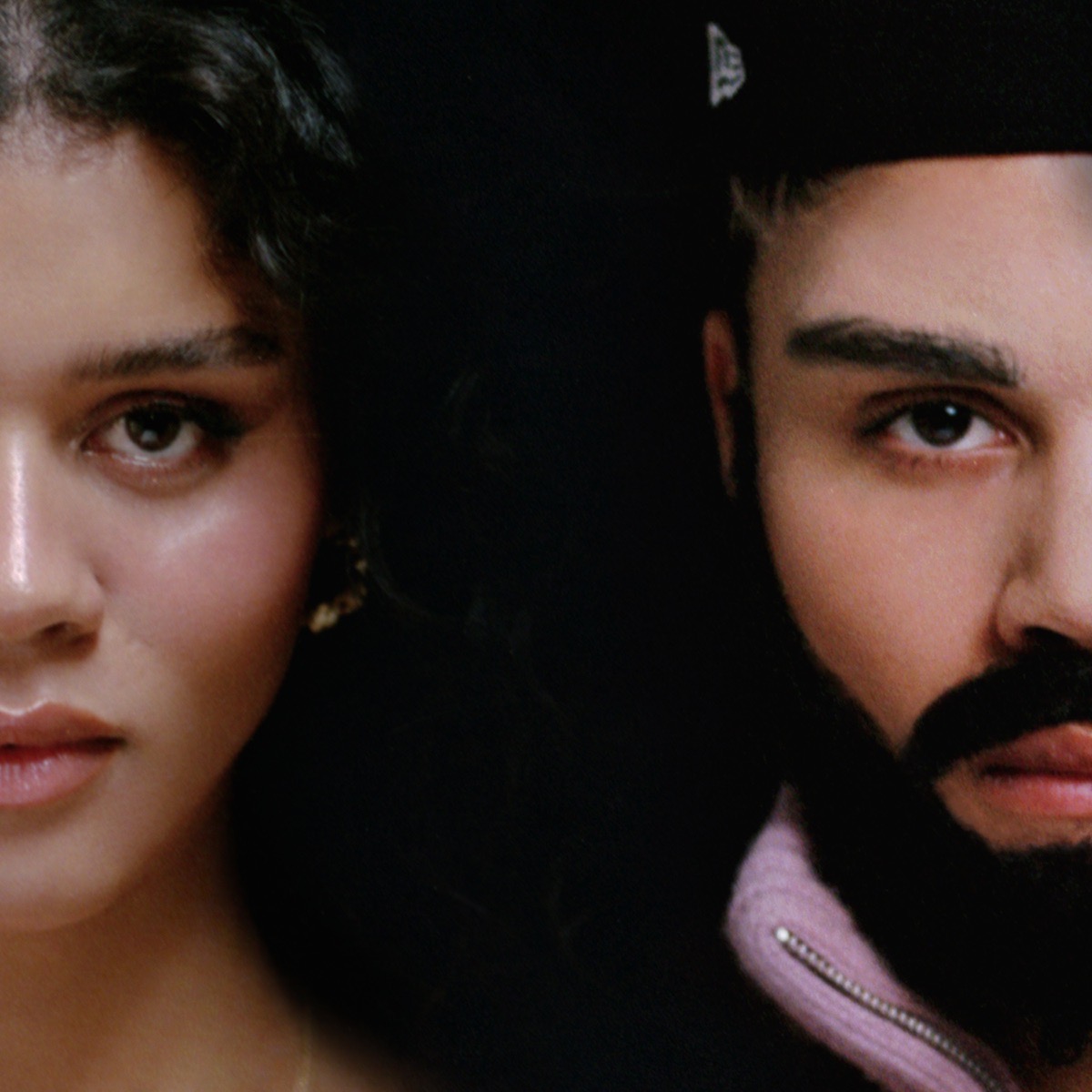
Let us be clear about something: Dijon is not a Frank Ocean clone. The comparison is inevitable and in some ways useful, but it is also reductive. Dijon Duenas, the Los Angeles-based singer, songwriter, and producer, has built a musical world that overlaps with Frank's in emotional territory but diverges sharply in execution.
Where Frank tends toward the architectural, constructing elaborate sonic environments that reveal themselves over dozens of listens, Dijon works in a more immediate register. His songs feel caught rather than built. They have the quality of voice memos that happened to be perfect, of late-night recordings where the microphone was on by accident and captured something true.
His album Absolutely was a masterwork of this approach. Songs that sounded like they could fall apart at any moment but never did. Guitar lines that wandered like thoughts. Vocals that moved between singing and speaking with the naturalness of actual conversation. The production, spare and warm, made room for imperfection in a way that most pop records are too cautious to allow. Every rough edge was a deliberate choice, and the discipline behind that apparent looseness is what separates Absolutely from music that merely sounds unfinished.
There is also the question of Dijon's growth across EPs and singles released before the album. He did not arrive fully formed. He accumulated decisions, refined his approach, discarded things that did not belong, and arrived at Absolutely having already done the hard work of understanding what he was trying to say.
The Emotional Frequency
What Dijon shares with Frank Ocean is not a production style but an emotional frequency. Both artists operate in the space between heartbreak and acceptance, between wanting someone and knowing that wanting is not enough. Both treat love songs as philosophical investigations rather than simple narratives.
But Dijon brings something Frank often withheld: warmth. His music is generous in a way that Frank's sometimes is not. Where Blonde could feel like watching someone through glass, Dijon's work feels like being in the room. He lets you in closer. He trusts the listener more.
This is not a criticism of Frank Ocean. Blonde's distance was part of its power. But Dijon's intimacy is its own kind of achievement, and it resonates differently with an audience that has spent a decade waiting for an artist who can make them feel this much.
That warmth shows up most clearly in the moments where Dijon is most vulnerable. He does not dress his confessions in metaphor. The specificity of his language, the way he names things directly and then steps back to observe them, creates the sensation of being confided in rather than performed at. You are not a witness to his pain. You are a participant in the processing of it.
Production as Emotional Architecture
Dijon's production approach on Absolutely deserves more serious attention than it typically receives. The temptation is to describe it as minimal, which is accurate but incomplete. What he does is more precise: he identifies the exact amount of sonic information a song needs to carry its emotional weight and then provides only that. Nothing more.
That economy is enormously difficult to execute. Most producers fill space. Dijon removes it. The guitar tones on tracks like Skin are chosen for their specific warmth, not their technical impressiveness. The percussion sits at a volume that feels natural rather than mixed, as though it recorded itself. The overall effect is music that sounds like it could be played live in a kitchen, which is exactly the intimacy it creates.
Comparisons to other bedroom pop or lo-fi artists miss this point. The craft in Dijon's production is invisible by design. That invisibility is the craft.
The Live Experience
Dijon's live performances have become one of music's best-kept secrets, though the secret is spreading fast. His shows are loose, spontaneous, and devastatingly emotional. He plays guitar like someone who learned by feel rather than theory. He improvises lyrics. He talks to the audience like they are friends at a house party rather than ticket holders at a venue.
The result is an experience that feels genuinely unrepeatable, something that cannot be captured by a live album or a concert film. You had to be there, and increasingly, people are making sure they are.
There is a feedback loop at work in his performances. The intimacy of the music draws an audience that is already open to being moved. That openness then feeds back into the performance, and what you get is a room full of people collectively experiencing something they did not expect to feel quite this much. It is rare in 2026. It should not be taken for granted.
Filling the Void
The Frank Ocean void was never going to be filled by someone who sounded like Frank Ocean. It was going to be filled by someone who understood why Frank Ocean mattered: because he proved that popular music could be genuinely personal, formally adventurous, and emotionally devastating all at once.
Dijon is that artist. He has taken the permission that Frank gave a generation of musicians, the permission to be weird, to be tender, to be incomplete, and run with it in a direction that is entirely his own.
Frank Ocean changed what was possible. Dijon is showing us what comes next. And what comes next sounds like the most honest music being made right now.