The Reckoning Continues
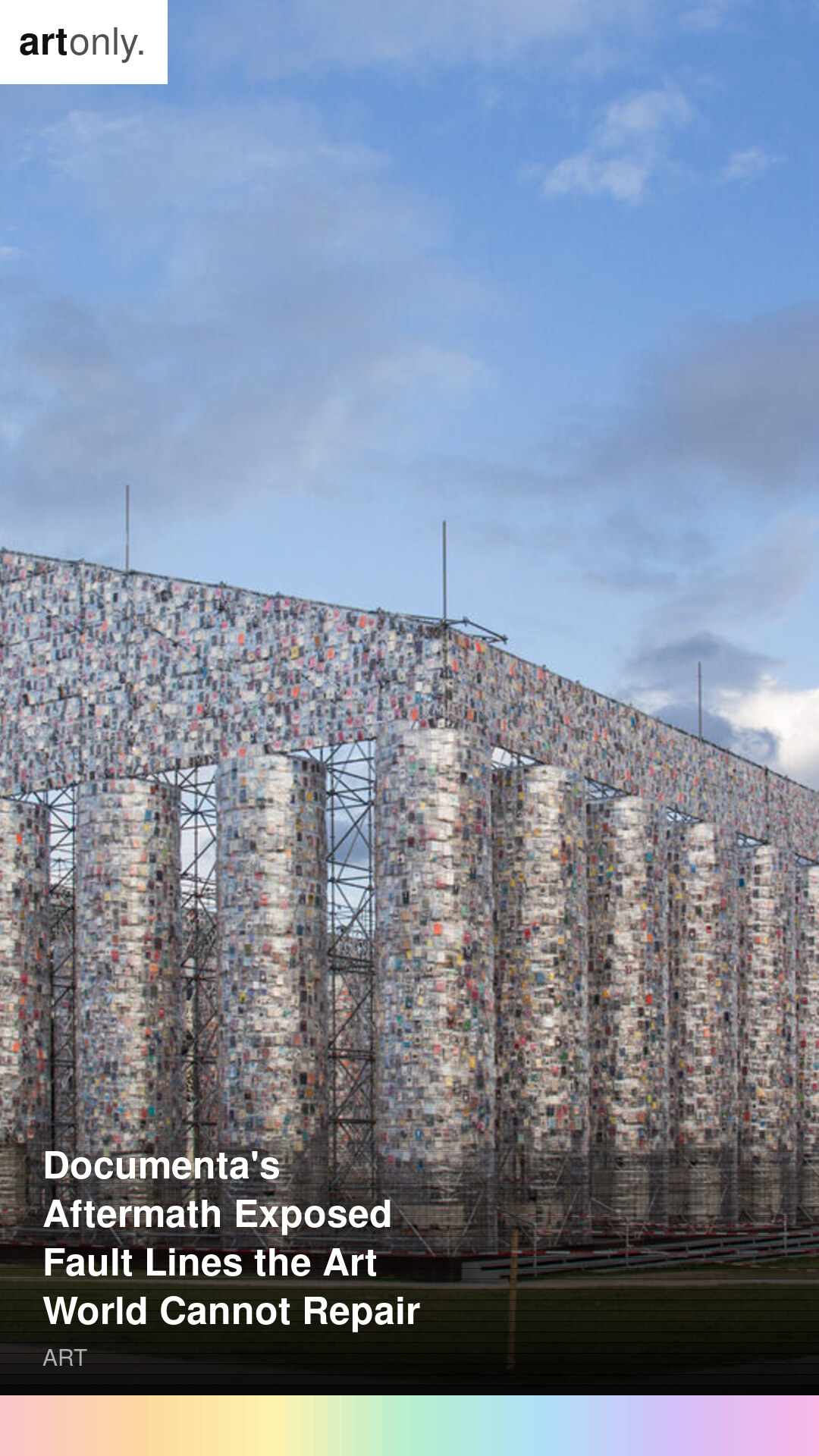
The controversy surrounding documenta fifteen did not end when the exhibition closed in Kassel in 2022. Throughout 2023, the fallout continued to reshape conversations about curatorial responsibility, institutional governance, and the limits of artistic freedom. The antisemitism scandal that engulfed the exhibition had exposed fractures in the international art world that proved far more structural than anyone initially wanted to admit.
What made the aftermath so prolonged was not the incident itself but what it revealed. A major international exhibition, funded largely by the German government and overseen by an established board, had failed to identify and remove antisemitic imagery before it reached the public. The failure was not incidental. It was a product of specific decisions made at every level of the institutional structure.
What Happened
For those who need the summary: documenta fifteen, curated by the Indonesian collective ruangrupa, included a work containing antisemitic imagery that was displayed publicly before being removed. The incident triggered a cascading crisis involving accusations, investigations, resignations, and a broader reckoning about how one of the art world's most prestigious exhibitions had allowed such imagery to be shown without adequate oversight.
The specific work at the center of the scandal was a large banner by the Indonesian art collective Taring Padi, depicting figures in antisemitic caricature. It had been in place for days before the Central Council of Jews in Germany publicly demanded its removal. The artwork was eventually covered, then removed entirely. The damage to documenta's credibility was immediate and severe.
What followed was a series of institutional responses that satisfied almost no one: ruangrupa released a statement, several advisory figures resigned in protest or frustration, and the German political establishment demanded accountability from an exhibition that had been structured specifically to resist top-down editorial authority. The tension between those two positions, institutional accountability versus curatorial autonomy, became the defining fault line of the aftermath.
The Institutional Response
The German government commissioned investigations. Advisory boards were restructured. New oversight mechanisms were proposed for future editions. But the institutional responses often felt like they were addressing symptoms rather than causes. The deeper questions, about how curatorial authority is distributed, how non-Western perspectives are integrated into European institutional frameworks, and how institutions handle politically sensitive content, remained largely unresolved.
The documenta model, which rotates curatorial responsibility to a different collective or individual every five years, is designed to prevent calcification. It is supposed to ensure that the exhibition never becomes the property of any single aesthetic or political perspective. That openness is genuinely valuable. But it created a situation in which a curatorial collective with a specific political orientation and very limited operational support was given enormous institutional authority without corresponding institutional infrastructure for oversight.
The result was predictable in retrospect and missed in prospect. That gap between retrospective predictability and prospective blindness is where institutions tend to fail most badly.
The Broader Implications
The documenta controversy became a proxy for several tensions that the international art world had been avoiding. Questions about the relationship between artistic freedom and institutional responsibility. Questions about whether Western art institutions can meaningfully decolonize their practices without losing structural coherence. Questions about who gets to define the boundaries of acceptable artistic expression.
The most contentious of these was the question of context. Ruangrupa and their supporters argued that the imagery in question needed to be understood within a specific political and cultural context, that its meanings shifted depending on the interpretive framework you brought to it. Their critics argued that antisemitic caricature carried a fixed meaning that no contextual argument could neutralize. This disagreement was not resolved. It hardened.
The debate also exposed something uncomfortable about how the international art world had been handling its post-colonial commitments. Decolonizing a European institution is not accomplished by delegating authority to a non-Western collective and then stepping back entirely. Delegation without infrastructure is not solidarity. It is negligence with good intentions. Several critics made this argument during the aftermath, and it is the critique that most institutional responses failed to genuinely engage.
Who Defines Acceptable Expression
The deepest problem the documenta controversy exposed was not procedural but philosophical. The question of who gets to define the boundaries of acceptable artistic expression has no institutional answer. Institutions can create review processes, appoint advisors, implement content policies. None of these mechanisms resolves the underlying question. They defer it.
The international art world operates with a set of values around artistic freedom that it treats as foundational. The right of artists to make work that challenges, offends, and unsettles is built into the ideology of contemporary art practice. The antisemitism in the Taring Padi work exposed the limits of that ideology: there are forms of harm that the right to unsettle does not cover, and the art world, precisely because it values its own freedoms so highly, has been slow to develop the tools for recognising and naming those limits clearly.
This is not a problem that documentation restructuring or oversight reform will fix. It requires something more difficult: a genuine conversation within the field about where the limits of artistic freedom are, conducted with the honesty to acknowledge that those limits exist rather than pretending the question has already been answered.
No Resolution in Sight
By the end of 2023, the documenta aftermath had not produced anything resembling consensus. Different constituencies within the art world drew fundamentally different conclusions from the same events. Some saw a failure of curatorial oversight. Others saw an overreaction driven by political pressure. The most honest observers acknowledged that the situation was genuinely complex and that easy resolutions were not available.
The search committee for documenta sixteen, set to open in 2027, inherited this weight. The criteria for selecting future curators necessarily changed, and the nature of those changes revealed exactly which lessons the institution had and had not absorbed. Whether the structural reforms proposed in the aftermath will hold under the pressure of an actual exhibition remains to be seen.
The next documenta will arrive carrying this weight, and how it navigates the inheritance will say a great deal about whether the art world learned anything at all.