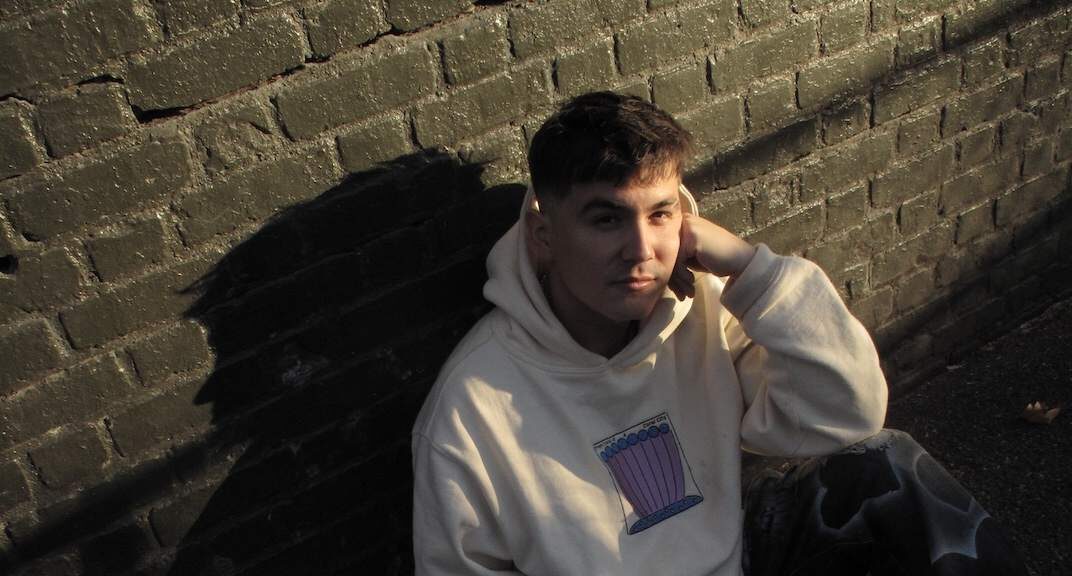
There's an artist on the internet with no face, no backstory, and no interest in giving you either. Dream Tunes has been quietly uploading covers for the past few years, Blink-182, Cascada, Green Day, Jefferson Airplane, Belinda Carlisle, and turning each one into something that feels like watching a Super 8 reel of a summer you can't quite place. The latest one worth losing yourself in: a rework of Shakira's "Whenever, Wherever" that strips the Latin pop original down to its emotional skeleton and rebuilds it as something fragile, warm, and impossibly pretty.
The Sound of Borrowed Memory
What Dream Tunes does isn't really covering songs. Covering implies fidelity to the original architecture, same structure, different voice. This is something else. "Whenever, Wherever" in Dream Tunes' hands loses its hip-shaking urgency entirely. The Andean pan flutes and the propulsive percussion vanish. What's left is a vocal that floats over gentle synths and reverbed guitar, a melody you recognize but can't quite reach, like hearing a song through the wall of a house party you weren't invited to.
The genius is in what gets removed. Shakira's version is a body song, physical, rhythmic, rooted in movement. Dream Tunes turns it into a head song. A thought you had at 2 AM on a Tuesday. A feeling that sits in your chest without explanation.
This is the essential technique across the entire catalog: identify the emotional core of a song, strip away the period-specific production that dates it, and rebuild around that core in a register that feels contemporary without being trendy. The result never sounds like a remix, which implies transformation. It sounds like an original recording of a song that always wanted to be quieter.
The Board Era, Revisited
Scroll through the catalog and a pattern emerges: "All The Small Things." "Holiday." "There She Goes." "Every Time We Touch." "The Middle." These aren't random selections. They're the soundtrack to a very specific era. The early 2000s, when these songs played over skate videos and TRL countdowns and the car stereos of older siblings. The board era. The decade when pop-punk and euro-dance and one-hit wonders all coexisted on the same burned CD.
Dream Tunes takes those tracks, songs so familiar they've become almost invisible, and makes them visible again. Not by adding complexity, but by removing it. By slowing the tempo, softening the edges, and letting the melody do something it was never allowed to do in its original context: breathe.
The result is music that triggers nostalgia not for the songs themselves, but for the feeling those songs once accompanied. The version of yourself that heard "All The Small Things" for the first time. The specific quality of sunlight on the day "There She Goes" played from someone's phone speaker at a park. Dream Tunes isn't covering the music. Dream Tunes is covering the memory.
This distinction matters. Music that targets nostalgia directly tends to feel manipulative, engineered to produce a specific emotional response by mining shared cultural reference. Dream Tunes sidesteps that problem by transforming the source material so completely that what you feel isn't nostalgia for the original song. It's something more private, more specific to your own experience of when you first heard something like it.
The Craft of Reduction
Most cover versions improve on originals through addition: more production, bigger arrangements, a stronger vocal performance. Dream Tunes improves through subtraction, and this is a genuinely difficult thing to do well. Stripping a track to its essential melody requires confidence that the melody can carry the weight alone. Most pop melodies cannot. The ones Dream Tunes selects are the exceptions.
The choice to use reverbed guitar and gentle synths across the catalog is not stylistic laziness. It is a deliberate palette that serves the transformation. These textures are neutral enough to not impose a new emotional context on the material. They don't tell you how to feel. They remove the original instructions and leave you with the melody and whatever personal history you bring to it. The catalog would not work in any other sonic register.
Anonymous by Design
There's no press photo. No interview. No face in the thumbnails, just found vintage photography with warm grain and soft focus. A couple kissing in a 1970s living room. Kids running on a beach. Soldiers standing in afternoon light. Each cover art looks like a photograph someone's grandmother would have in a shoebox under the bed.
This anonymity isn't a gimmick. It's the point. Dream Tunes works because there's no personality competing with the feeling. No backstory to contextualize, no face to project onto. Just the music and whatever it unlocks in you.
The aesthetic consistency of the cover photography reinforces this. Every image is from a specific visual register: warm, analog, slightly faded, depicting human life in its unhurried moments. The images signal that this is music for a specific emotional state rather than for a specific demographic. They open a door without specifying who should walk through it.
Why It Matters
With nearly 27,000 Spotify followers and individual tracks pulling millions of streams, Dream Tunes has built something quietly enormous. "There She Goes" alone has over 7 million plays. There's no viral moment, no TikTok dance, no algorithmic push. People find these tracks the old-fashioned way, through the specific, private ache of searching for a song they half-remember and landing on a version that feels more real than the original.
That mode of discovery is itself meaningful. Dream Tunes attracts listeners who are already in a particular emotional state when they arrive, who are searching for something they can't quite name. The music meets them there. It doesn't try to redirect their attention or monetize their emotional need. It just delivers what the search was for.
"Whenever, Wherever" is the latest in a catalog that keeps proving the same thesis: the songs that shaped us weren't great because of production value or chart position. They were great because of when we heard them and who we were when we did. Dream Tunes just gives us a way back.
Find Dream Tunes on Instagram: @dreamtunes.co