Toronto has always had a complicated relationship with its own R&B artists. The city that gave the world Drake and The Weeknd has a habit of either absorbing its singers into the OVO gravity well or ignoring them entirely. Dylan Sinclair has managed to escape both fates. At twenty-four, with a Juno Award, a Polaris nomination, over 100 million streams, and a debut album that sounds like it was written specifically for the version of you that exists at 3 AM, he has built something that belongs entirely to himself.
The Record That Grew Up in Public
For the Boy in Me arrived in September 2024, but it has spent the months since then becoming the album people discover when they are finally ready for it. It is not a slow burner in the traditional sense. Tracks like "Lemon Trees" and "Forever" had immediate pull, with warm production from Jordon Manswell and LUSTBASS giving them an expansive, lived-in quality that rewards repeat listening. But the album's power lives in its cumulative effect. Each song is a letter to a different version of himself, and by the end, the portrait is complete.
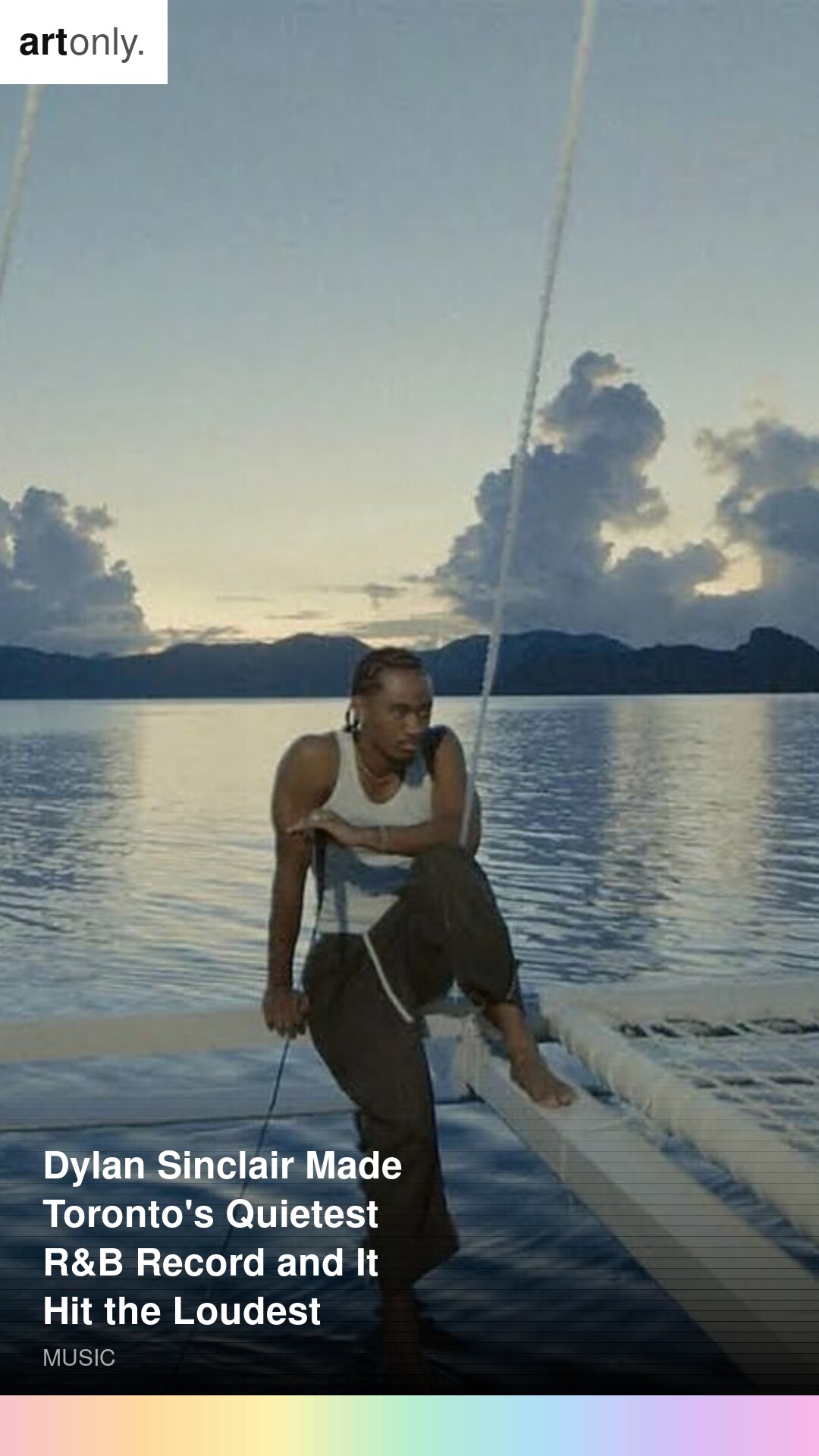
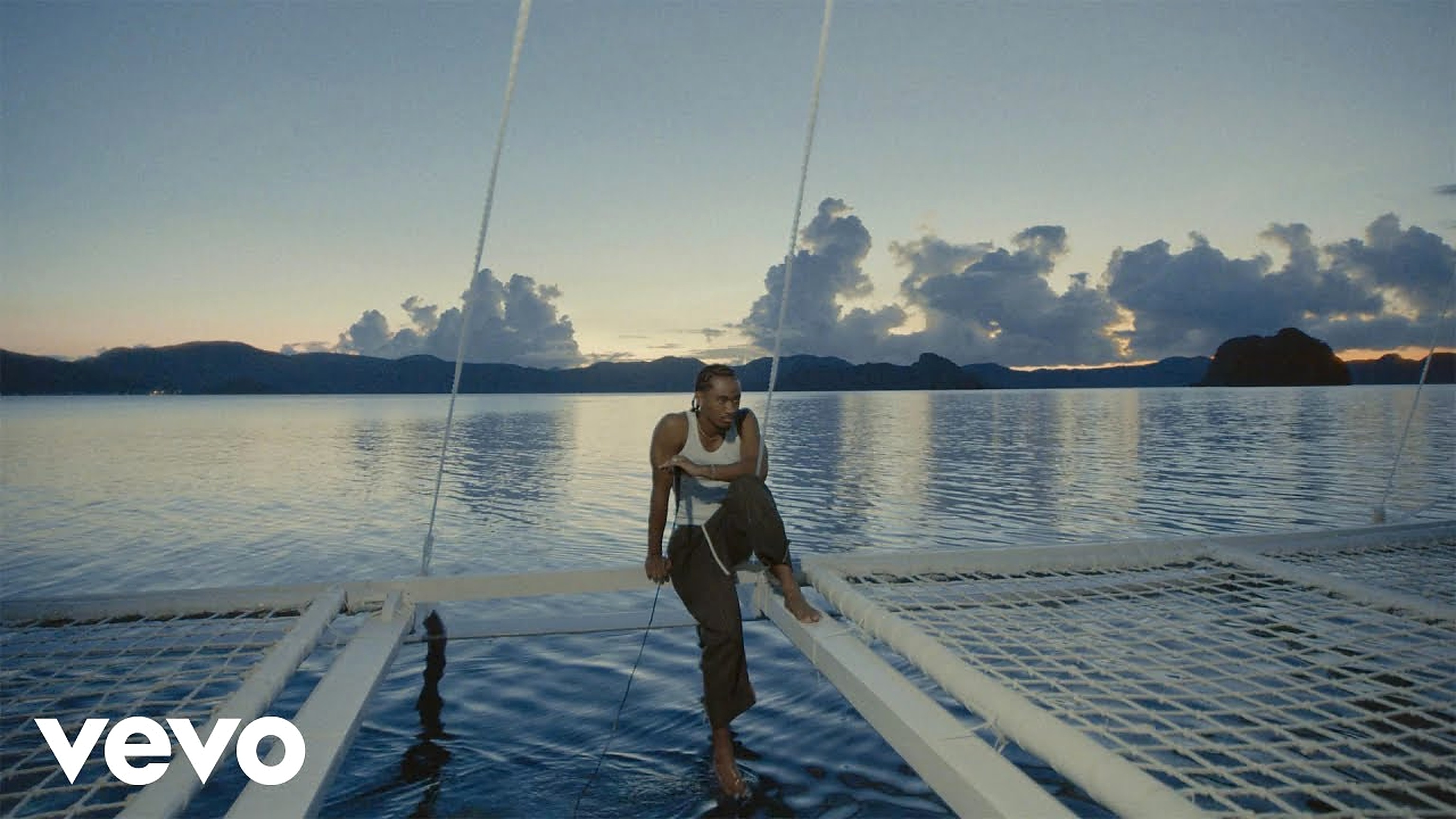
Sinclair has described the record as being deeply connected to his Filipino heritage. The Motherland Sessions, filmed in El Nido and Dasmariñas, are some of the most visually striking performance videos in recent R&B. There is something genuinely affecting about watching a young man from Toronto sing about love and loss while standing barefoot on a boat in the Philippines. It collapses the distance between where he comes from and who he is becoming.
What Makes Sinclair Different
The easy comparison is Daniel Caesar, another Toronto artist who made introspective R&B feel like a viable commercial proposition. But where Caesar's music often floats in a kind of spiritual ether, Sinclair's stays grounded in the specific. His songs are about real people, real situations, real consequences. "IMY" is not an abstract meditation on longing. It is a man calling someone he should not be calling and knowing it. "Sweet Life" is not a mood board. It is a promise made to a specific person on a specific night.
That specificity is what makes For the Boy in Me resonate beyond the Toronto R&B ecosystem. Sinclair writes the way the best songwriters always have: by making his particular experience feel universal without ever pretending it is anyone else's story. He is not trying to represent a generation. He is trying to be honest about one life. And it turns out that is enough.
The Production That Makes Space
Jordon Manswell and LUSTBASS built an environment on this record that serves the writing without ever competing with it. The production has warmth without softness, depth without clutter. Guitars sit in a register that feels natural rather than arranged. Percussion is present but unhurried. The overall quality is of music that was recorded by people who trusted each other completely, where no one was trying to prove anything.
This is harder to execute than it sounds. R&B production in 2024 was pulled in two directions simultaneously: toward maximalism on one side, all vocal stacks and processed everything, and toward sparse lo-fi on the other. For the Boy in Me found a third position, full-band warmth with genuine space inside it. The record sounds finished without sounding overworked. That balance is the production's primary achievement.
The Motherland Sessions aesthetic extends this logic into visual territory. Filming performance videos in the Philippines, with natural light and acoustic environments, was a declaration about what kind of artist Sinclair is. Not a studio construction. Not a brand. A person whose music exists in a physical world.
The Filipino Heritage and What It Produces
Sinclair has talked about his Filipino heritage in interviews in ways that resist the easy framework of identity-as-content. He is not making songs about being Filipino-Canadian. He is making songs inflected by a particular family culture, a particular relationship to emotion, a particular understanding of what love and loyalty mean, that comes from growing up inside that heritage without it being the explicit subject of his work.
This is the more interesting artistic relationship with cultural heritage. It is not representative. It is foundational. The warmth in For the Boy in Me, the sense that the stakes of its emotional situations are genuinely high, the directness of its confessions, these qualities come from somewhere specific in Sinclair's life and upbringing. They are not generic expressions of vulnerability. They are his vulnerability, shaped by his specific formation.
The Motherland Sessions made this visible in a way that the album itself keeps implicit. Filming in El Nido and Dasmariñas, performing for Filipino audiences who recognised something in the music as theirs, created a record of connection that deepened the meaning of the album for listeners who encountered the sessions before or after the record. The visuals and the music are not the same project but they illuminate each other.
The Touring Artist as the Real Product
Sinclair opened for Sabrina Claudio across North America this spring and has his own headlining run continuing through the year. Live, he is a revelation. His voice, which on record feels precise and controlled, opens up into something rawer and more urgent in a room. The "baby, let's be honest" tour took the album to London, Paris, Amsterdam, and back home to Toronto, where the final show in April felt less like a concert and more like a homecoming.
What is most impressive about Sinclair's trajectory is how unhurried it is. In an era where artists are pressured to release constantly and chase every algorithmic wave, he has moved at his own pace, EPs in 2020 and 2022, a debut album in 2024, live sessions that treat the songs as living things rather than finished products. That patience is becoming its own kind of statement.
Dylan Sinclair is not the loudest voice in Toronto R&B. He is not the most theatrical, not the most experimental, not the most prolific. He is simply the most honest. And in 2026, that counts for more than it used to.