Alexandra Drewchin has been building something strange and beautiful for over a decade, and most people still haven't caught up.
Working as Eartheater out of New York, she sits in a space that genuinely resists description, part opera, part electronic production, part sculpture. Her voice alone is a disorienting instrument, capable of spanning three octaves in ways that feel closer to environmental phenomenon than pop song. But the voice is only half of it. The production around it warps and breathes with a logic entirely its own.
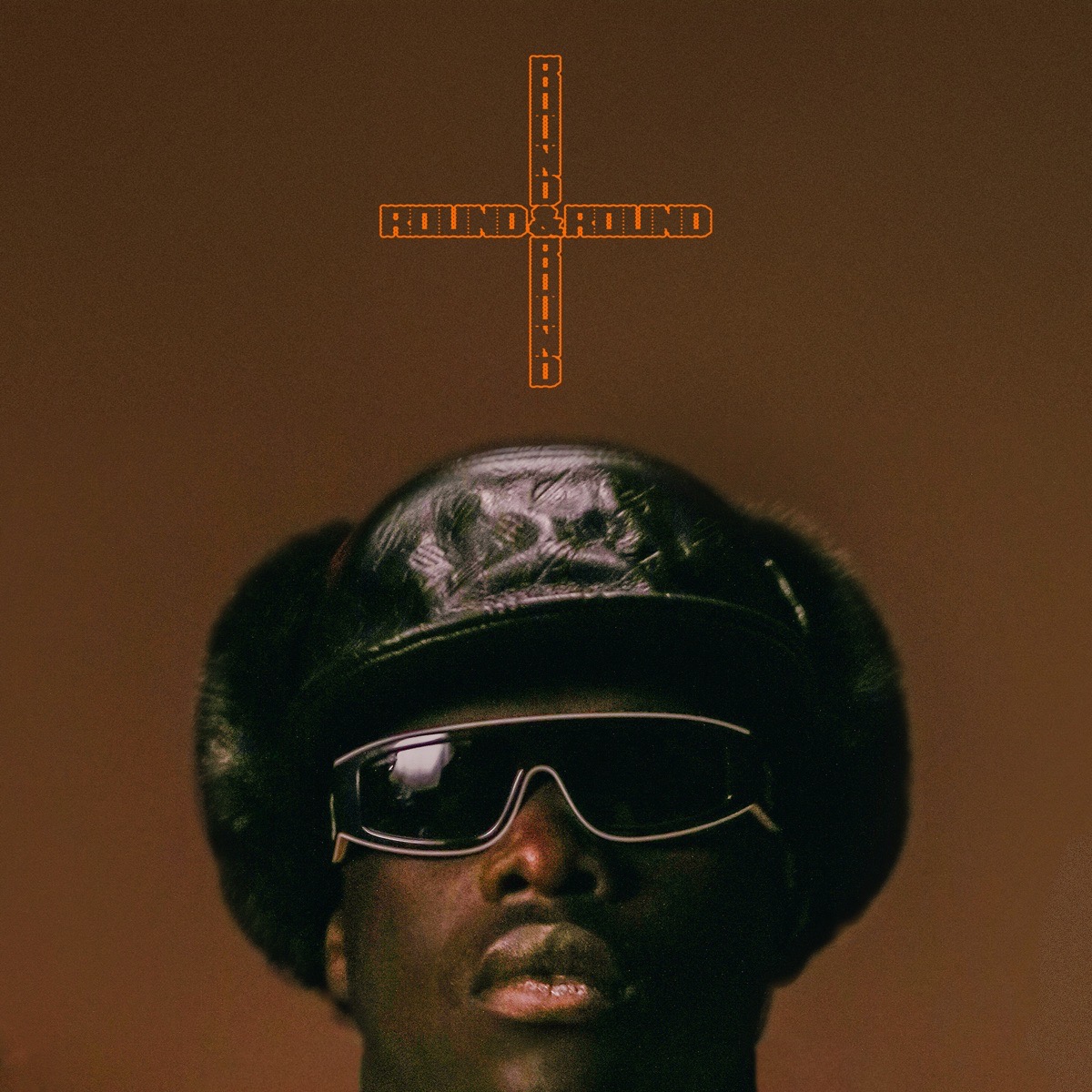
Her 2020 album Phoenix: Flames Are Dew Upon My Skin, released on Berlin's PAN Records, was the moment things started to crystallise. It was cinematic and strange, rooted in a kind of classical training that she then subverted completely. If you put it on expecting ambient music, you were wrong. If you expected experimental noise, also wrong. It kept slipping out of whatever category you tried to place it in.
Since then she has pushed further outward. She produced two tracks, Shark Brain and Dolphin, for a 2025 collaboration with Shygirl, two artists who approach sound construction with similar intensity from opposite directions. The pairing made a kind of intuitive sense: both operate with a physicality that most producers are too cautious to reach for.
She also contributed production to FKA Twigs' Eusexua album, appearing on the title track. That record was everywhere last year, and Drewchin's fingerprints on it are worth understanding. The sense of unease that underpins even its most euphoric moments is exactly her territory.
What Three Octaves Actually Means
The claim that Drewchin's voice spans three octaves is the kind of technical detail that music writing deploys without always unpacking. What it means in practice, on an Eartheater record, is that she can move between registers that would normally require different vocalists. The low end of her range sits in a territory that reads as masculine in cultural terms, a deep, chest-resonant register that carries weight differently than the mid-range does. The top of her range reaches into soprano territory. The movement between these registers within a single phrase produces a disorientation that is precisely calibrated.
This is not a party trick. It is a compositional tool. When Drewchin moves from a low murmur to a high acute passage within the same sentence, she is using register shift to carry semantic content. The low register grounds claims in the body. The high register lifts them toward something more fragile, more exposed. The transitions between them are never arbitrary. They map onto the emotional logic of the phrase.
Classical training gives you this vocabulary but does not guarantee you will use it this way. Most classically trained singers who move into experimental or pop contexts either suppress their training or display it. Drewchin integrates it, which is the harder and more interesting option.
The PAN Records Context
PAN Records operates as one of the most consistently rigorous labels in contemporary experimental music. Founded in Berlin by Bill Kouligas, the label has built its reputation on releasing music that does not have an obvious commercial application but has an obvious artistic necessity. Eartheater fits this context exactly, which is why the relationship has been so productive.
But PAN is not a ghetto. The artists it releases, Powell, Actress, Amnesia Scanner, have consistently influenced mainstream electronic music in ways that took several years to become visible. Drewchin's influence on a generation of artists working at the intersection of pop and experimentalism is already apparent. The specific quality of her voice processing, the way she layers operatic range with digital distortion, shows up in younger artists who are working in spaces adjacent to hers without always being aware of the source.
That influence without credit is the typical fate of avant-garde artists. PAN has given Drewchin a platform that reaches the people who need to hear this work. That the mainstream will eventually absorb elements of it without attribution is not a failure. It is the way influence actually moves.
Aftermath and What It Costs
Her own album Aftermath followed in 2025. It does what the title implies: takes the wreckage of everything she has built and looks at it clearly, without romanticising it. The result is some of the most unsettling, honest work she has made. Tracks like Powders move with a kind of bruised grace, as if the music itself knows what it has been through.
Aftermath is not a comfortable listen. It is not designed to be. The production choices throughout, the exposed textures, the moments where melodic structure gives way to something closer to environmental sound design, create an album that demands a specific kind of attention. You cannot have this on in the background. It will not allow it.
That insistence on full attention is itself a position. In an era where most music is designed to function as ambient accompaniment, Eartheater makes music that requires you to stop and listen. That requirement is not a barrier. It is a guarantee that what you find when you stop will be worth the interruption.
The Voice as Instrument
Drewchin's voice deserves specific attention because it is genuinely unusual in ways that classical vocal training alone cannot explain. The range is there, the control is there, but the choice of when to deploy that control and when to abandon it in favor of something rawer is entirely her own. She will move from a passage of almost formal classical phrasing into something that sounds like a field recording of a person in extreme distress, and the transition is seamless because both modes are equally intentional.
This is the quality that makes the Shygirl and FKA Twigs collaborations work. Both artists are comfortable with the tension between beautiful and unsettling, between control and release. Drewchin doesn't need to be managed into that territory. She lives there.
PAN Records has always known who to sign. Eartheater is the reason you trust that instinct. The label's reputation is built on artists who cannot be placed, and Drewchin is the clearest example of what that means in practice.