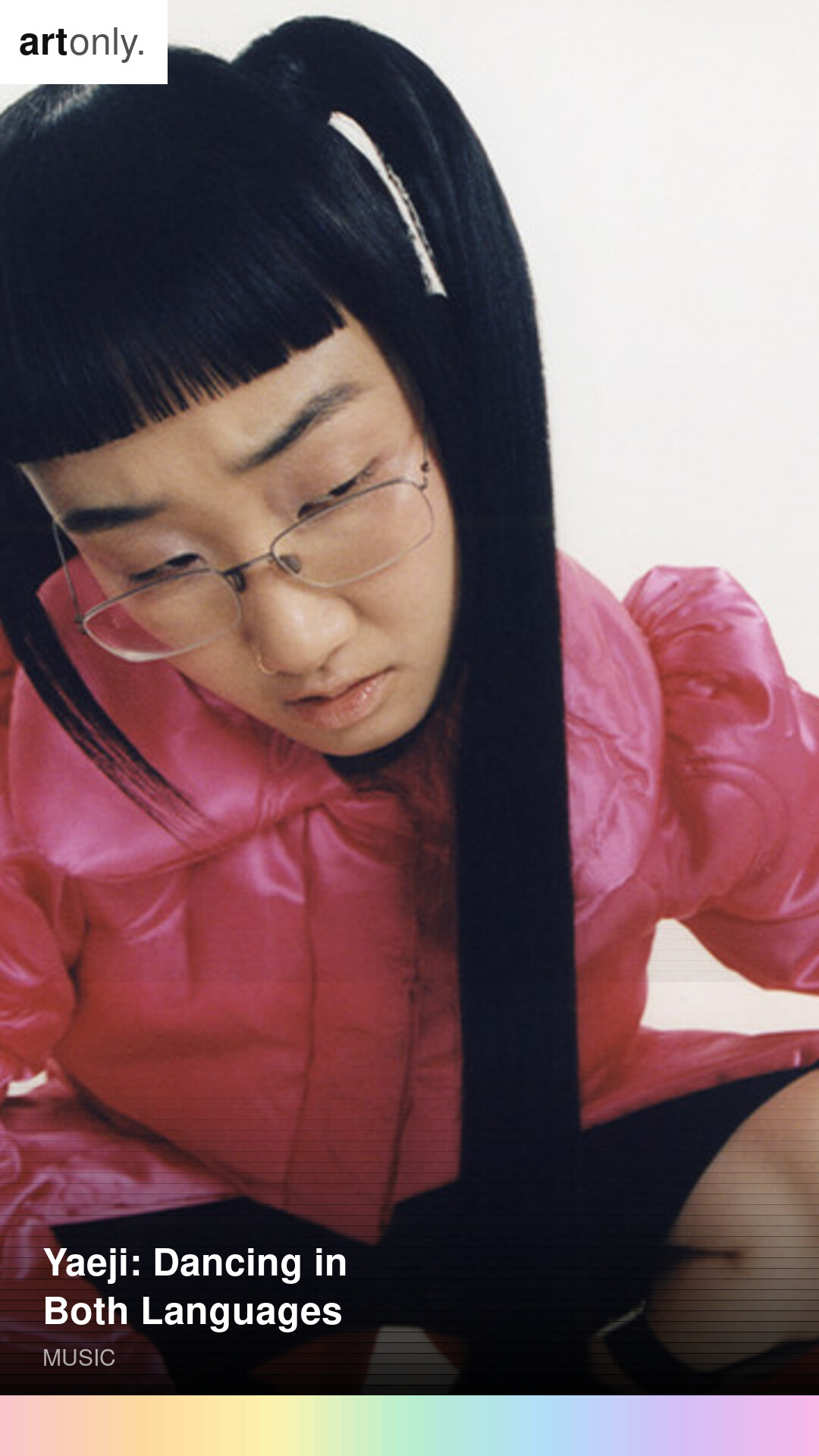
Kathy Yaeji Lee makes music that sounds exactly like what it is: house music made by someone who grew up between cultures and found a way to live inside that gap.
She was born in New York, raised in Seoul, then Atlanta, then back in New York. Her parents are Korean. She sings in both languages, often within the same song. That is not a stylistic choice. It is just how she thinks. The bilingualism is structural, not decorative, a consequence of a life that genuinely occupied multiple cultural spaces simultaneously rather than moving between them as a tourist.
The early EPs on Godmode from 2017 and 2018 are where she made her name. "Raingurl" became the track people played on repeat, a shuffling four-four groove with her voice floating over the top, speaking in a near-whisper about rain and presence. It sounds nothing like what most people associate with club music, but it absolutely works on a dancefloor. The track accumulated millions of streams without radio support, which tells you something about how it found its audience: laterally, through sharing, through the specific networks that trade in music that is genuinely unusual. The intimacy of her delivery is part of what made it travel. It sounds like a private thought made public, which is the kind of thing that people forward to each other.
What "Raingurl" Set Up
The Godmode EPs established something that her subsequent work has continued to refine: a particular relationship between the body and interiority in dance music. Most house music is extroverted. It is addressed to the room, to the collective, to the shared physical experience of people moving together. Yaeji's music is addressed to that space too, but it also speaks to the person inside the dancer. The club setting is a vehicle for something more internal, a way of being present in public while remaining private, the kind of doubled consciousness that defines life between languages and cultures.
That theme is structural. The bilingual songs are not making a point about code-switching. They are demonstrating what it feels like to carry more than one interior life simultaneously, to have different versions of yourself in permanent negotiation. A line that begins in English and resolves in Korean is not a grammatical experiment. It is a report on what it feels like to think in two languages at once, to reach for the word that fits and find it in the other tongue.
The production across the early work is deceptively simple. Yaeji is working with house templates that her audience recognises, but the choices she makes within those templates, the specific quality of the bass, the placement of silence, the grain of the vocal processing, are decisions that accumulate into something unmistakably her own. Simple-sounding music that is genuinely difficult to replicate is a specific achievement.
With A Hammer
WHAT WE DREW came out in 2020 via XL Recordings. A mixtape in form but an album in ambition. The bilingual structure is more deliberate there, some songs in Korean, some in English, some in both. "MONEY CAT" uses a playful structure that hides how technically precise the production is underneath. The record was made during isolation, which gives it a specific quality of turned-inward attention, the energy of someone working through creative questions with nobody watching.
With A Hammer (2023) was her most direct statement yet. She moved away from pure house music into something harder and more physical. The title track has a brutalist quality, drums that hit like machinery, vocals processed in real time. "Submerge FM" from that record is the most fully realised thing she has made: it moves through three different tempos without losing the emotional thread, which is a compositional achievement that gets obscured by how effortless it sounds.
The album arrived with a clear thesis about what club music can hold. The lyrics engage with frustration, societal pressure, the specific weight of being an Asian-American woman in spaces where those identities create friction. The hard beats are not incidental to that content. The ferocity of the production and the directness of the subject matter are the same argument made in two different registers simultaneously.
The Live Show and What It Demonstrates
Her live sets have evolved significantly since the early DJ sets. The 2023 tour behind With A Hammer was reviewed across the board as a step-change in scale and ambition. More theatrical, more physical, more willing to use the stage as something other than a surface for equipment. Reports from those shows describe performances that combined the intimacy of the recorded work with a presence and physicality that recordings can only gesture toward.
This is the live dimension of what makes Yaeji's project coherent: the music she makes in the studio creates conditions that the live show can then inhabit. The performance is not a reproduction of the record. It is the record's argument made physical, made collective, made available to rooms full of people who experience it in their bodies rather than through headphones.
The Trajectory
The trajectory from "Raingurl" to With A Hammer is worth tracing from beginning to end, because it describes an artist making a series of deliberate decisions about what she is willing to ask of her music. Each step increases the stakes. The Godmode EPs are an introduction. WHAT WE DREW is an expansion. With A Hammer is a declaration.
What she is declaring is that the gap between cultures is not a problem to be solved. It is a location, specific and productive, where music can be made that would not be available from any single place. The bilingual songs are not compromises between two possibilities. They are the thing itself, the music that exists because both languages are present and neither yields.
That is worth paying attention to for a long time.
The broader implication of her work is one that gets discussed less than the bilingual angle but is equally significant: what happens when someone trained in a music that was always peripheral to the dominant conversations in dance music takes that peripheral position as a starting point rather than a limitation. Yaeji has never tried to make music that sounds like it belongs in a specific critical conversation. The music belongs to itself, which is why it travels in the way it does, through communities that recognise something real in it rather than through institutional channels that validate the recognisable.