Not a Sound, a Stance
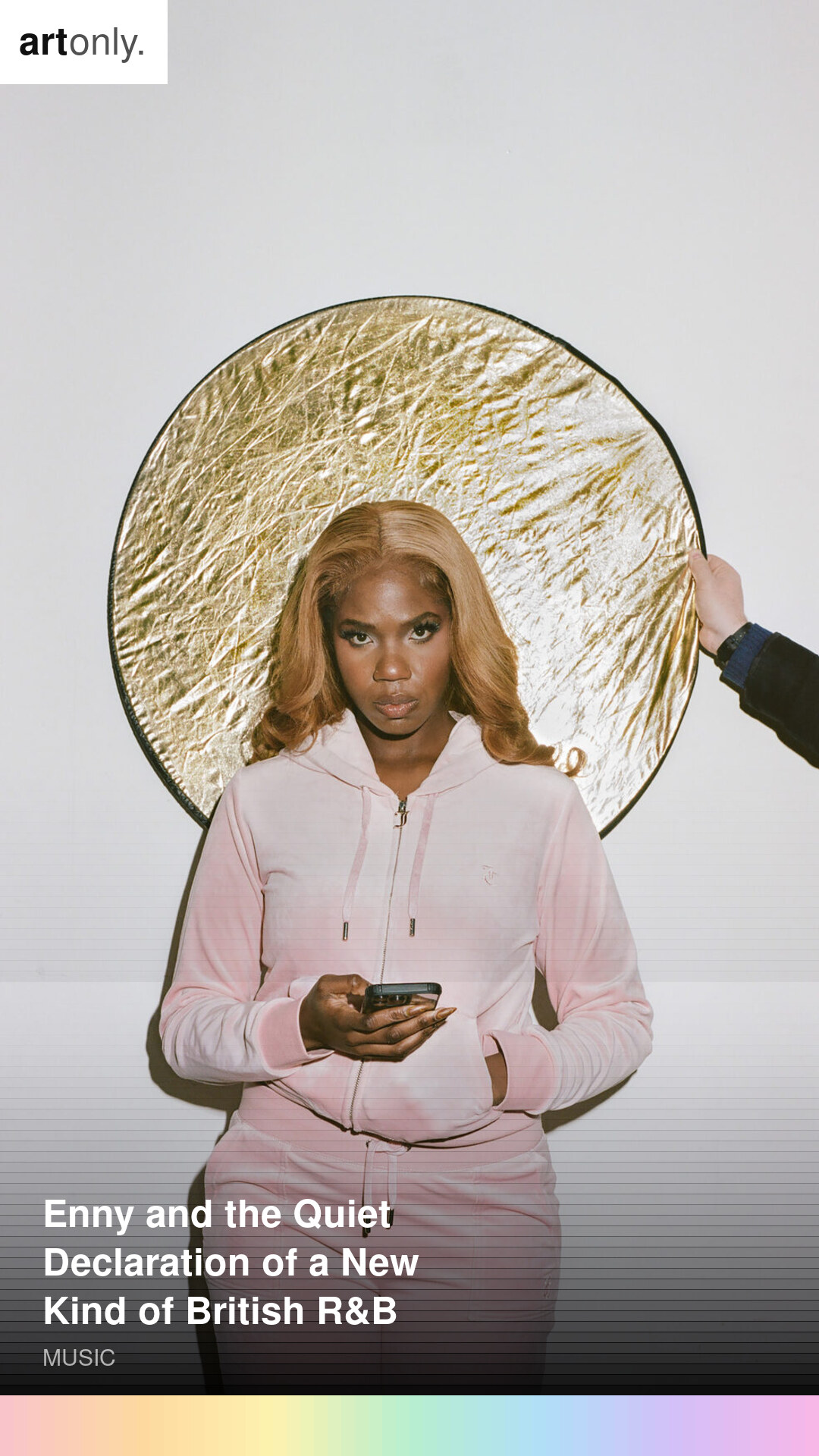
What strikes me first about Enny, the British-Nigerian singer and rapper from North London, is not the sound, which is immaculate but not unprecedented, but the stance. There's a particular quality to how she holds her artistic identity: no apology, no overexplanation, no anxious positioning of herself within existing genres. She just is. The music just is. And in a landscape where so many British artists contort themselves toward legibility, that ease is almost disarming.
First Offering, her debut EP released in 2021 and still expanding its audience through 2022, is a relatively short document but it's dense with information about who Enny is and what she's making. The title track has a spoken-word quality to the verses that draws comparisons to Little Simz, justified comparisons, actually, given that Simz appears on it. But Enny's voice is different in register and intention. She's quieter, more interior, concerned less with proclamation than with observation.
The production comes largely from Peng, and it occupies a space between South London soul, West African rhythm, and something that sounds like late-night clarity, the particular quality of thinking clearly in the small hours when everything else has gone quiet. The drums are patient. The bass lines move with deliberate weight. Nothing is rushed because nothing needs to be.
What British R&B Is Becoming
British R&B has been an interesting thing to watch over the past five or six years. The scene that produced Jorja Smith, RAYE, Mahalia, and Little Simz has expanded and deepened into something that doesn't feel derivative of American R&B in the way that earlier iterations did. It has developed its own vocabulary, its own reference points, its own way of being Black and British that doesn't require translation or apology.
Enny is part of this moment but occupies a particular position within it. She's more understated than some of her contemporaries, less interested in the kind of big vocal statement that announces arrival. The statement in her music is quieter and I think ultimately more durable for that. "Peng Black Girls", a collaboration with Amia Brave that became one of 2021's most circulated tracks through word of mouth, does something specific: it celebrates without performing celebration, affirms without the self-consciousness that affirmation sometimes carries. It sounds easy. It isn't.
There's a politics implicit in this music that's never foregrounded to the point of didacticism. Enny is making music that takes certain things for granted, the validity of her experience, the rightness of her presence, and building from there rather than arguing for them. That's a different kind of political act, more quiet and possibly more lasting.
Production as Argument
The production on First Offering deserves more attention than it typically receives. Peng builds arrangements that are spacious in a specific way: the space is not emptiness but presence, the presence of things that could be added and aren't, of choices made to prioritise the voice and the emotional core of each track above the accumulation of sonic detail.
This restraint is itself a position. So much contemporary R&B production is built on density, on the principle that more elements signal more effort and more value. Peng's work with Enny inverts this. The minimalism is where the confidence lives. Each element in these arrangements earned its place by proving it was necessary. Nothing is there for texture or atmosphere alone.
The bass on "Peng Black Girls" is the clearest example. It sits low in the mix and moves with a steadiness that grounds the track without drawing attention to itself. It is the reason the track feels as sure of itself as it does. Remove it and the lightness above it becomes precarious. With it, the track carries its own weight without apparent effort.
The Little Simz Comparison and Its Limits
The appearance of Little Simz on the First Offering title track is the detail that most critical reception reached for first, and it makes sense as a shorthand: both artists are North London women making music that is intelligent, restrained, and rooted in a specific community. But using Simz as the frame for Enny misses what is most distinctive about Enny's approach.
Simz operates in a register of assertion. Her music announces things. It stakes claims. The emotional register is often declarative, even in its most intimate moments. Enny's register is observational. She notices things. She places them in the light carefully and leaves you to draw your conclusions. This is a fundamentally different relationship between artist and audience. Simz is pulling you toward a position. Enny is opening a space and inviting you into it.
Both approaches are valid. They produce different experiences. Enny's approach is harder to execute at the level she achieves it on First Offering because observation without assertion requires the listener to do more of the work. The EP trusts that its audience is capable of doing that work.
The London She's Making Audible
London appears in Enny's music not as a backdrop or a brand but as a texture, something felt in the rhythm of the speech, in the specificity of the social observations, in the way the music moves between languages and references without announcing the transitions. This is London as it actually is: porous, layered, defined by its multiplicities rather than any single cultural identity.
I find myself thinking about the geography of this music in ways I don't always think about geography, about which parts of the city produce which sounds, about what North London sounds like versus South London, about the sonic imprint of the Nigerian diaspora on British popular music more broadly. Enny is a node in all of these conversations.
First Offering feels, even now, like a beginning, a document that establishes terms rather than exhausts possibilities. The restraint in it is a kind of promise. There's more here than what's been shown.
I don't keep coming back to this because it's impressive. I keep coming back because it feels true.
The promise in First Offering is of an artist who knows what she is and where she's going, who doesn't need to perform arrival because the confidence of the music makes the arrival obvious. The next record will tell us more, will show what Enny does with the space that this careful, assured beginning opened.
I'll be paying attention. The quiet declaration has been made. The conversation that follows is going to be worth listening to.