The Fragment as Form
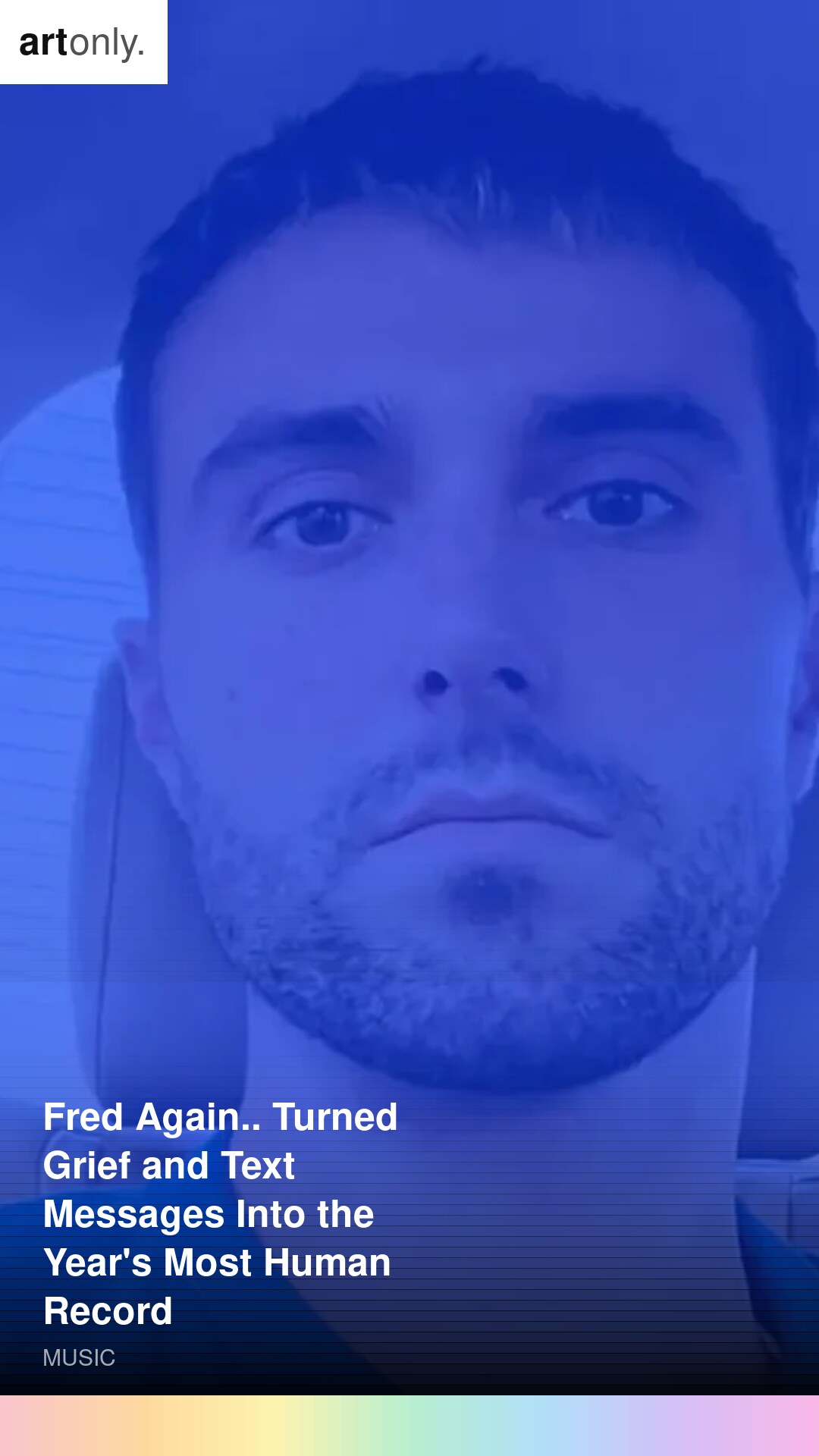
Actual Life (April 14, December 17 2020), the full title, is a record built from fragments: voice memos, text messages, short video clips, snippets of conversation. Fred Gibson (Fred again..) gathered these pieces of other people's lives and built music around them, which is a description that could sound cold, digital harvesting, the aestheticisation of other people's experience, and instead produces something that feels more like devotion. More like witness.
The textures of the record are identifiably contemporary: four-to-the-floor rhythms under vocal samples, the production language of UK dance music inflected with something warmer and more personal than most electronic music allows itself to be. But the emotional content is something different from the context. This is music made during the depths of 2020, during lockdown, during grief, during the specific horror of that specific period, and it carries the weight of that time without performing trauma.
What saves it from sentimentality is the specificity. The people in the samples are real people in real moments, Hannah crying in a birthday message, Bermon speaking about his grandmother's death, various voices navigating the particular emotional landscape of that year. The specificity is what makes universality possible. The particular person's feeling, held exactly right, becomes the feeling anyone can recognize.
The Production Architecture
Gibson's background as a collaborator and co-writer with Brian Eno is audible in how Actual Life is built. Eno taught him something about the relationship between system and accident, about constructing frameworks that allow the unexpected to function as composition rather than noise. The Actual Life method, taking someone's voice memo and making it the emotional center of a track, is a system of that kind. It does not control what the voice will say. It creates conditions in which whatever the voice says becomes music.
The four-to-the-floor production underneath these vocal samples is doing specific emotional work. Dance music rhythms carry a collective memory of bodies in rooms, of the shared physical experience of the dance floor. When Gibson puts Hannah's birthday message over a kick drum pattern, he is invoking both the isolation of the individual moment and the communal history of the form. The track holds both things simultaneously. That double register is what gives Actual Life its particular emotional effect: you feel the loneliness of the recorded moments and the presence of an imagined community around them at the same time.
What Dance Music Was For
There's an argument, one I find compelling, that dance music has always been fundamentally about collective grief as much as collective joy. The history of house and techno is a history of communities processing loss, of people who had been excluded from mainstream social space creating their own, of music as survival technology.
Fred again..'s work operates in this tradition, even if its surface aesthetic is different. The dance floor, in this music, is not a place of escape but a place of confrontation with feeling, a space where the emotion you've been carrying can move through you in the presence of others. That's not a minor thing. That might be the most important thing.
The second and third Actual Life records extended and deepened the project, but the first has a quality of discovery that later work can't replicate, the sense of a mode being invented in real time, of formal problems being solved by necessity rather than intention.
The track 'Dermot' is the one that consistently undoes me, built around a voice note from someone who sounds like they've just realized something important, with a production underneath that creates a kind of emotional amplification, a making-more-present of whatever the voice is carrying.
The Intimacy Question
I've been thinking about what it means to share someone else's private moment in public, to take a voice note, a text message, a fragment of intimate communication, and transform it into music that potentially hundreds of thousands of people will hear. This is an ethical question and Fred again.. has addressed it in interviews, describing the consent process, the ongoing relationships with the people in his music.
But the ethical question doesn't resolve the formal one: why does this intimacy work? Why do these fragments of other people's lives generate the response they do in listeners who don't know these people?
The answer, I think, is that intimacy is recognizable across contexts. The specific texture of a person speaking candidly, unguarded, in a voice memo, that texture is instantly legible as real, and the recognition of realness produces a connection that more polished emotional expression sometimes can't.
This record is full of real things. It's been a long time since I heard that many of them in one place.
The 2020 Document
Actual Life is also a document of a specific period that is easy to forget was as psychologically strange as it was. The dates in the title are not incidental, they mark the span of time the record covers, April to December 2020, the first year of the pandemic, the months in which ordinary social life contracted to the dimensions of a single room. The voice memos and text messages Gibson gathered were produced in that context, by people who were isolating, grieving, trying to maintain connection across physical separation.
The record does not explain this context or comment on it. It simply carries it, in the texture of the voices, in the quality of the emotional moments that were captured. Listening to it now, after that period has ended, produces a kind of double exposure: you hear the music and you hear the time it came from simultaneously, layered on top of each other. That is a specific kind of historical document, made not with intention but with presence.
Actual Life marked the beginning of a project that has continued and deepened across subsequent volumes. The first record has a quality that the sequels can't replicate, the discovery of a form, the surprise of finding out this thing was possible. But even knowing all three records now, knowing where the project went, the first one retains its specific weight.
The real things. The grief and the text messages and the voice memos and the love. Turned into music that gives them back to you in a form you can carry. That's the exchange. That's what he made.