The Unpainted People
For most of the history of Western painting, the people in paintings were particular kinds of people: wealthy people, powerful people, mythological figures, religious subjects. The expansion of portraiture to include working-class subjects, to include people of colour, to include the people the tradition had historically excluded, is one of the ongoing projects of the art world. Henry Taylor is one of the artists doing this most urgently and most convincingly.
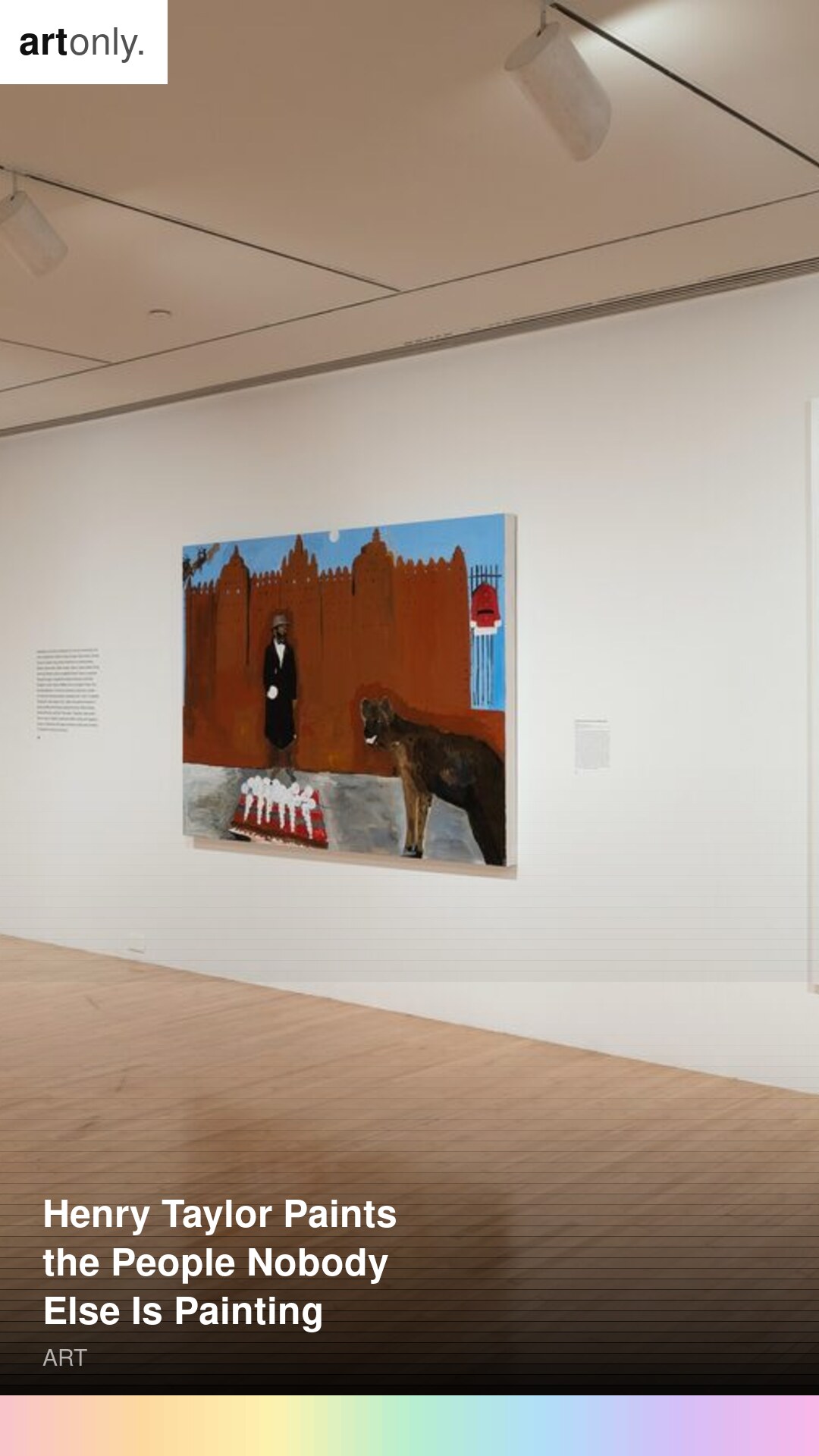
His retrospective at MOCA Los Angeles in 2023 brought together several decades of paintings, portraits, scenes from daily life, depictions of family and community and sports and street, in a survey that was one of the more important exhibitions of the year. Standing in the rooms, moving through the work, I had the feeling that happens sometimes in a good retrospective of seeing an entire world become visible.
Taylor was born in Oxnard, California, worked as a psychiatric technician at Camarillo State Hospital for over a decade, and began painting seriously in his forties. He came to art late by conventional career standards and the lateness is part of what his painting carries: the accumulation of a life lived among people, the deep familiarity with how people hold their bodies and occupy space, the attention to the details of lived experience that comes from having paid that attention for a long time before having a studio to paint in.
The Style and What It Means
Taylor's paintings are loose and fast-seeming, the paint applied with an immediacy that makes the canvases feel still warm, still in the process of being made. This looseness is sometimes described as naive and the description is wrong. It's controlled in ways that require very close looking to understand: the decisions about what to leave incomplete, about where to push the detail and where to let the ground show through, are careful decisions that produce a specific effect.
The effect is of presence. The people in these paintings feel present in a way that more technically finished portraiture sometimes doesn't achieve. The looseness leaves space for the subject to exist in the painting rather than being contained by it. They breathe. The technique is in service of this breathing quality, this alive quality.
The paintings of sports, basketball games, baseball, boxing, are among the most formally interesting in the survey. The figures in motion, the crowd, the specific architectures of arenas and fields: Taylor handles these with a compositional confidence that uses the American sporting tradition as material for paintings that are also about collective experience, about community, about the specific joy of watching other bodies move well.
The Camarillo Years
The decade Taylor spent as a psychiatric technician at Camarillo State Hospital is not incidental to his painting. He developed his practice of looking at people in an environment that required sustained, sympathetic attention to individuals whose lives were largely invisible to the culture at large. The patients, the staff, the institutional rhythms of a state psychiatric facility: these formed his education in human presence before he had a formal art education.
This background distinguishes Taylor from painters who arrive at working-class subjects through political conviction or aesthetic program. He does not paint these people because they represent something. He paints them because he knows them. The difference in the paintings is palpable. There is no distance in his looking. There is no ethnographic remove. The people in his paintings are simply people, specific and present, worthy of the same quality of attention that the tradition has historically reserved for subjects with more cultural power.
Scale and Ambition
Taylor works at a range of scales, from intimate portraits to large multi-figure compositions. The large paintings, some of them covering entire walls of the MOCA galleries, are his most ambitious formal statements. "B Side" from 2021, which depicts a group of Black men outside a building, is organized with a compositional logic that draws on the history of American scene painting while completely rejecting that tradition's relationship to its subjects. These are not men being observed. They are men existing in their own social space, claiming the canvas rather than occupying it at the painter's invitation.
The smaller works operate differently. A portrait of a family member, a friend, someone from the neighborhood, carries an intimacy that the large canvases cannot replicate. Both scales are necessary to the full account of what Taylor is doing. The retrospective at MOCA was important partly because it showed both registers together, let you move between the intimate and the monumental and understand them as parts of a single ongoing project.
Why This Matters Now
The question of whose lives count as worthy of painting is a question that has become more visible in recent years, as the art market and the institutions have begun reckoning with the historical exclusions of the Western tradition. Taylor's retrospective was part of this reckoning, part of a belated recognition of work that had been building for decades.
But the paintings themselves go beyond reckoning. They're not arguments for representation. They're just paintings, paintings that see particular people clearly and render that seeing with skill and love and no apology.
Nobody else is painting these people with quite this quality of attention. That's what I mean. That's what the paintings do.
The MOCA retrospective was the kind of exhibition that ends and leaves a gap. You go back to your daily visual experience and it seems slightly impoverished by comparison, not because the paintings are more beautiful than life, but because they demonstrate a quality of looking at life that you want to maintain and can't quite sustain without the paintings to remind you.
That's a rare thing for a retrospective to accomplish. It's a measure of Taylor's achievement that the looking he modeled keeps affecting how you look after the exhibition is over.
Taylor's emergence as a major figure in the art market has happened alongside the broader reckoning with representation that the field has been undertaking since 2020. His prices have risen sharply at auction. Institutions that did not collect him aggressively a decade ago are now competing for his work. Whether this belated recognition reflects genuine understanding of what the paintings are doing or is simply the market correcting a prior exclusion is an uncomfortable question. The paintings are indifferent to the answer. They do what they do regardless of what they cost.