The Distance Between Albums
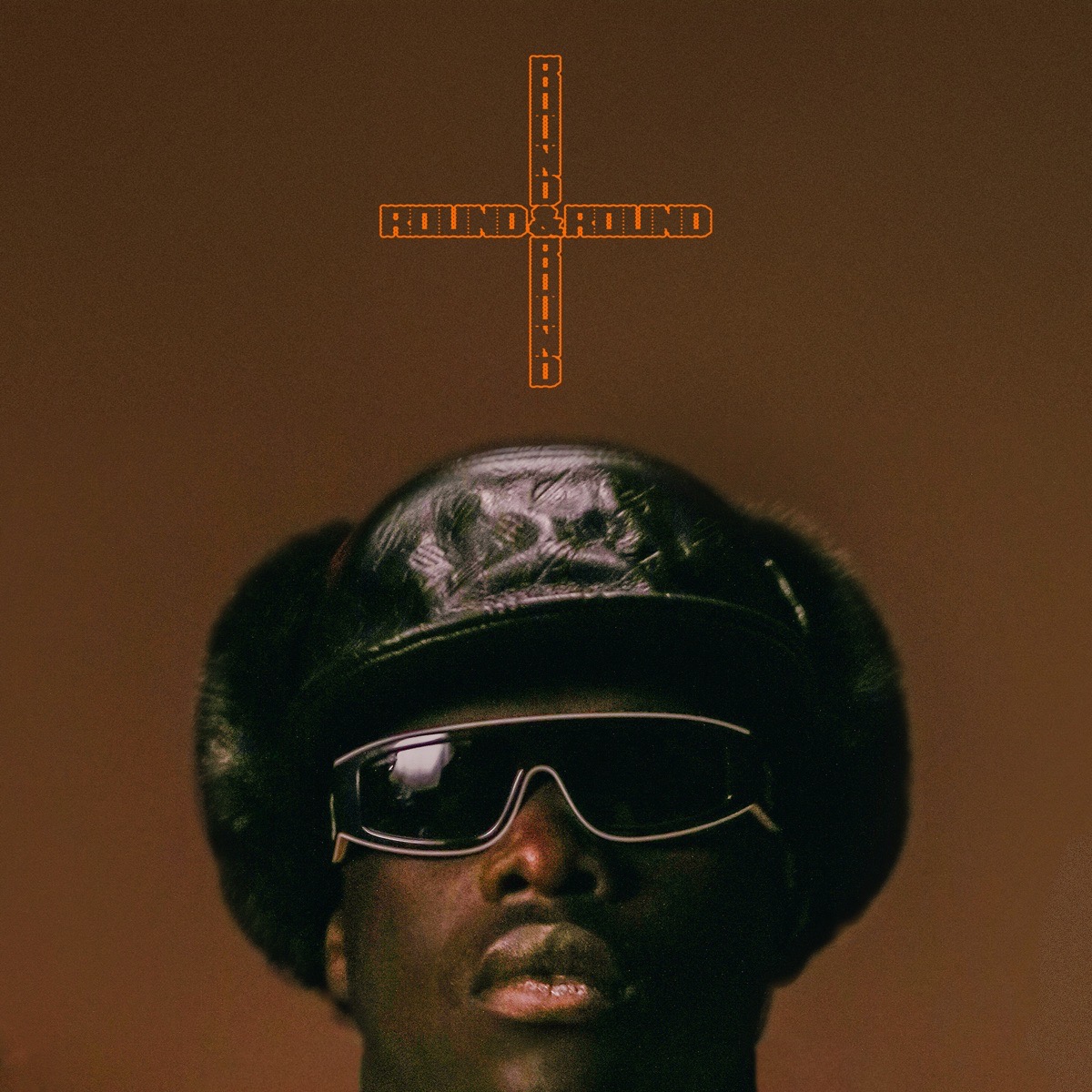
Playing Robots into Heaven arrived when James Blake had been quiet for a few years, and the gap felt meaningful in retrospect, like he'd been working through something that required the silence before it could become sound. This is his fifth album and the one that sounds most purely electronic, most willing to let go of the voice-as-anchor that his earlier work depended on. The voice is still here, still extraordinary, but it has been processed and contextualised differently, embedded in the electronic architecture rather than floating above it.
Blake has always occupied an unusual position, too pop for the electronic purists, too electronic for the mainstream pop audience, carrying critical acclaim alongside a certain underestimation that I've never fully understood. His debut remains a genuine achievement, one of those records that sounds like a formal statement, that establishes a vocabulary of production that others subsequently borrowed. The records after it were less formally radical but often more emotionally resonant. Playing Robots feels like a synthesis, the formal ambition of the debut with the emotional depth that came later.
The title is an image that makes a kind of immediate sense once you have the music in your head. There's something playful here that earlier Blake records didn't have, a quality of genuine enjoyment, of making music for the pleasure of the making rather than under the weight of the statement. That freedom is audible in the way the tracks move and develop.
What He's Figured Out
I'm being deliberately opaque with the headline because the thing he seems to have figured out is easier to feel than to describe. It has something to do with the relationship between technology and feeling, with how much mediation the emotion can survive, how processed a voice can be before the person inside it disappears. Blake's answer, worked out over a decade of records, is that the mediation isn't opposition to feeling but a different kind of feeling. The processed voice doesn't hide the human; it shows a different aspect of it.
This is not a new idea in electronic music. It's what a certain strand of post-dubstep and UK bass music was working on in the early 2010s and Blake was part of that project. But Playing Robots takes it somewhere more extreme and more confident. Some of the vocal processing here is so thorough that Blake's voice becomes texture rather than voice in the conventional sense, and the emotional impact is no less, is, in some moments, more.
'Loading' is the track. There's a build in it that I've listened to dozens of times and still feel in my nervous system. The synth work is meticulously designed but doesn't sound designed, it sounds alive in the way that the best electronic music always manages to sound alive, which is a mystery I'm happy to not solve.
The Question of Influence
Blake came up at the same moment as a cohort of producers, many of them UK-based, who were applying post-production techniques to the problem of emotional directness in ways that hadn't been tried before. Mount Kimbie, Burial, Sbtrkt, James Blake: all of them working in overlapping territory, all of them arriving at different conclusions. What distinguished Blake from the beginning was the insistence on the song as a unit. The beats and textures were never the point in isolation. They were in service of something that had verses and choruses and emotional arcs.
Playing Robots into Heaven takes that commitment to the song and applies it to material that is more formally abstract than anything in his catalog. The songs are still songs. They have shapes, they develop, they resolve or deliberately refuse to resolve. But the formal materials are more radical, the electronic architecture more uncompromising, the space between sounds more fully inhabited.
This is the record of someone who has fully internalized his influences and moved past them. The post-dubstep tradition is audible in the production, but it's not the frame. Blake has built his own frame.
Against the Consensus
I think Playing Robots into Heaven is underrated. Not criminally, it received good reviews, but underrated relative to what it actually does, which is produce a fully realized artistic vision that advances something meaningful about what electronic music is capable of emotionally.
There's a tendency in music criticism to value the first time something is done over subsequent iterations, to reward novelty over depth. Blake's career challenges this because his work keeps deepening rather than repeating, the same set of questions being explored at increasing levels of complexity and confidence.
The critical consensus settled on his debut as the essential record, and it is an essential record. But treating it as the peak closes off the argument too early. Playing Robots represents a Blake who has done the work, absorbed the responses, developed his craft over years of live performance and studio experimentation, and arrived at a formal confidence his younger self didn't have. That confidence produces music with a different quality than the debut's uncertainty produced. Neither is more valuable in the abstract. But the critical record should register both.
The Collaborator Question
Blake has worked extensively as a producer and songwriter for other artists over the years, with credits on records by Beyoncé, Jay-Z, Kendrick Lamar, and others. This work is sometimes used to explain his mainstream adjacency, to position him as someone who operates fluently in both the avant-garde and commercial pop worlds. That framing is accurate but undersells the specific quality he brings to his own records. When he produces for other artists, he is serving their vision. When he makes his own records, he is asking different questions, ones that the requirements of commercial collaboration don't allow.
Playing Robots into Heaven is fully in the second mode. Nothing here was made with anyone else's audience in mind. The formal decisions are Blake's decisions, serving Blake's questions. The result is music that could only have been made by someone with his specific history: the decade of production credits, the years of live performance, the accumulated understanding of what electronic music can and cannot do when pushed to its limits.
The Long Return
Playing Robots into Heaven is not the record of a young artist figuring things out. It's the record of a mature artist who has figured out the specific thing he's been working toward for a decade and is delivering it with complete confidence. That delivery, unhurried, undefended, exactly what it is, is what I find most impressive.
I don't fully know what he figured out. It sounds important. It sounds like something that will become clearer over time, the way that certain records become clearer the more distance you have from them. I'll be returning to this one.