Every generation there are a few artists who find the seam between two forms that everyone assumed were incompatible and pull something through it that neither form could contain alone. Kassa Overall is doing this with jazz and hip-hop, and the phrase "doing this" doesn't quite capture the specificity of what's happening, which is why I need to try harder to describe it than that summary allows.
The integration is not additive. It's not jazz plus hip-hop, the way fusion music is sometimes jazz plus rock, two things coexisting in the same space without genuinely transforming each other. What Overall does is find the common root, the improvisation, the conversation between musicians in real time, the relationship between individual expression and collective structure, and grow both forms from that root simultaneously. The result doesn't sound like either jazz or hip-hop exactly; it sounds like the place where they come from.
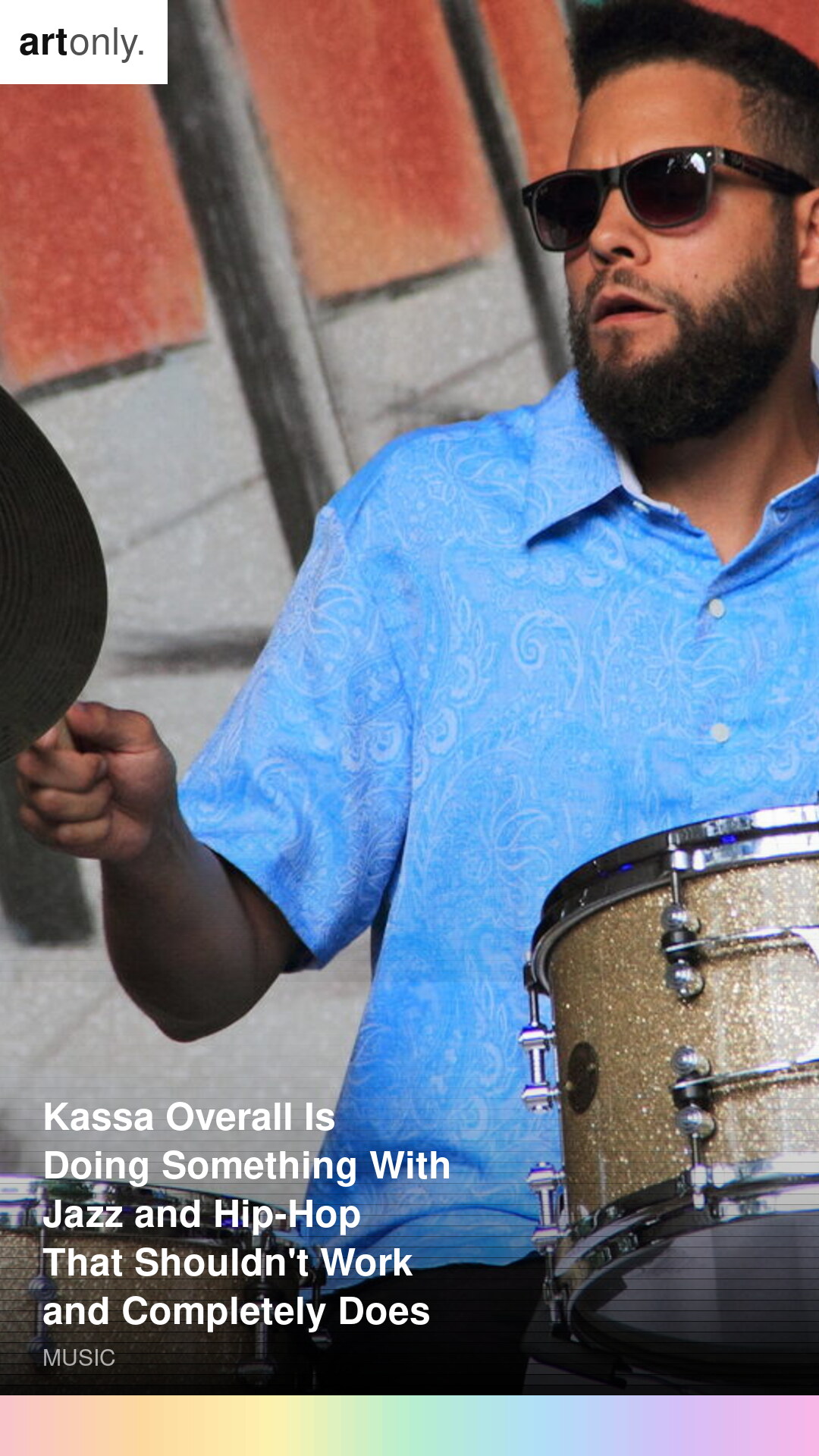
He's a drummer first, which matters. The rhythmic intelligence in his music comes from genuine embodied knowledge of how rhythm works at the source level, not from production choices made by someone who hears rhythm from the outside. His drumming is absurdly good, technically fluent, emotionally expressive, capable of holding complex polyrhythmic structures while also leaving space for the music to breathe. And his rapping has the quality of someone who understands rhythm from the inside, who approaches flow with the drummer's understanding of where the pockets are.
The Improvisation as Structure
The thing that jazz and hip-hop genuinely share is the improvisation, the space within form for individual expression that responds to what's happening in real time. In jazz, this is explicit: the solo, the conversation between instruments, the variation on the theme. In hip-hop, it's more hidden but equally present: the flow adjusting to the beat, the response to the producer's choices, the whole tradition of freestyle. Overall makes this shared element visible by treating both forms with equal weight and letting them inform each other.
His live band, the specific musicians he plays with, the contexts he creates for improvisation, is part of the work. Jazz has always understood that the ensemble is a composition. The people you choose to play with, the space you give them, the way you respond to what they bring, these are creative decisions as significant as any note you play. Overall clearly understands this. His records have a live quality that preserves the sense of musicians in real-time conversation.
The 2023 album ANIMALS features Theo Croker, Melanie Charles, and Kassa himself navigating that conversation across an LP that holds together as a unified statement rather than a collection of showpieces. Each of those players is capable of their own solo record. The discipline it takes to keep that much talent in service of a shared arc is itself a compositional achievement.
The Album as Argument
Go Get Ice Cream and Listen to Jazz, his 2019 Bandcamp release that became a cult object before it became widely distributed, established the core proposition. The title is a joke and a manifesto at once. Ice cream is accessible. Jazz has been made to feel inaccessible. Put them together and the accessibility argument is made without any laboring over it. You just hear the music and it sounds good, which is the only argument that actually works.
I SEE THE FUTURE, his 2022 Nonesuch debut, extended the palette considerably. The production became more detailed, the sampling more adventurous, the collaboration list longer. Dornik, Lil B, Shabaka Hutchings, Monroe Wisdom. The range of those names tells you something about what Overall is trying to do: not to occupy a niche but to move between worlds without losing coherence.
Coherence is the hard part. Most artists who try to work between jazz and hip-hop end up with something that sounds like a compromise, as if the two forms are interests that had to be negotiated rather than impulses that are genuinely integrated. Overall never sounds like he's negotiating. He sounds like someone for whom these are simply both native languages, spoken with equal fluency, combined because that's how he actually thinks.
On Forms That Shouldn't Work
My instinctive scepticism about jazz-hip-hop integration has a history behind it. There have been plenty of attempts that produced interesting failures, things that honoured the surface features of both forms while missing the animating spirits of each. The failures are instructive. They tend to happen when the integration is conceptual rather than felt, when the artist understands intellectually why these things should connect but hasn't lived inside both forms deeply enough to know how they actually connect.
Kassa Overall has lived inside both. The jazz background is real. The hip-hop knowledge is genuine. The integration feels inevitable because both things are native to him, and when you work in your native language the sentences come out right.
The live dimension is where the final argument gets made. In performance, the integration of jazz and hip-hop that seems remarkable on record becomes inevitable. You watch him at the kit, rapping while drumming, navigating the conversation with his collaborators in real time, and the two things don't seem like different disciplines that he's bringing together. They seem like the same discipline expressed through different but related sets of tools. That realisation, that the apparent distance between the forms is partly constructed, partly about how we've been taught to listen, is one of the more useful things music can teach you. Kassa Overall teaches it by demonstration. The lesson sticks.
What the Drums Know
There's a specific quality to music made by drummers who also compose and perform in other roles. Max Roach understood it. Tony Williams understood it. The drummer hears architecture that other musicians don't hear as immediately, because the drummer's job is to hold the structure together from inside it. When that structural awareness moves from the kit to the arrangement to the vocal, you get something that feels unusually solid even when it's doing unusual things.
Overall's rapping is not what you'd hear if a jazz drummer decided to try rap as a side project. It is what you'd hear if a musician who has internalized rhythm at its most fundamental level decided to use words as one more instrument in the arrangement. The syllables land where they land because he knows where they need to land. The flow serves the pocket the same way a snare lands serves the groove.
I keep listening. Every listen I find something new in the rhythm, something new in the flow, something new in the conversation between what the kit is doing and what the voice is doing. Music that keeps producing new things to hear is music that was made with more in it than any single listen can receive. Overall made more. I'll be listening for a while.