Dance Music With Memory
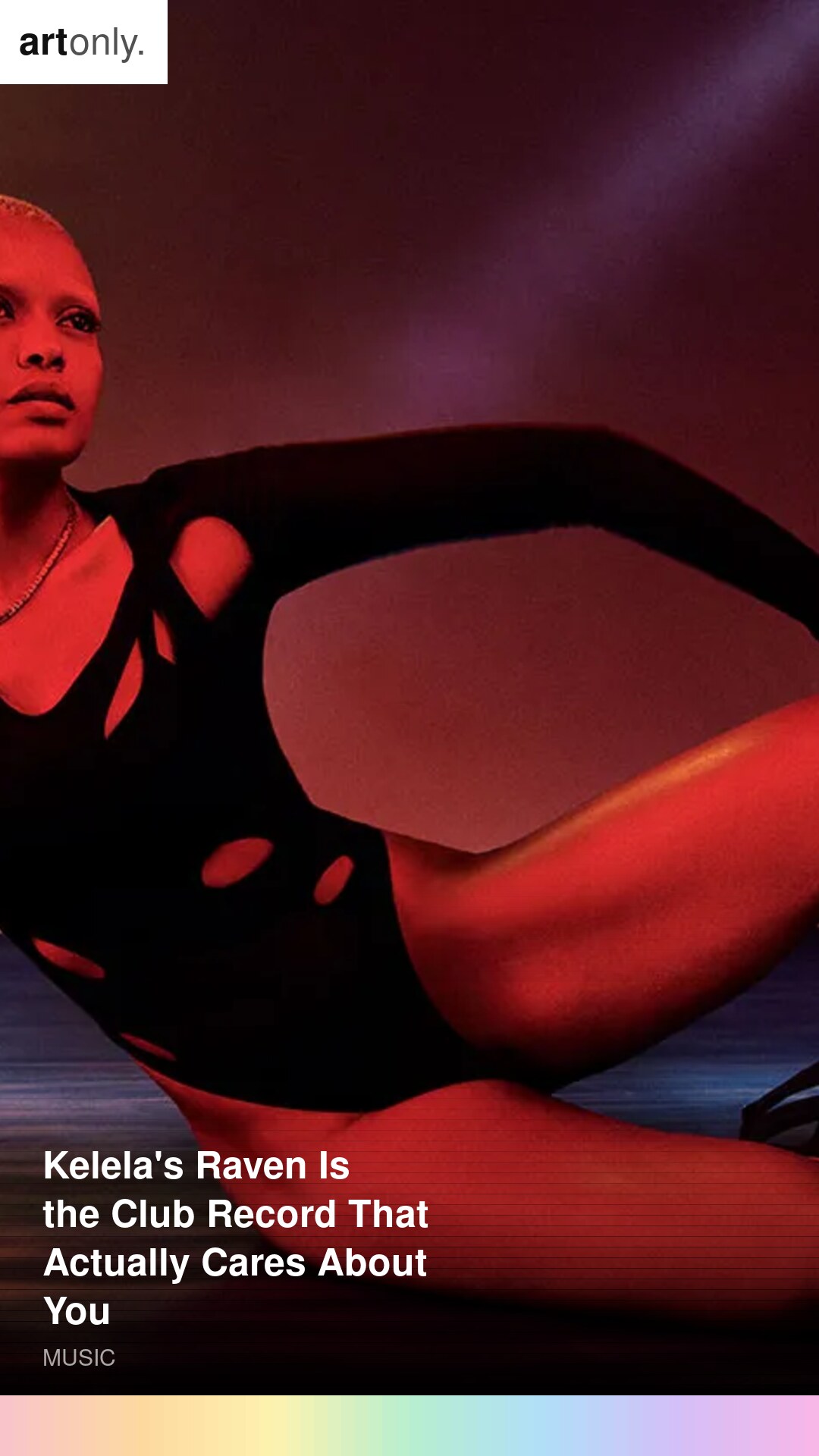
Six years between Take Me Apart and Raven. Six years is long enough to constitute a second era, long enough for everything to have changed, the culture, the musical landscape, the particular climate of dread and collective grief that Kelela has been absorbing and translating into sound. Raven arrived in early 2023 feeling both current and timeless, which is a quality that most dance music explicitly avoids.
Kelela Mizanekristos is Ethiopian-American, based between Los Angeles and London, and has been one of the more singular voices in R&B and electronic music since the early 2010s. Her music has always operated at the intersection of the personal and the physical, it's emotionally deep in ways that club music usually sacrifices for propulsion, and physically alive in ways that confessional R&B often sacrifices for sentiment. Raven finds the balance and then holds it across an entire album, which is a considerable achievement.
The production on Raven involved an international collective of collaborators, Kaytranada, Bambii, Leilah Weinraub among others, and the record moves through different registers of electronic music: UK club, Chicago footwork, industrial, ambient, and various points between. But the emotional through-line holds throughout. This is a record about the body and its needs, about vulnerability in physical space, about what it means to be a Black woman in a world that has specific designs on your body and your energy.
What Caring Sounds Like
I said the record cares about you and I mean it structurally, not metaphorically. The dance music tradition that Raven draws from, the house and techno lineage that emerged from Black queer communities in Chicago and New York and Detroit, was always fundamentally about care. About creating space for people who didn't have space elsewhere. About the politics of dancing as an act of survival and connection.
Most contemporary dance music has lost that dimension. The commercial appropriation is so complete that the music now mostly serves the economy of the festival, the algorithm, the playlist. Raven doesn't. It sounds like it was made for specific bodies in specific rooms by someone who understands what those rooms are for.
The sound design is extraordinary, there are textures here that I find genuinely alien in the best sense, things I can't identify with certainty, arrangements that create spaces you want to inhabit. "Washed Away" is the track I keep returning to: a slow-burning, bass-heavy piece that moves between melody and texture in ways that feel like emotional cartography, mapping something that can be felt but not quite named.
The Collaborators and What They Bring
The choice of collaborators on Raven is itself a statement. Kaytranada has long operated at the intersection of house, R&B, and hip-hop, bringing a looseness and body-awareness to dance production that most producers in his generation don't have. His contribution is not about adding a famous name. It is about finding someone who understands rhythm as a physical proposition.
Bambii, the Toronto-based DJ and producer, brings a specific relationship to the dancefloor that is inseparable from the politics of the spaces she has built and occupied. Her presence on the record signals something about the kind of room Raven was designed for: one where the political context of dancing is understood and not set aside.
Leilah Weinraub, whose documentary Shakedown documented the underground Black lesbian strip club scene in Los Angeles, directed visuals for the album era and brought an understanding of Black women's physical and erotic autonomy that runs through the record's whole conceptual framework. These collaborations are not decorative. They are the record's worldview made concrete in personnel.
The Six-Year Question
There were interviews where Kelela talked about what the time away cost and what it was for, about healing, about working through things, about needing to reconstitute something before she could make music from it again. You can hear it in the record, not in the sense that it sounds like therapy, but in the sense that it sounds like it's coming from somewhere that has been arrived at, not just described.
The difference between music that depicts feeling and music that comes from it is usually something you feel in your body before you understand it in your mind. Raven has that quality throughout. The emotion is structural rather than ornamental. It's built into the architecture of the sound rather than placed on top of it.
Six years is also long enough to watch the culture shift around you and decide what you think about those shifts. R&B had fragmented considerably in the years between Take Me Apart and Raven. The streaming economy had pulled the genre toward shorter, more immediately accessible sounds. Kelela went the opposite direction. Raven is an album in the full sense, a sustained argument across a body of material, at a moment when that format was under commercial pressure to shrink.
Track by Track Logic
Raven does not make its best case through any single track. It makes it through accumulation and pacing. "Enough for Love" is the opening statement: warm, bass-driven, a voice that sounds like it has been through water and come out clarified. "Contact" is where the footwork influence lands most decisively, a broken rhythm that never feels unstable because the emotional center holds it. "Happy Ending" is the hardest thing on the record, industrial in texture, demanding in its emotional register.
The sequencing shows an attention to how a listening session moves through time. There are moments of intensity followed by release, rooms of sound followed by corridors. Arriving at the end of Raven feels like having been somewhere. That is not common in contemporary dance music. It is central to what the album asks of you.
The Politics of the Dancefloor
The club, at its best, is one of the places where you're allowed to not have it together. Where physical presence and emotional need can coexist without explanation. Raven understands this and makes music for that understanding.
The dance floor that Raven imagines and creates for is a specific place: one where Black women's bodies are celebrated rather than surveilled, where the music serves the dancers rather than the other way around, where the political context of the club is understood and held. This place exists and it needs music like this.
Six years between albums. The wait was the work of becoming someone who could make this record. The record is evidence that the becoming happened. I'll wait as long as necessary for what comes next.