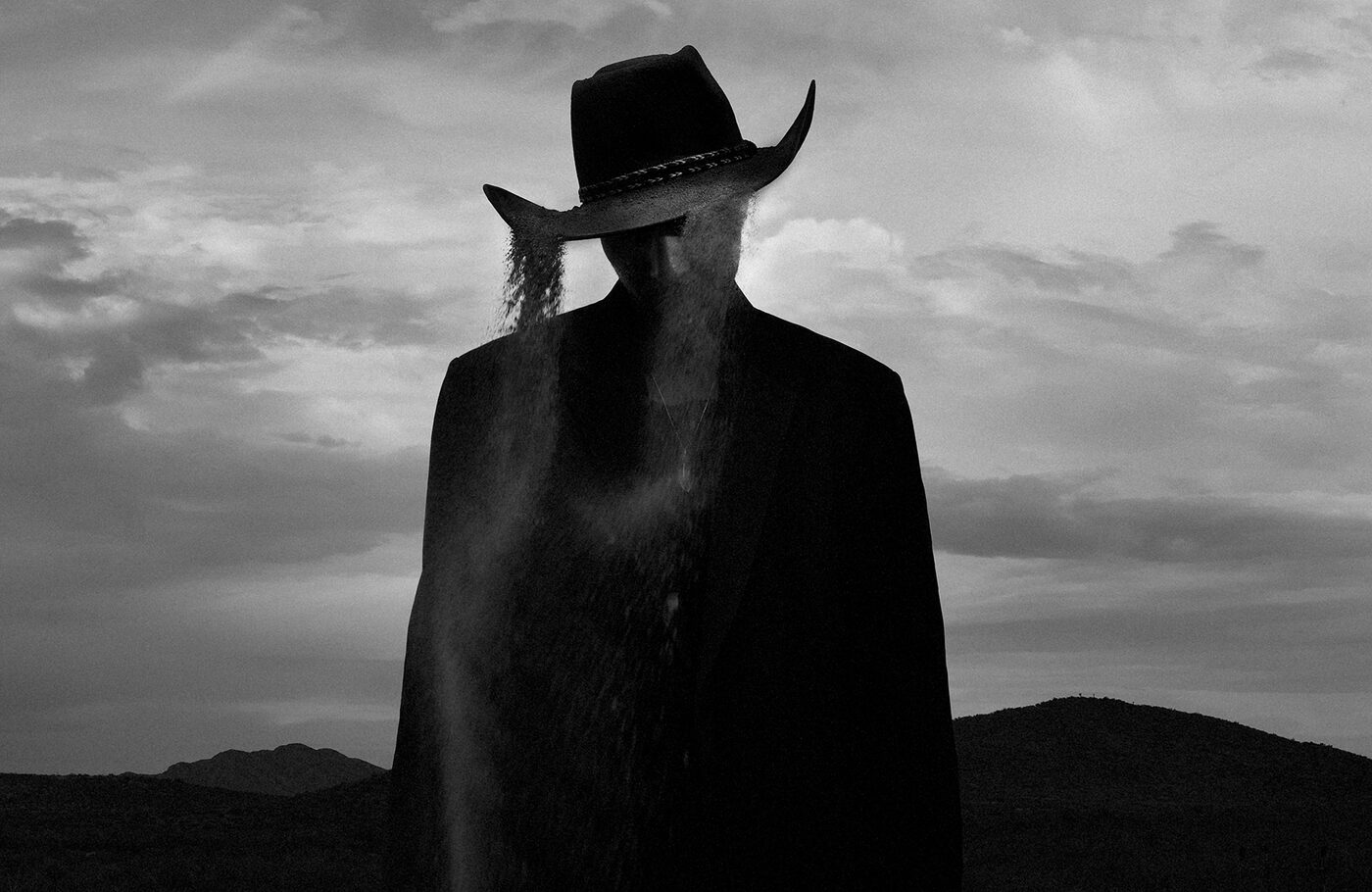
The first time I heard Loraine James I was in someone else's kitchen at a party that had reached the small-hours stage where only the serious listeners are left, and the serious listeners have taken over the aux cord, and the music has shifted from things people can dance to towards things people can think inside of. Someone put on a track I didn't recognise: something with broken rhythms and a texture that felt like the inside of a mind in the middle of something rather than the outside of a mind describing it. I asked what it was. Loraine James. I went home and listened to everything I could find.
She's been on Hyperdub, which is its own kind of credential. That label's ear for music that pushes against the walls of electronic convention is better than almost anyone else's. Her records have a quality that I find difficult to articulate but will try: they feel self-regarding in the best sense. Like music that is primarily in conversation with itself and is letting you listen in. There's no concession to accessibility, no moment where the production opens up to welcome you in if you've been finding it difficult. You adjust to the music. The music does not adjust to you.
The Interior Architecture
What James does with rhythm is what I find most interesting: the way she builds structures that seem stable until they suddenly aren't, where a beat will be doing one thing and then quietly stop doing that thing without any announcement, leaving you to recalibrate. There's a particular kind of listening this demands that I find energising. It keeps you from the passive receiving mode that most music is designed for. You have to stay active.
The textures are extraordinary. There's a granularity to the production that sounds like music made by someone who has spent a lot of time close to the actual material of sound: the physics of it, the way certain frequencies interact. This is not someone who learned what finished music is supposed to sound like and worked backwards. It's music assembled from the inside out. And underneath the difficult rhythms and the splintered textures, there are melodies and harmonies that are genuinely lovely, in the way that a plant growing through concrete is lovely: incongruous and therefore more valuable.
For You And I in 2019 established the approach. Reflection in 2021 deepened it. Building Something Beautiful For Me in 2022, dedicated to the composer Julius Eastman, made the compositional intelligence explicit by treating the form itself as the subject. Eastman wrote minimalist repetition with a ferocity that undermined the genre's reputation for placidity. James's dedication to him was a claim about lineage and method, not just admiration.
On Hyperdub and the Infrastructure of Adventurous Music
There is an infrastructure that makes music like this possible, and it's worth naming because it often goes unremarked. Labels like Hyperdub don't just release records. They create contexts. When an artist joins that roster they inherit a set of associations: a listener community, a critical positioning, a sense of what the label stands for. James has been with Hyperdub through several records and the relationship is generative. She is making increasingly confident music, and the label is clearly giving her the space to do it.
The Hyperdub lineage includes Burial and DJ Rashad and a long history of artists who don't pander to the dance floor and don't run from it either. James fits that lineage because her music holds two things at once: the rhythmic insistence of footwork and dancehall, and the harmonic patience of contemporary classical. The friction between those modes is what makes her records feel alive rather than technically impressive.
This matters because adventurous music requires infrastructure the way a plant requires soil. The lone-genius narrative is almost always false, and when we repeat it we erase the collective labour that makes adventurous art possible. James's music exists because she is talented, and because there is a scene that produced her, and because there is a label willing to bet on her, and because there is an audience willing to seek out music that doesn't meet them halfway.
The Hours It Suits
I've been playing her records late at night, mostly. There is something about the interior quality of the music that suits those hours: the quiet, the specific kind of attention you can give things at 2am that isn't available at noon. She makes music for people who are alone and thinking, which is a specific audience with specific needs, and she serves those needs with uncommon intelligence.
Loraine James makes music that is exactly as difficult as it needs to be, no more accessible than its own logic permits, and no less beautiful than its own internal standards require. That combination, difficulty and beauty in equal measure, is what I keep coming back for. It doesn't get easier. It gets deeper. The private conversation becomes yours the more you're willing to stay in it.
The Enfield origin is itself interesting. North London has produced a particular strain of British experimental music: artists who grew up adjacent to the capital's more celebrated scenes without belonging to them, who developed their practice in the orbit of the centre without having the centre's resources or the centre's tendency toward certain validated sounds. James carries that formation: the independence of the outsider, the ambition of someone who grew up close enough to see what was possible, the refusal to imitate when the more interesting option is to build something of your own.
The music she will make next is unpredictable, which is the best possible thing to be able to say about an artist. She has given no indication of slowing down, consolidating, or becoming easier. The private conversation keeps going. It keeps being worth joining. The Whatever the Weather ambient side project adds another dimension: a slower, more patient channel that lets the main project stay sharp and rhythmically focused. She is managing two creative personalities simultaneously and both are producing work of real quality. That kind of creative organisation, the discipline to know which project wants what material, is rarer than the talent that produces the material itself.