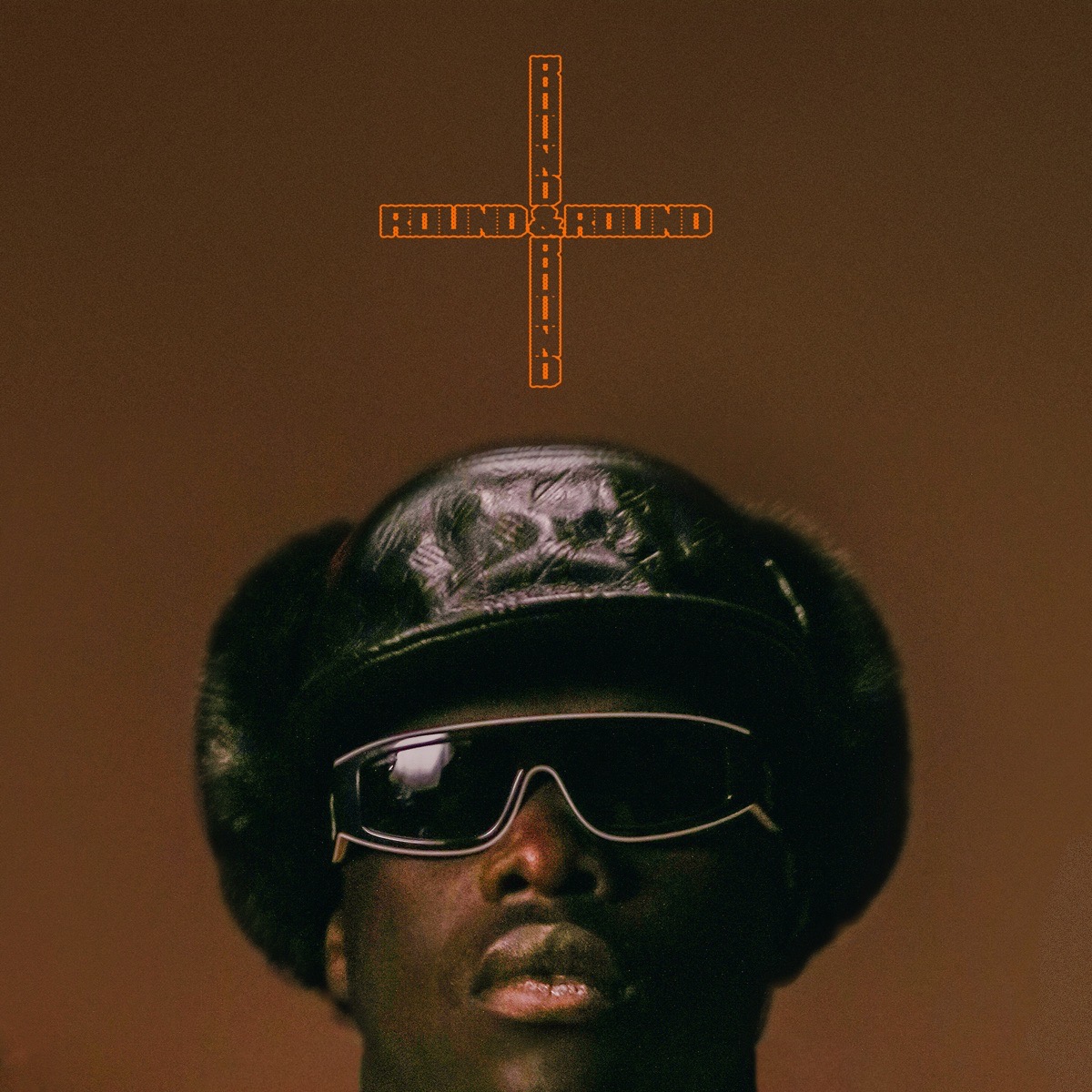
On June 13, 2025, Lyra Pramuk released Hymnal on 7K! Records and her own Pop.soil imprint, in LP, CD, and digital formats. The album contains 14 tracks and received an 8.0 from Pitchfork and four stars from Mojo. For the lyrics, Pramuk worked with poet Nadia Marcus. For the track sequencing, she collaborated with biological artist Jenna Sutela, who grew slime mold across a bingo board populated with key phrases from Marcus's poems, letting the organism's growth pattern determine which words Pramuk would vocalize.
What the Slime Mold Decided
The slime mold sequencing method is easy to dismiss as conceptual gimmick. It is worth taking seriously instead. Pramuk has built her career on finding ways to remove herself from decisions that a conventionally trained vocalist would make based on technical comfort and aesthetic habit. Using an organism with no musical understanding to determine which language she would use in a recording session produces results that her own judgment would have edited differently.
The process is not random. Marcus's poems provided the vocabulary. The slime mold selected within that vocabulary. Pramuk then performed what was selected. The organism did not compose the record. It disrupted the composer's tendency toward the familiar.
This is Pramuk's most developed application of a method she has been building since she left Eastman in 2013.
Eastman and Berlin
Lyra Pramuk was born on September 20, 1990, in Hollidaysburg, Pennsylvania. She attended the Eastman School of Music, where the program required daily vocal exercises in six different languages. That training, designed to build technical range and linguistic flexibility, gave her a foundation she has spent the subsequent decade methodically dismantling and reassembling.
She moved to Berlin in 2013, the year after graduating, and released her first vocal pieces on Bandcamp from there. Berlin's techno scene shaped the context into which her work entered, though her music has never been techno. She collaborated early on with Holly Herndon and Colin Self, two producers working in the overlap between classical vocal training and experimental club music. Those collaborations established her critical position before she had released a full album.
Fountain in 2020
Pramuk's debut album Fountain arrived in 2020 on Bedroom Community, the Icelandic label associated with Valgeir Sigurdsson and artists including Ben Frost and Johann Johannsson. The record was composed entirely from recordings of her own voice, processed and layered without conventional instrumentation. Its genres on Rate Your Music include ambient, post-minimalism, and electroacoustic, none of which quite captures what the record sounds like to someone encountering it without that framing.
Fountain received significant critical attention. It established Pramuk as a singer who was also, inseparably, a producer and composer, someone whose work could not be separated into a voice and a sound and evaluated each on its own terms.
Hymnal arrives five years later with a clearer set of influences to absorb, including techno, ambient, neo-classical, European folk, and experimental music, and a more elaborate creative infrastructure behind it.
Nadia Marcus and the Poems
The decision to bring in an external poet as lyricist is the most significant structural change between Fountain and Hymnal. On Fountain, Pramuk controlled every element of the work. On Hymnal, she handed the source language to Marcus and then handed sequencing decisions to a biological entity.
This is not an abdication of authorship. It is an expansion of what authorship means in practice. The record that resulted from those constraints is hers in the way that a composition is its composer's even when performed by musicians following a score. Pramuk wrote the parameters. Marcus provided the vocabulary. Sutela's slime mold made specific choices within that vocabulary. Pramuk performed and produced the result.
The album's title, Hymnal, points toward the sacred and communal dimensions of that process. Hymns are not personal expressions. They are shared forms, written for collective use. Pramuk is making experimental music inside that idea.
Pitchfork 8.0 and What It Means
An 8.0 from Pitchfork in 2025 is a different thing from an 8.0 in 2010. The publication's reach has changed, its audience has changed, and the weight of a specific numerical rating means something different in a streaming era where discovery happens through algorithms as often as through editorial recommendation.
Hymnal is not a record that benefits from algorithmic placement. Its 14 tracks require the kind of sustained listening that playlist culture discourages. Four stars from Mojo places it alongside records that are meant to be played from beginning to end, in sequence, with attention. The critical consensus around Hymnal suggests that reviewers are hearing it that way.
The 7K! Records release, on a label associated with artists including Mount Kimbie, Fever Ray, and Lambchop, gives Hymnal broader distribution than Bedroom Community could provide for Fountain. That change in label infrastructure is a practical decision about reach rather than a creative one.
Collective Healing as Formal Proposition
7K! describes Hymnal as an earthy, raw and psychedelic burst of euphony for collective healing. That phrase, collective healing, is doing a lot of work in the description of a record made through slime mold sequencing and poet collaboration. It positions the album not as a personal statement but as a structure designed for shared use.
Pramuk's background at Eastman, where vocal exercises were practiced in six languages daily as a collective discipline, makes this framing less metaphorical than it might initially appear. She trained in a system designed to produce shared capability through individual repetition. Hymnal applies a similar logic: a system with specific inputs and constraints, designed to produce something beyond what any single decision-maker would have made alone.
The album runs 14 tracks. Most are short. The sequencing, which the slime mold partially determined, does not follow conventional arc logic from opening to close. It is a stranger sequence than a human curator would have built, and that strangeness is audible in the listening experience.
This is the most formally ambitious record Pramuk has made, and also the most direct in its stated purpose. Those two qualities are rarely found together.