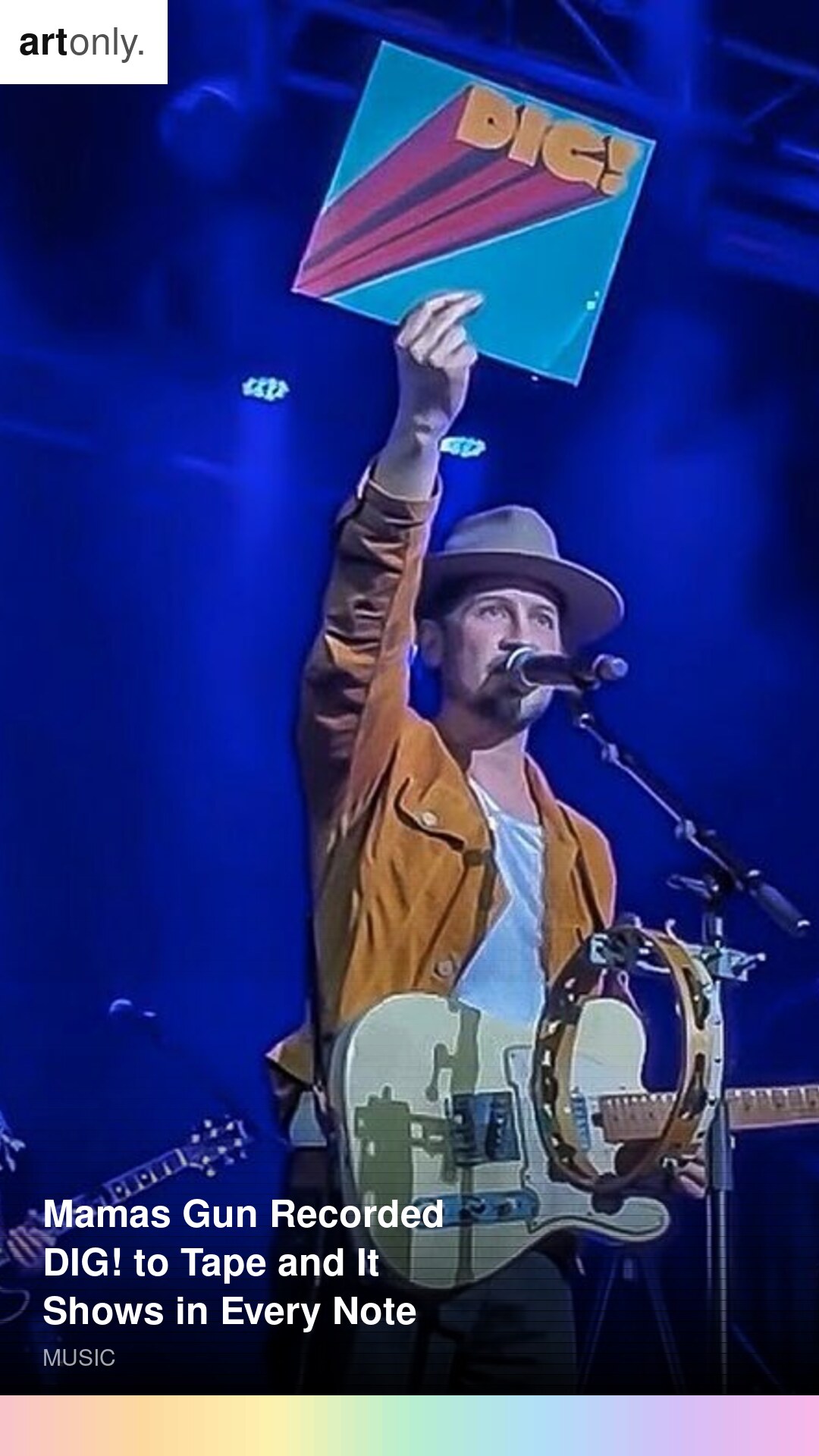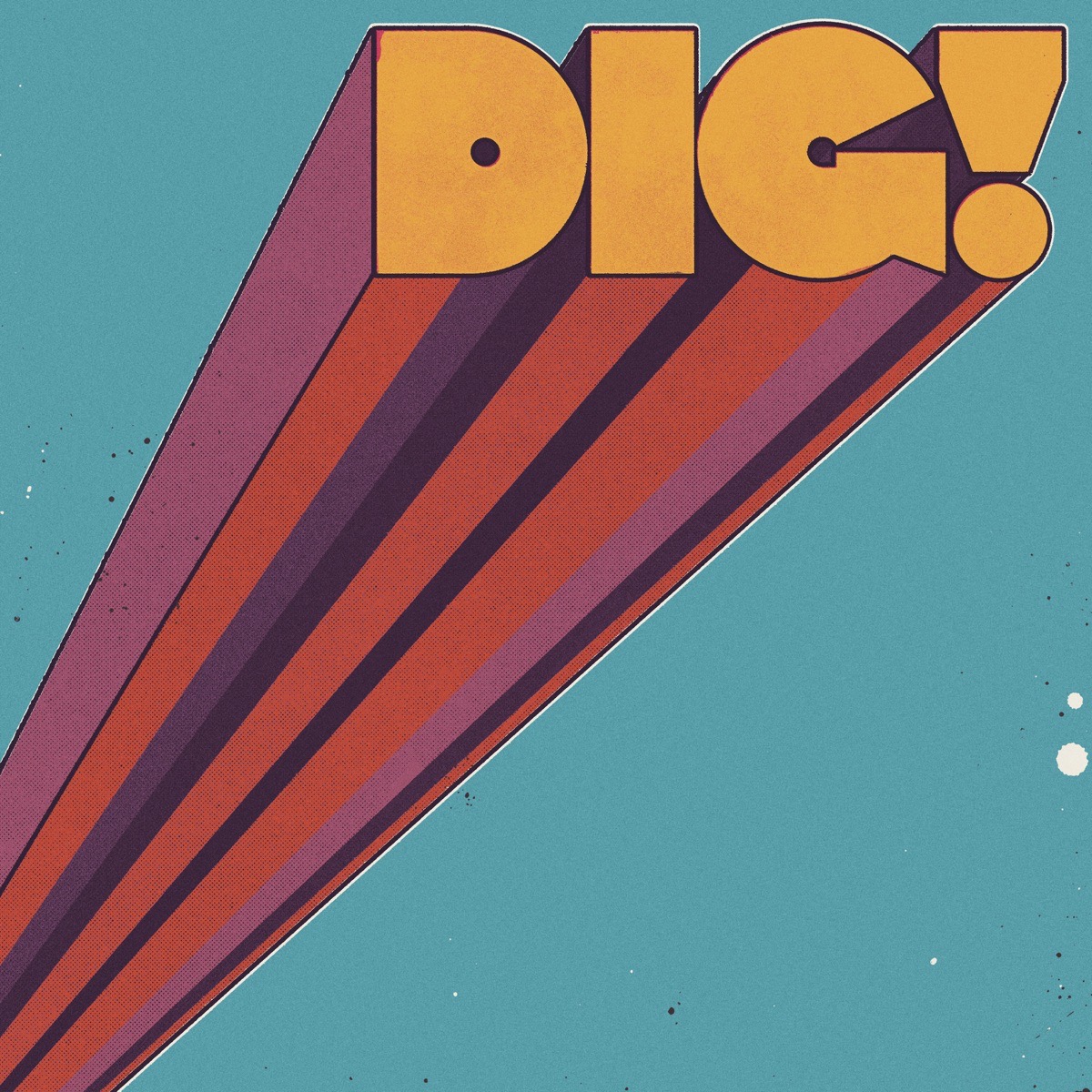
There is a specific quality to music recorded to analogue tape that digital production can approximate but never replicate. It is in the way bass frequencies warm and swell rather than simply occupy frequency space. It is in the slight compression of the drums, not the mathematical precision of a plugin but the physical behavior of magnetic particles on oxide. Mamas Gun knows this, which is why their sixth album, DIG!, was recorded straight to 16-track tape at All Things Analogue Studios in Leeds. You can hear it in every single note, in the room bleed between instruments, in the way the whole mix breathes as one organism rather than a collection of stacked and edited parts.
Tape does something else, too. It forces commitment. You cannot endlessly undo. You cannot quietly fix a slightly flat note in the edit window after everyone has gone home. When you record to tape, the performance is the record, and the record is the performance. For a band that has spent nearly two decades building a shared musical vocabulary, that is not a limitation. It is permission to be exactly what they are.
The Band
Five musicians, nearly two decades together. Andy Platts sings with a falsetto that sits somewhere between Curtis Mayfield and Terry Callier, warm, honest, and incapable of faking it. There is a directness to his phrasing that comes only from years of live performance, a quality of landing on the emotional centre of a line without telegraphing the approach. Chris Boot plays drums with a jazz player's restraint and a soul musician's instinct for the pocket. He does not fill space because he can. He leaves room, and the room he leaves is where the music breathes.
Cameron Dawson's bass channels James Jamerson without impersonation, which is the only honest way to carry that influence. The Jamerson reference in contemporary soul music has become almost meaningless through overuse, but Dawson earns it specifically: the melodic independence of his bass lines, the way they comment on the vocal rather than simply supporting the chord, the decision to treat the low end as a conversation rather than a foundation. Terry Lewis brings guitar work rooted in Grant Green and Wes Montgomery, which means he understands that space between notes is as important as the notes themselves. Dave Oliver on keys, piano, Wurlitzer, Hammond, bridges gospel, jazz, and soul as if the distinctions were always artificial.
This is not a band that needs to be told what soul music sounds like. They have been living inside it since 2007.
Brian Jackson Walks In
The album's centerpiece is its title track, "DIG!", which features Brian Jackson, Gil Scott-Heron's legendary songwriting partner and a collaborator with Roy Ayers, Earth Wind and Fire, and a generation of artists whose work remains some of the most sampled in hip-hop history. Jackson's flute and piano work on records like Pieces of a Man and Winter in America defined what politically engaged soul could sound like. He did not merely accompany Scott-Heron. He shaped the sonic architecture of those records from the inside.
His presence on this track is not decorative. He brings a jazz-funk authority that elevates an already formidable groove into something that feels like a conversation between eras. The arrangement creates space for him in the same way a good rhythm section creates space for a soloist, and he fills it with the particular confidence of someone who has been doing this for fifty years and has nothing left to prove. "What an absolute honour," drummer Chris Boot said of the collaboration. When Brian Jackson plays on your record, the music either rises to meet him or it does not. DIG! rises.
The Songs
"Food For The Flames," the first single and a co-write between Platts and guitarist Terry Lewis, uses fire as its central metaphor. Love as something that requires constant fuel, attention, and courage to maintain. The arrangement earns that metaphor rather than illustrating it. The track was road-tested on tour before it was recorded, which means the version on the album has been refined by audiences before the tape machine ever started rolling. You can hear that road-tested quality in the tightness of the rhythm section interplay, in the way the band locks up on the chorus without tightening up.
"The Proof" channels Stevie Wonder's gospel-funk period with an uptight groove anchored by Dawson's standout bass performance. This is the kind of track that reveals how much craft goes into making something sound effortless. The feel is conversational and loose, but the rhythmic placement of every instrument is precise. "Wings" pulls from a different corner of the band's vocabulary. Blue Note-adjacent jazz, with Lou Donaldson piano textures and ride cymbal work that whispers rather than states. It is the most understated performance on the record, and the most confident.
"Had Me At Goodbye" goes full Philly soul, channeling The Stylistics and The Delfonics through vocal harmonies that remain one of Mamas Gun's most underrated weapons. The orchestral approach of the classic Philadelphia International sound is here filtered through a band that understands the underlying harmonic logic rather than simply reproducing the surface texture.
Analogue as Argument
The choice to record to 16-track tape at All Things Analogue is worth examining for what it says about the band's values, not just their aesthetic preferences. Digital recording offers infinite tracks, unlimited revision, and total control over every element of the finished product. What it cannot offer is the organic interaction between instruments that happens when everyone is playing at once and the room becomes part of the sound. Tape recording captures the performance as a social event. The musicians are responding to each other in real time, and that responsiveness is embedded in the recording itself.
This is not nostalgia. Nostalgia looks backward. DIG! does not look backward. The production choices here are practical decisions about the most honest way to capture what a group of musicians actually sounds like when they are fully present in a room together. The limitations of 16 tracks force a discipline of arrangement that digital abundance tends to erode. Every instrument has to matter because there is no room for everything. Every performance has to be right because there is no invisible repair work happening afterward.
Why This Matters Now
In 2026, when most music is produced in bedrooms and mixed entirely in the box, a five-piece band recording to 16-track tape in Leeds is doing something genuinely countercultural. Not as a statement. As a standard. The expectation built into every track on this record is that music made by musicians playing together in a room should sound like exactly that, and that this is still the most powerful way to make someone feel something.
Released April 10 via Candelion and Blue Elan Records, DIG! is available on vinyl, CD, and digital. The vinyl is the correct format. Not because vinyl is fashionable, but because a record this committed to the analogue signal chain deserves to be heard in the format where that chain remains unbroken from performance to playback.
Find Mamas Gun on Instagram: @mamasgunmusic