Here is the paradox of Mannywellz: 660,000 monthly Spotify listeners, 31,000 of them in Lagos alone, a collaboration with Wale, a discography that stretches back to 2020, and somehow the conversation about modern R&B rarely includes his name. The algorithm knows him. The playlists know him. The people who find his music at 2 a.m. when they are searching for something that feels real know him. The discourse has not caught up, and honestly, that is working in his favor. Artists who build audiences before critics discover them arrive at that coverage with something most artists do not have: a body of work that has already proven itself on its own terms.
What Afro-Soul Actually Means Here
The label "Afro-soul" gets applied loosely to anything that combines African rhythmic elements with American vocal traditions, which means it has started to describe a marketing category more than a sound. Mannywellz gives it specific content. His music is Afro-soul in the sense that the African and soul elements are not layered on top of each other but fused at the structural level, which is a different thing entirely.
The distinction matters sonically. When African rhythmic frameworks are grafted onto R&B production, the result is usually a track that alternates between two modes. In Mannywellz's music, the groove itself is hybrid. The rhythmic subdivision carries West African influence while the harmonic movement and vocal phrasing come from American soul. These two things occupy the same bar simultaneously. That is not a simple thing to achieve, and most artists attempting this fusion settle for something more architecturally obvious.
From Lagos to Maryland, Through Feeling
Emmanuel Ajomale was born in Nigeria and raised in Maryland, a geography that puts him at the intersection of two musical traditions that have been circling each other for decades. Nigerian Afrobeats and American R&B have been trading influence since Fela Kuti and James Brown found each other in the early 1970s, but Mannywellz is not interested in the grand narrative of cultural exchange. He is interested in the specific: how a particular chord progression carries the feeling of Sunday mornings in Lagos, how a particular groove replicates the specific quality of driving through College Park at dusk with the windows down.
That specificity of emotional reference is what separates his work from more generic Afro-R&B production. The cultural touchstones are personal before they are commercial, which is audible in the way his arrangements settle rather than perform. There is no moment in his catalog where the African influence is foregrounded for the benefit of a Western listener who might find it exotic. The music assumes you understand both traditions, or it assumes that if you do not, you will come to them through feeling rather than explanation.
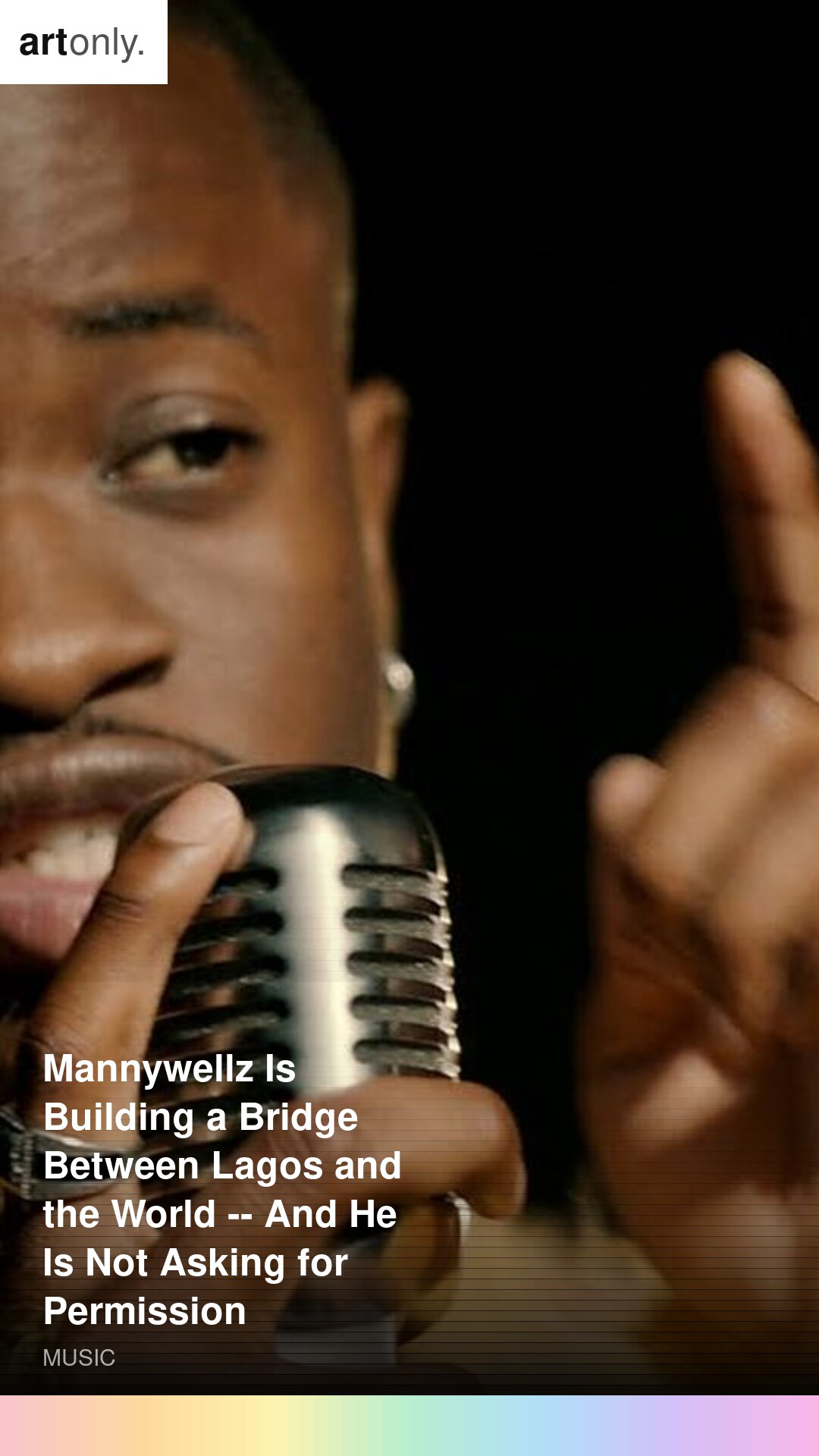
His debut album Mirage in 2020 introduced the formula, warm production, soulful harmonies, African influences woven into R&B structures rather than attached to the outside. "So Good," the breakout from that project, has crossed 1.1 million views on YouTube. The vintage microphone, the yellow fur coat, the controlled confidence in every frame. This was not someone finding himself. This was someone introducing himself.
The Wale Moment
"How It Feels," released in March on his own Oulala Sounds label, marks the first time Mannywellz has shared a track with someone of Wale's stature. The song does not defer to Wale. If anything, it is Wale who adjusts to Mannywellz's frequency. The production stays warm and unhurried, the groove remains organic, and Wale's verse fits into the pocket rather than commanding it. That is a meaningful dynamic in a genre where featuring a bigger name usually means restructuring the track around that name's established aesthetic expectations.
The fact that Wale enters Mannywellz's sonic world and adapts to it rather than redirecting it toward more familiar territory says something specific about the strength of the world Mannywellz has built. A well-developed artistic identity functions like a gravitational field. It pulls collaborators toward the center rather than letting them pull the work off axis.
The Numbers Beneath the Numbers
His Spotify geography tells a story the streaming numbers alone cannot. Lagos, Abuja, Port Harcourt, Ibadan, then Johannesburg. His top five cities are all African. This is not a diaspora artist hoping Africa will eventually notice. This is an artist whose African audience found him first, and whose American market is still in the process of catching up. That dynamic matters because it means Mannywellz is not performing Africanness for a Western listener who might reward him for it. He is making music for people who already share the references, and everyone else is welcome to listen in.
The continental African listener base also changes the way you read his artistic decisions. The fusion he is working in is not a crossover strategy aimed at expanding his appeal into African markets. It is his natural register, and the African audience response reflects that authenticity.
"Holy Father" in 2025 deepened the spiritual dimension of his work, a song that treats devotion as both romantic and sacred, the line between the two deliberately blurred. "Energy (Chak Dum Dum)" in 2026 pushed further into global fusion territory. Each release adds a new coordinate to a map that keeps expanding its reach without losing its center of gravity.
Why He Matters Now
The conversation about the space between Wizkid's polish and Daniel Caesar's intimacy needs artists who live in that intersection authentically rather than strategically. Mannywellz lives there. He is not calculating a crossover. He is making music from where he stands, which happens to be on a bridge between continents, between devotional and romantic, between the groove and the feeling underneath the groove. With 660,000 listeners and growing, the secret is getting louder. The discourse will catch up. It always does.