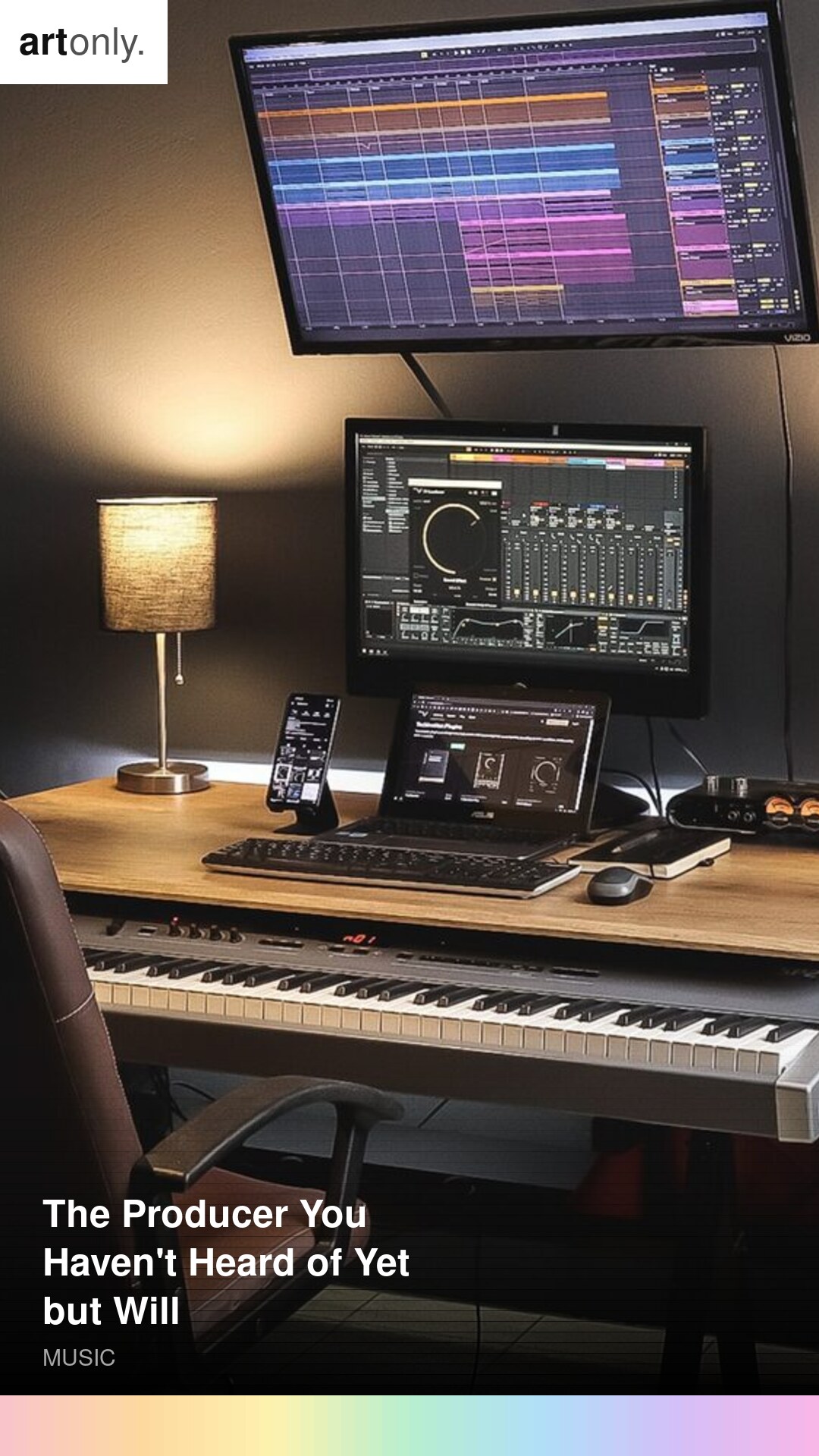
Attention Economy and the Hidden Artist
The paradox is this: more music exists and is accessible than at any prior point in history, and the systems designed to connect listeners to music have made genuine discovery harder, not easier. The algorithm optimizes for engagement, not for transformation. It gives you more of what you already like rather than showing you what you do not know you need. Engagement is measurable. Transformation is not. The system is not broken. It is doing exactly what it was built to do.
This creates a specific ecosystem for a certain kind of artist. The one who is doing something genuinely interesting but exists below the threshold of algorithmic visibility. Who circulates through human networks rather than machine networks. Word of mouth, forum posts, a shared file, a conversation after a show. MK Ultra Sound, a producer based in East Los Angeles whose identity has been carefully maintained as near-total mystery, releasing music through a Bandcamp page that has been active for three years and accrued a following that is small and absolutely devoted, is one of these artists. The devotion is not incidental. It is the correct response to the work.
The Sound Itself
The production language is dense. Multiple rhythmic layers move at different speeds simultaneously, creating polyrhythmic textures that resist easy counting but feel physically coherent rather than chaotic. Samples appear from sources specific enough to feel deliberate and obscure enough to resist immediate identification. Synth tones occupy a character somewhere between industrial corroded metal and the long clean tones of ambient work, a combination that should feel contradictory and instead feels inevitable once you have heard it.
The bass weight in these tracks is a structural element rather than a texture. It sits low and heavy in ways that recall UK grime production from the Wiley and early Skepta era, that physical sub-bass pressure designed to be felt in the body before it is processed by the ear. But MK Ultra Sound deploys this weight in contexts that are slower and more spacious than grime, which shifts its effect from agitation toward something closer to dread, or to awe.
There are specific production choices that appear consistently across the catalogue. A tendency toward very slow filter sweeps that take minutes to resolve rather than bars. A use of silence that is not emptiness but pressure, gaps that feel loaded rather than merely absent. A particular approach to reverb that places sounds in large and undefined spaces without making those spaces feel artificial. Someone who has spent serious time with William Basinski's work will recognize some of this logic, and someone who has spent serious time with early Flying Lotus will recognize other parts of it. The result does not sound like either.
The Architecture of a Catalogue
Across a series of releases spanning the pandemic years and continuing past them, MK Ultra Sound has been building something that functions as a body of work despite never being presented as one. There is no album, no EP sequence, no evident release strategy. Tracks appear when they appear. Each one advances the project in some direction, adds something to what came before, poses questions that later tracks either answer or deliberately leave open.
The references accumulate across listens. Burial's London textures, the particular emotional register of rain on concrete and late-night public transport that made Untrue feel like a city record even when it was not using field recordings directly. The time-stretched vocal samples of early Clams Casino, that chopped devotional quality that made tracks like Realist feel like secular hymns. Certain strains of Detroit techno, the minimal and machine-driven lineage from early Underground Resistance through Jeff Mills. But the accumulation does not produce derivative work. It produces something that has absorbed all of this and arrived somewhere else. Somewhere without a clear address.
The track "Terminus," a twenty-two minute piece released at the end of 2023, is the most ambitious thing in the catalogue so far. It moves through phases of intensity and dissolution across its runtime in ways that feel compositionally thought through rather than improvisational. The first six minutes establish a rhythmic foundation using what sounds like processed industrial percussion, something between a press and a heartbeat. The middle section strips this back to a single sustained tone and a very slow melodic movement that takes about eight minutes to complete a phrase. The final section rebuilds the rhythmic material but changed, with something absent from it that was present at the start. The structure is not conventional but it is legible. You can feel the architecture even if you cannot name the rooms.
Los Angeles as Sonic Context
East Los Angeles has a specific cultural geography that is worth being precise about. The area has historically been a center of Chicano cultural production, from the muralism of the 1970s through lowrider culture through the East LA punk and hardcore scene that produced bands like Los Lobos and the Plugz. It is also a neighborhood shaped by industrial infrastructure, warehouses and freight corridors and the particular sonic environment those create.
MK Ultra Sound's music does not announce this geography in obvious ways. There are no explicit samples of local music, no overt cultural references in track titles or visual materials. But the sense of space in the production, the industrial weight alongside a kind of warmth that feels human rather than clinical, reflects an environment shaped by both of these things.
The Care of Discovery
Writing about an underground artist with a small audience carries a specific responsibility. The intimacy of a devoted small following is itself part of the value of music made outside industry attention. There is a quality in work made without the anticipation of being evaluated, without a release timeline imposed by a label, without the need to make something legible to an audience whose existence you are performing for. MK Ultra Sound's music has this quality. It sounds made because making was the point.
Publishing something that might bring more traffic to the Bandcamp page changes the nature of the situation, even slightly. I am making a judgment that the music is important enough to describe anyway, which is the only judgment available to a writer who has encountered something that feels real.
The small and devoted audience found this music through effort. That is the correct origin story for this kind of work. You will find it or you will not. You will find it through a recommendation from someone who cares about music the way you care about it, through a forum thread that has ten replies and was posted two years ago, through the particular attentiveness that sends you into the Bandcamp new arrivals at an hour when you have nothing else to do. That is not a failure of distribution. That is the distribution system working correctly for music that is genuinely for people who seek things out.
I check the Bandcamp page regularly. The hope is always that something new has appeared. When something new has appeared, it has been worth the time. That is a record without exception so far.