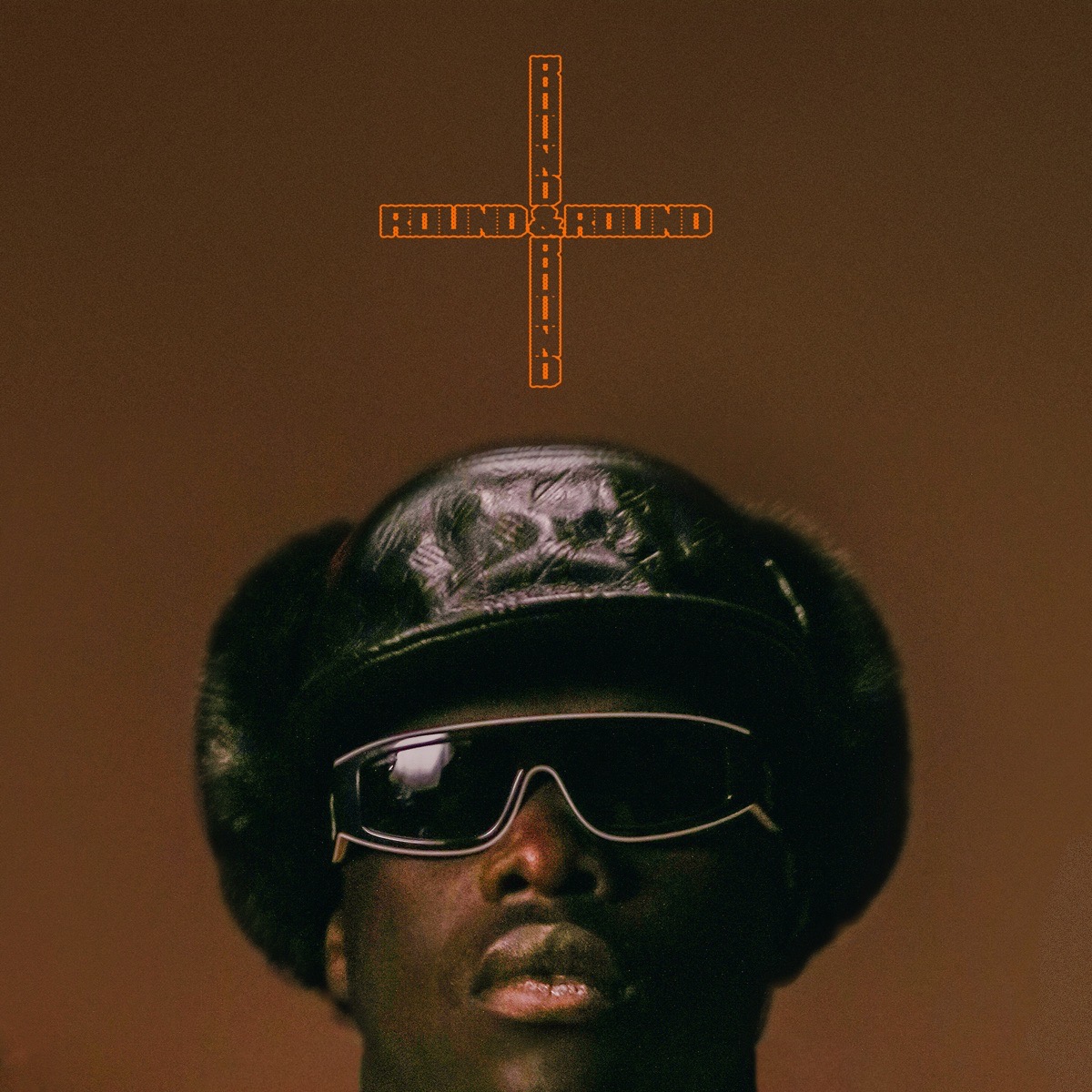
UK funky is one of the most undervalued genres in contemporary British music and the undervaluation is not accidental. It emerged in the mid-2000s from London's African and Caribbean communities, primarily Nigerian and Ghanaian, and it was immediately vital. Rhythmically complex in ways that most British club music was not, possessed of a specific kind of bounce that made bodies move differently than house or garage, connected to diaspora experience in ways that gave it emotional roots that went deeper than pure dancefloor functionality. It was played in specific rooms, for specific communities, and it did not need the approval of mainstream music media to know its own value.
When mainstream media did notice, eventually, it tended to misread what it was looking at. It treated UK funky as a subcultural curiosity rather than a sophisticated musical tradition, positioned it as proto-something-else rather than as a fully realised thing in itself. MssingNo came up in this context and has been working in this tradition and its electronic afterlives ever since. His recent music carries the ghost of UK funky not as nostalgia but as operating system. The rhythmic intelligence, the particular feeling in the groove, informs how the more contemporary elements behave.
The Conga and the Computer
There is a specific rhythmic relationship in UK funky between the conga patterns borrowed from afrobeats and the more mechanised elements of electronic production. MssingNo has developed and extended that relationship in his own work. He has added layers of contemporary electronic texture that would not have been available or culturally legible in 2007, and he has brought them into dialogue with the deeper rhythmic logic of the genre in a way that feels like genuine development rather than appropriation or pastiche.
This matters because the worst thing you can do with a musical tradition is freeze it. Traditions that remain alive stay alive because people continue to work within them and push against them simultaneously, inheriting the logic while refusing to be imprisoned by it. MssingNo does this. His tracks have the feeling of something continuous with a specific musical history and also of something happening right now, in the present tense of making.
The Production Decisions
Listen to how MssingNo handles space. In the classic UK funky template, space was a functional tool: the gap between kick and conga created tension, and the release of that tension was the physical event the track was built toward. MssingNo understands this at a cellular level. His tracks breathe at the right moments. The low end punches through without overwhelming the mid frequencies where the melodic information lives. This is production that was thought about with the body in mind, not just the ear.
The synthesis choices are worth noting too. Where a lot of producers working in revival territory reach for vintage analog warmth as a signifier of authenticity, MssingNo allows digital textures to sit alongside the organic elements without apology. The combination is honest about what it actually is: music made now, from a specific place, using the tools of now, rooted in a tradition that gave it its backbone.
The Work of Keeping Things Alive
There is a kind of music preservation work that happens through continued creation rather than archive and documentation. When a genre is undervalued by the mainstream, the people within the community who continue to make music in that tradition are doing conservation work. They keep the rhythmic intelligence alive, keep the vocabulary in use, ensure that the knowledge of how to do this thing does not dissipate across the generation gap. MssingNo is doing this work. He does not present it that way. He probably does not think about it that way. He is just making music he cares about. But the effect is conservational.
I have been playing his recent work alongside some of the classic UK funky tracks, the Roachford, the Bracey, the early DJ Rashad that was in dialogue with it, and the conversation between them is audible and enlivening. The music talks back to its origins. You can trace the lineage without the lineage feeling like a constraint.
More people should know about this. More people should be listening. The music rewards attention more than most things I could point you toward.
The Room and the Record
I think about the clubs where this music lives, the rooms where it functions as it is designed to function, where bodies respond to it and the response shapes the energy of the room, which shapes how the music is experienced, which shapes how future music is made. This feedback loop between production and reception, between the artist in the studio and the dancer on the floor, is what keeps club music alive as a form. MssingNo is part of that loop. He plays out. He makes music, he hears how it works, he makes more music with that knowledge. The records are products of that continuous process. You can hear it in the craft of them, the understanding of what a body needs and when it needs it, translated into sound.
The ghost of UK funky that never really left is not haunting anything. It is alive and developing, carried by people who love it, embedded in music that knows where it comes from. MssingNo is proof of that. The music is alive.
The Quiet Influence
MssingNo does not have the mainstream profile of the names most people associate with electronic music. He has not crossed over in the way that some of his peers have, and his work sits at a distance from the chart-oriented side of the genre. That distance is a feature. It means his music is made entirely on its own terms, with no concession to an imagined mainstream listener who needs things simplified. The club is his medium. The people who understand the music are his audience. He makes no effort to translate.
There is a kind of influence that operates through people rather than through charts. A producer hears a specific rhythmic approach and takes something from it. A DJ incorporates a track into a set and that decision shapes what comes next in the room. The ripple moves outward without a press campaign or a moment of mainstream visibility to mark it. This is how a lot of the most important electronic music has always traveled, community to community, room to room, across borders that commercial channels do not cross.
MssingNo's music travels this way. You will not necessarily know where you first heard him. But if you are paying attention to London club music, you have heard him, or heard music that carries his influence, or been in a room where his records were played and felt something shift in the collective energy of the space. That invisible influence is real influence. The music is doing its work.