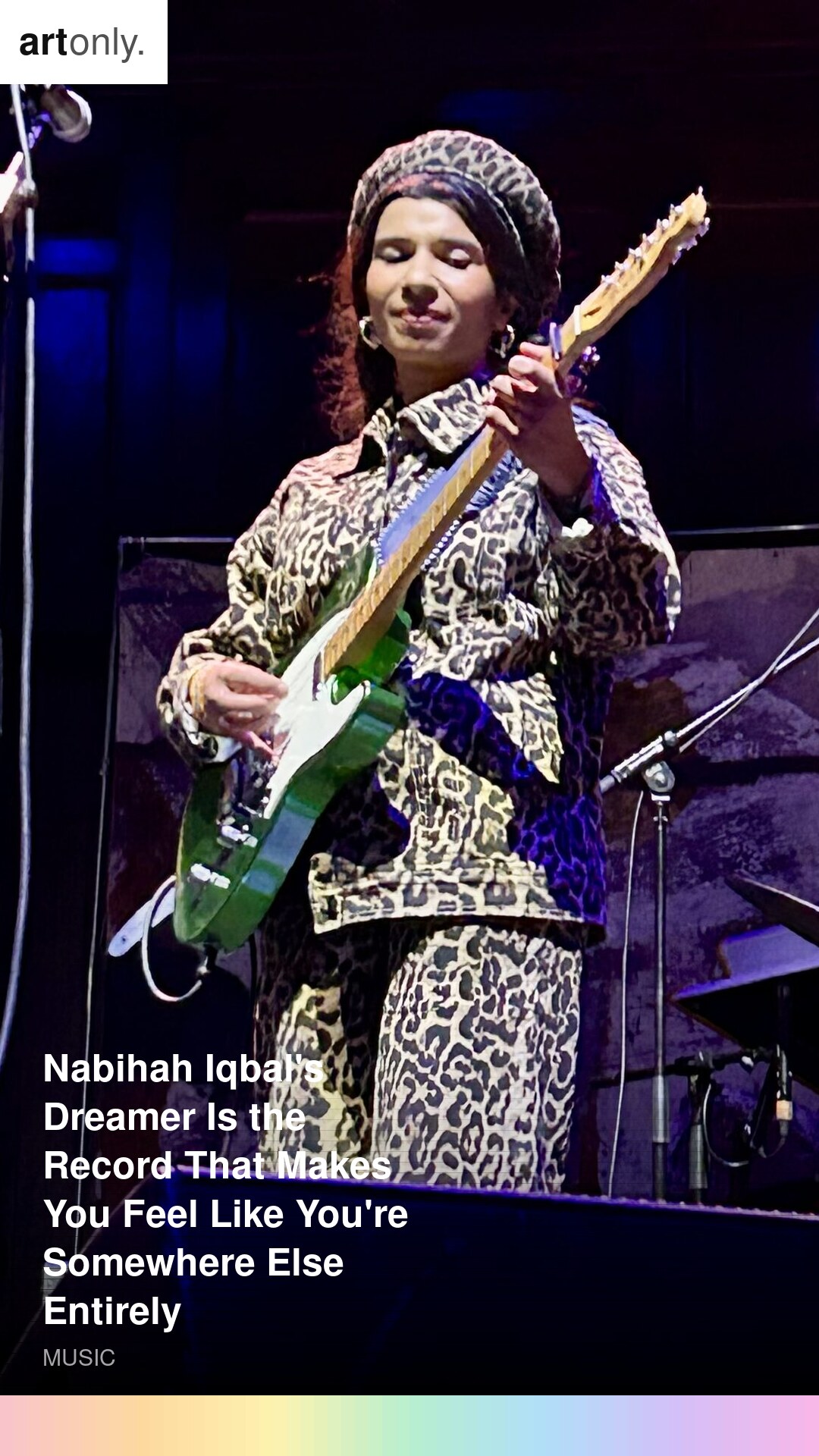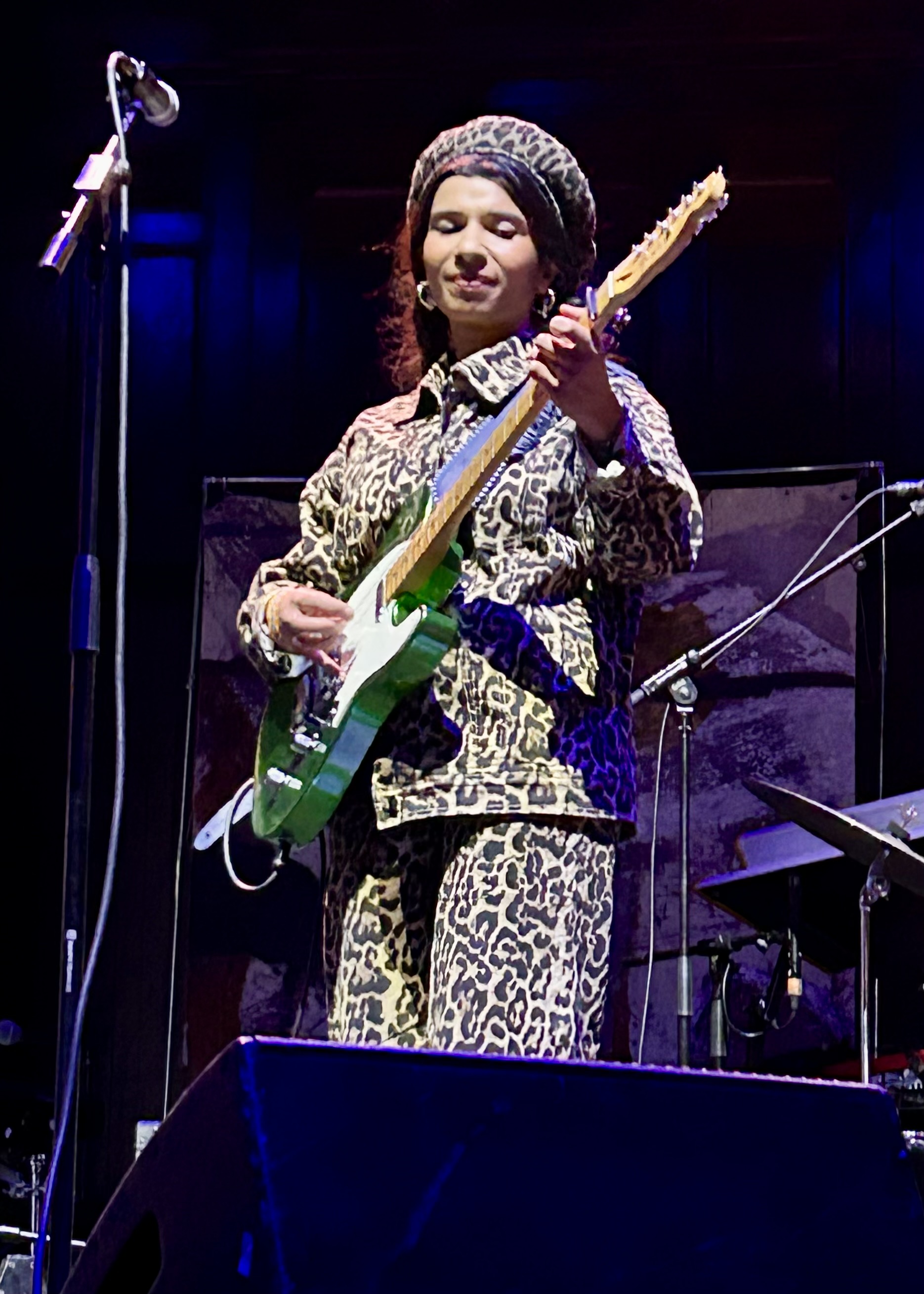
There are records you put on and they move you through sound. There are records you put on and they move you somewhere. Nabihah Iqbal's Dreamer is the second kind. From the first few seconds, the way the production opens up, the guitar that sounds like it was recorded in a room you have never been in but somehow recognise, I am not where I was when I pressed play. Something in the music has relocated me, gently and entirely, to some interior space where its particular emotional weather is the weather.
Iqbal has been doing this for a while, and the critical conversation around her work has sometimes struggled to find the right framing. She is a multi-instrumentalist, a producer, someone who makes music that draws on shoegaze and Krautrock and synth-pop and dream pop without fully belonging to any of them. The eclecticism is not the point, though. The point is what you do with the influences: whether they remain legible or whether they dissolve into something that belongs entirely to you.
Dreamer is the record where they fully dissolve. You can hear where things came from if you go looking, but you do not need to go looking, because the music presents itself as complete and self-contained. It does not need annotation.
The Dream State as Production Philosophy
The title is not a gesture. Iqbal makes music that replicates the peculiar logic of dream states: the way things that should not cohere do cohere, the way time moves differently, the way emotion arrives without narrative justification, the way beautiful things turn unsettling and back again with a smoothness that waking logic cannot account for. This is not easy to do. It requires a particular kind of production intelligence, an understanding of how texture and dynamics and space create psychological states in the listener.
The guitar work is central. There is a quality to her playing and production of guitar, the reverb decisions, the way notes are allowed to decay, the use of feedback as tonal colour, that creates a specific kind of sonic environment. It is not shoegaze exactly, though it is clearly in conversation with that tradition. It is something more controlled, more purposeful, less interested in overwhelming the senses and more interested in relocating them.
The synth work operates similarly. Rather than stacking layers of texture as a display of production richness, Iqbal uses synthesisers to define the emotional temperature of each section. Some passages are warm and enveloping. Others have a cooler quality that arrives without warning and shifts the feeling of the whole track before you have consciously registered the change. This is compositional intelligence applied to timbral choice.
The Pakistani Heritage and the Western Canon
Iqbal has spoken in interviews about the way her Pakistani heritage sits alongside her engagement with Western guitar music and electronic production. She does not treat this as a tension to be resolved or a fusion to be celebrated. It is simply the full set of musical materials available to her, absorbed and processed and made into something that does not announce its sources.
This matters because a lot of music that draws on multiple cultural traditions spends significant energy announcing the fact. Look at this combination, the music seems to say, see what I have done with these different things. Dreamer does not do this. It is too busy being what it is to be a demonstration of what it combines. The influences are present but they are working rather than performing.
On Making Music That Goes Somewhere
Most music is about its own content. A sad song is about sadness. A dance track is about dancing. Iqbal's music is about the experience of listening to it, which sounds circular but is not. The experience of listening to Dreamer, the somewhere-else-ness of it, the way it creates its own interior geography, is the subject of the record. She is making music about what music can do, and she is doing it by demonstrating rather than describing.
I have used this record as a reset mechanism in the middle of days that have become too loud, too full, too insistent on their own demands. Twenty minutes into it, the day recedes. Not in a dissociative way, but in the way that good fiction recedes the world, by filling your attention with something better organised and more beautiful. When the record ends you return to where you were with a slightly different relationship to it.
I keep coming back to Dreamer and finding that it takes me somewhere new each time, which is the mark of music that is genuinely alive rather than performing aliveness. It is an extraordinary record. I am not sure enough people know that yet.
There is a question I keep asking myself about music that relocates you, which is: where does it take you? I do not have a satisfying answer for what Dreamer does with that question. It is not somewhere I can describe with geographical coordinates. It is more like a psychological state than a place, a state of openness, of attention without agenda, of being available to experience without knowing what the experience will be. That is rarer than a good destination. Most music takes you to a place it has already decided on. Dreamer takes you somewhere that depends on what you bring to it. I have brought different things at different times and arrived in different places. That is why I keep going back.
The somewhere-else-ness never becomes the same somewhere. That is the thing I cannot stop being grateful for. A record that takes you to the same place every time becomes a known destination. Dreamer is always a discovery.
The Record as Practice
Dreamer rewards patience in a way that most contemporary music does not ask for. We have built our listening habits around music that delivers its content immediately, that gives you what it is within the first thirty seconds and either holds you or loses you on that basis. Iqbal's record operates differently. The first full listen is a partial experience. The second is where you start to hear the architecture. By the fifth or sixth, you are living inside it.
This is not a difficulty that announces itself as such. Dreamer does not feel challenging or withholding. It feels exactly like what it is: music that has depth, that rewards continued attention, that has more to give the more you bring to it. That quality is rarer than it should be.