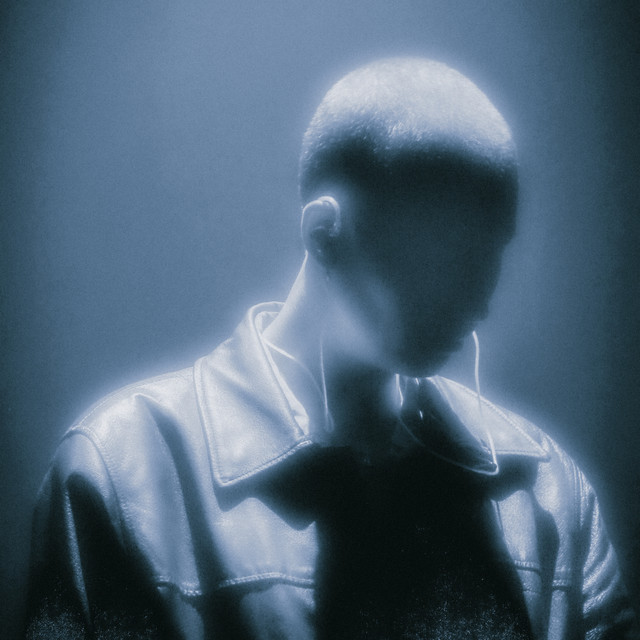
Tullia Benedicta grew up in Ravenna in a Neapolitan family, which is to say she grew up inside two Italys at once. The North that never asked where she came from. The South that was always asking where she had gone. NZIRIA, the project she releases under, is what happens when a producer decides not to choose between those Italys but to slam them together at full volume.
She calls the genre Hard Neomelodico. It pulls from neomelodica, the working-class Neapolitan pop that scores weddings and funerals and the long slow late-night walks home, and runs it through gabber, hardcore, and the kind of distortion that makes the speaker cone visibly move. Her debut XXYBRID came out on Gabber Eleganza's Never Sleep imprint. ULTRANCE followed and pushed even further into the red.
What Hard Neomelodico Actually Is
Neomelodica is a genre that the Italian cultural establishment has spent decades trying to ignore. It is music of the working-class south, of Campania and the Naples suburbs, of communities that do not appear in the official narrative of Italian culture as sophisticated or worthy of serious attention. The melodies are emotionally direct to the point of excess. The lyrics deal in uncomplicated feeling: love, loss, loyalty, the particular solidarity of people who understand that official society has no particular interest in them.
Gabber comes from Rotterdam, from the early 1990s hardcore rave scene, and it shares with neomelodica a quality that both traditions' critics reach for the same word to dismiss: vulgarity. Both genres are loud in the wrong registers, emotionally unsubtle in ways that cultured taste finds embarrassing, made for and by communities that do not factor into the mainstream's self-image.
When NZIRIA puts them together, the collision produces something that is not a novelty act. The emotional logic of both forms is identical. Both are about the intensity of feeling without apology. Both are anti-ironic in a cultural moment that treats irony as sophistication. The production just makes the argument at a volume where it cannot be dismissed.
The Vocal as Proof
What makes her work particular is the vocal. She sings the way nonna sings on a Sunday, full chest, slightly cracked, completely sincere. Then the kick drum hits at 180 BPM and you realise she is doing something nobody else is. There is no distance between the tradition and the rave. They are the same song.
The voice is not processed into something alien. It is recognisably human, recognisably from a specific tradition, recognisably in relationship with the machines underneath it rather than buried by them. This is the key decision in the whole project. A different producer might have treated the neomelodica vocal as a sample to be chopped and repitched. NZIRIA treats it as the primary instrument and builds the production around what it needs.
Live and in the Room
Live she is a presence. The Boiler Room set she did last year was one of those clips that goes round group chats for three days. People DJing in T-shirts that say MAMMA. Someone crying in the front row. Someone else laughing at the same time. That is the territory she works in, the place where the joke and the prayer are the same gesture.
The experience of the live set makes clear what the recordings suggest: this music is designed to be felt physically. The kick drum in gabber is not a rhythmic event. It is a physical event. At proper volume it reorganises your relationship to your own body. NZIRIA uses this physiological dimension to deliver emotional content that the lyric alone could not carry to the same place.
The Non-Binary Dimension
The non-binary thing matters here too. She has been clear that the project is about borderlessness as a lived experience, not as an aesthetic. North/South. Masculine/feminine. Tradition/contemporary. The hyphen is the point. The refusal to resolve the contradictions is the artistic position.
In a cultural moment where identity claims often harden into brand positions, NZIRIA's approach is genuinely dialectical. The categories remain in tension. The tension is productive. The music sounds like what it feels like to live inside multiple contradictions simultaneously without needing them to resolve.
NZIRIA is what new Italian music sounds like when it stops asking permission. Start with XXYBRID, then ULTRANCE, then go listen to your grandmother's records again.
The Production Collaborators
NZIRIA does not work alone. Her music is collaborative in ways that are audible in the final product, a synthesis of multiple production intelligences applied to a musical vision that is entirely hers. The producers she works with understand how to translate between registers: how to take the emotional vocabulary of neomelodico and make it sit alongside contemporary production without the seam showing, how to preserve the specific quality of southern Italian musical feeling while giving it a frame that speaks to a younger and more internationally oriented audience.
This translation work is harder than it sounds. Fusion music often fails because one element dominates and the other becomes decorative. NZIRIA's music avoids this by treating the neomelodico tradition not as a flavour to add but as a structural foundation, a set of emotional and harmonic commitments that inform every decision. The hyperpop and electronic production elements are applied on top of that foundation without displacing it. The result is genuinely hybrid rather than one thing with cosmetic additions from another.
On Authenticity and Innovation
There is a version of the conversation about NZIRIA that frames her work as a reclamation project, a southern Italian woman artist taking back a musical tradition that has been dismissed as lowbrow or provincial and asserting its value. That reading is not wrong. But it is incomplete.
What makes the music interesting is not primarily the reclamation. It is the innovation. NZIRIA is not making neomelodico. She is making something new that could not exist without neomelodico, something that requires its emotional architecture in order to build what she is building. The reclamation is a byproduct of the creative ambition rather than the goal. The goal is making music that is honest about where it comes from while refusing to stay there, music that moves forward precisely because it knows what is behind it.
That combination, the confidence of someone who has absorbed a tradition completely and the restlessness of someone who needs to go somewhere new, is the source of the particular energy in her work.