The Work That Waited
Pacita Abad died in 2004. She was prolific for decades — a Filipino artist who spent her career moving between the Philippines, the United States, and dozens of other countries, absorbing visual traditions from every place she passed through and synthesizing them into work that is joyful and dense and unlike almost anything else in the history of contemporary art. She was not widely known outside specialist circles during her lifetime. She has been increasingly discovered in the years since her death.
The retrospectives and exhibitions that have brought her work to wider attention since 2020 have produced a consistent response in people encountering the work for the first time: where has this been? The sensation of discovery is genuine — real surprise, real pleasure, the feeling of encountering something that should have been part of your visual education and wasn't.
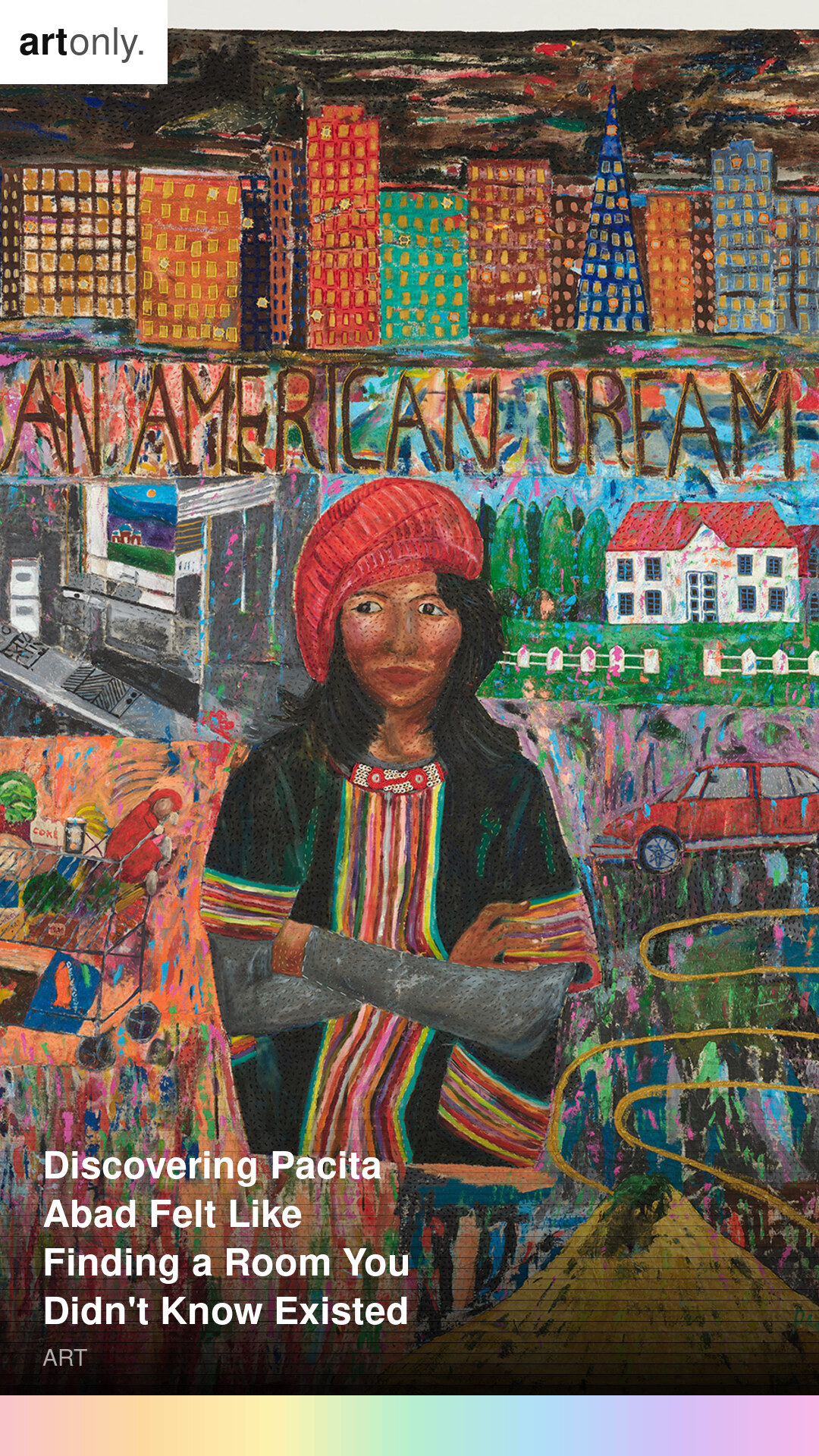
The trapunto paintings are the works most likely to produce this response. Trapunto is a quilting technique — fabric stuffed to create raised surfaces — and Abad adapted it for large-scale paintings that have a physical, three-dimensional presence unusual in painting. These canvases bulge and protrude. They use materials from the places she traveled — fabric, buttons, coins, shells — in accumulations that look both chaotic and precisely organized. The color is extraordinary: saturated, bold, unafraid.
What the Room Contains
The room I found — or found again, having seen her work in passing before but not stopped — contains a kind of painting that exists outside most of the critical frameworks I was trained in. Abad wasn't operating primarily within the Western contemporary art canon. She was drawing from Filipino folk traditions, from the visual cultures of Asia, Africa, and Latin America, from sources that were not the sources that got discussed in the seminars.
This outside-ness isn't a problem with her work. It's a problem with the frameworks. The frameworks were narrow, were exclusive in both the formal and literal sense, were organized to value certain kinds of painting and not others. Abad's work is now being seen in the context of art world conversations about those exclusions, and the conversations are improving the art world's ability to see what was always there.
But I want to stay with the pleasure before the politics. The paintings are delightful in a way that too much contemporary art is afraid to be. They invite looking. They are dense with detail that rewards close attention. They use color with a confidence that produces a physical response — not metaphorically but actually, a response in the eye and the chest.
The Recovery
There's a particular pleasure in discovering work that has been waiting to be found — that existed, fully formed, through the years when you weren't aware of it, accumulating its power without your knowledge. Discovering Abad doesn't change what she made. It changes what you have access to.
I think about all the rooms I don't know exist yet — all the artists who are waiting to be found, who made extraordinary things that the machinery of art history hasn't yet circulated widely enough to reach everyone who would love them.
The room Abad occupies is worth the journey. Go in and stay for a while.
The discovery narrative can be limiting even when it's real — it places the discoverer at the center of a story that should center the artist. What matters about Abad's work is not that it was waiting to be found by people like me, but that it exists at all, that it was made with such abundance and such commitment over such a long career. She traveled to more than sixty countries, made work in dozens of contexts, and kept a practice alive that the mainstream was not supporting.
The room she built — piece by piece, trip by trip, bolt of fabric by bolt of fabric — is large and strange and full of color. The invitation has been open for years. The fact that more people are accepting it now is not her good fortune. It's ours.