The Figure in the Landscape
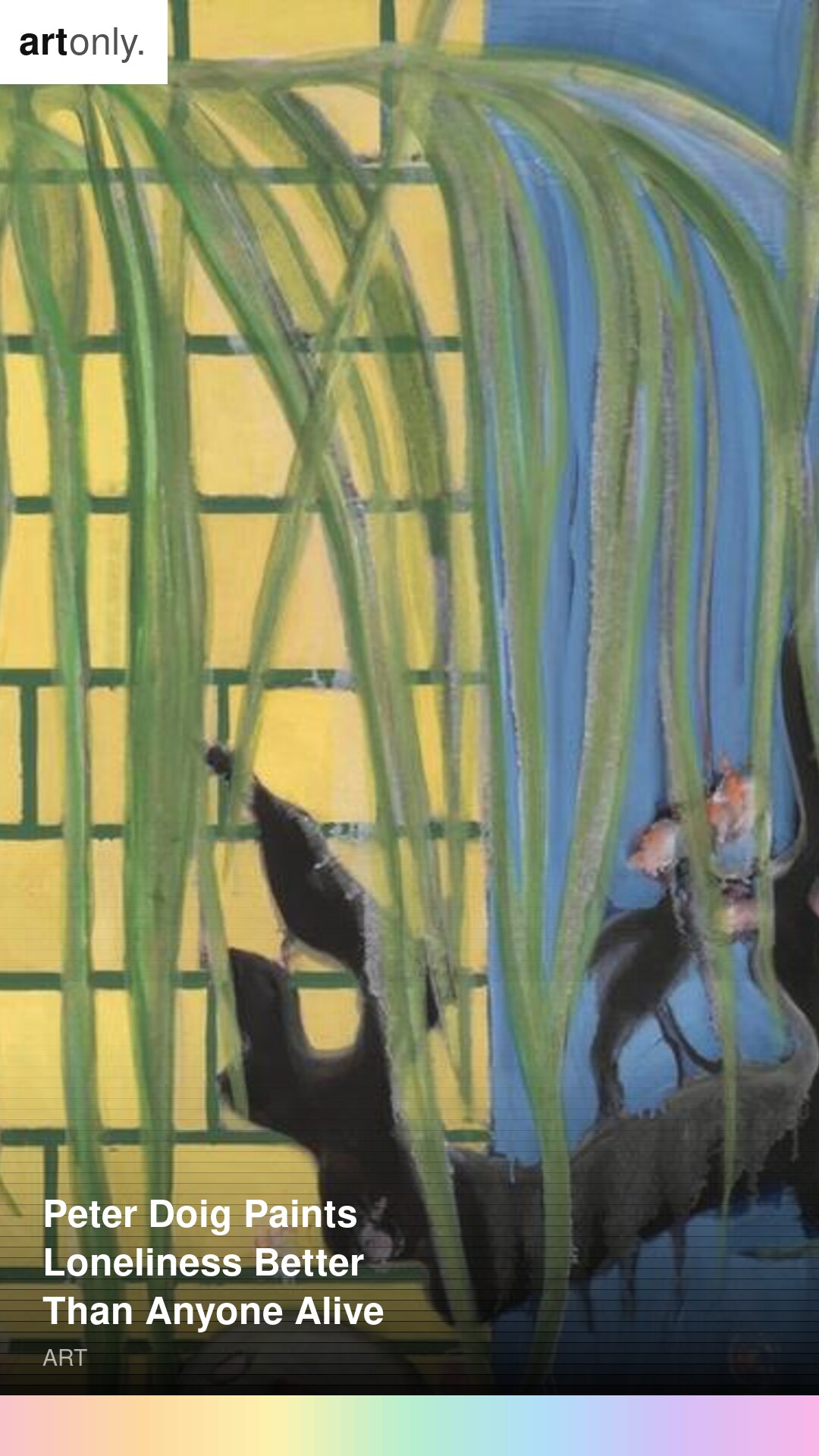
There is almost always a figure in a Peter Doig painting. Sometimes it's small — a speck in the distance, a silhouette against water or snow — and sometimes it's substantial, occupying the foreground, but even then there is an essential aloneness about it. The figure is never entirely in relation to other figures, or when it is, the relationship is ambiguous, unresolved, defined by the space between rather than the contact. He paints loneliness in the way that the best figurative painters paint it: not as absence but as presence, as something with weight and texture.
I spent time with the survey of his work that came through in early 2022 and found myself standing in front of paintings I'd seen in reproduction for years with the specific feeling that comes when the image you know is replaced by the object. Scale matters. The surfaces matter. The way paint is applied — the decisions made at a level smaller than the composition, at the level of the gesture and the mark — carry information that reproduction can't transmit.
Doig is Canadian-born, grew up in Trinidad, has been based in Trinidad again since the early 2000s. His work is saturated with specific geographies — Canadian winters, Caribbean light, European landscapes filtered through the distance of memory and imagination — and the specificity is part of the loneliness. These are places felt from outside themselves, seen through the membrane of absence.
What the Surfaces Do
The surfaces in Doig's paintings are extraordinarily complex. He works in layers, building up paint that reveals earlier decisions through the final one — sometimes through transparency, sometimes through partial coverage, sometimes through the way earlier marks influence the character of later ones. The result is paintings that have a depth that isn't perspectival. The depth is temporal: you're seeing multiple moments of making simultaneously.
This temporal depth gives the paintings their particular quality of memory. Things that are remembered rather than observed have this layered quality — the original experience and all the subsequent processings of it sitting on top of each other, the most recent understanding not erasing but modifying what came before.
The snow paintings do this most explicitly. The snow in Doig's paintings is not observed snow — it's snow as felt phenomenon, as atmosphere, as the specific quality of cold and isolation and silence that snow carries in the memory of someone who has experienced it. The paint itself mimics this phenomenological quality: thick, layered, simultaneously opaque and luminous.
'Blotter', one of his most discussed works, holds a figure skimming across a dark lake, the reflection below doubling and inverting it. It's an image that shouldn't carry the weight it carries — a single figure on water in the dark — and carries it anyway, completely. I stood in front of this for longer than I usually stand in front of anything.
The Question of Sentiment
Loneliness as subject risks sentimentality — the emotion aestheticized into something comforting that has lost the edge of the real thing. Doig avoids this, I think, by refusing to resolve the loneliness into meaning. His figures are alone without any suggestion that the aloneness is noble or instructive or pointing toward something. It just is. The painting doesn't tell you what to feel about it.
This restraint is a formal achievement as much as an ethical one. The refusal to editorialize — to tip the image toward pathos or beauty or critique — leaves the loneliness genuinely present rather than aestheticized away.
Better than anyone alive. I believe that.
The loneliness in Doig's paintings is not pessimistic exactly. It has a quality of acceptance — of figures who are alone without complaint, who inhabit their isolation as something fundamental rather than temporary. This acceptance is different from resignation. It's more like a clear-eyed recognition of the terms of existence, a looking-at without looking away.
He paints loneliness better than anyone alive. Standing in front of these paintings, I feel accompanied in mine. That's a paradox that the best art produces, and I don't want to explain it away.