The Reports of Its Death
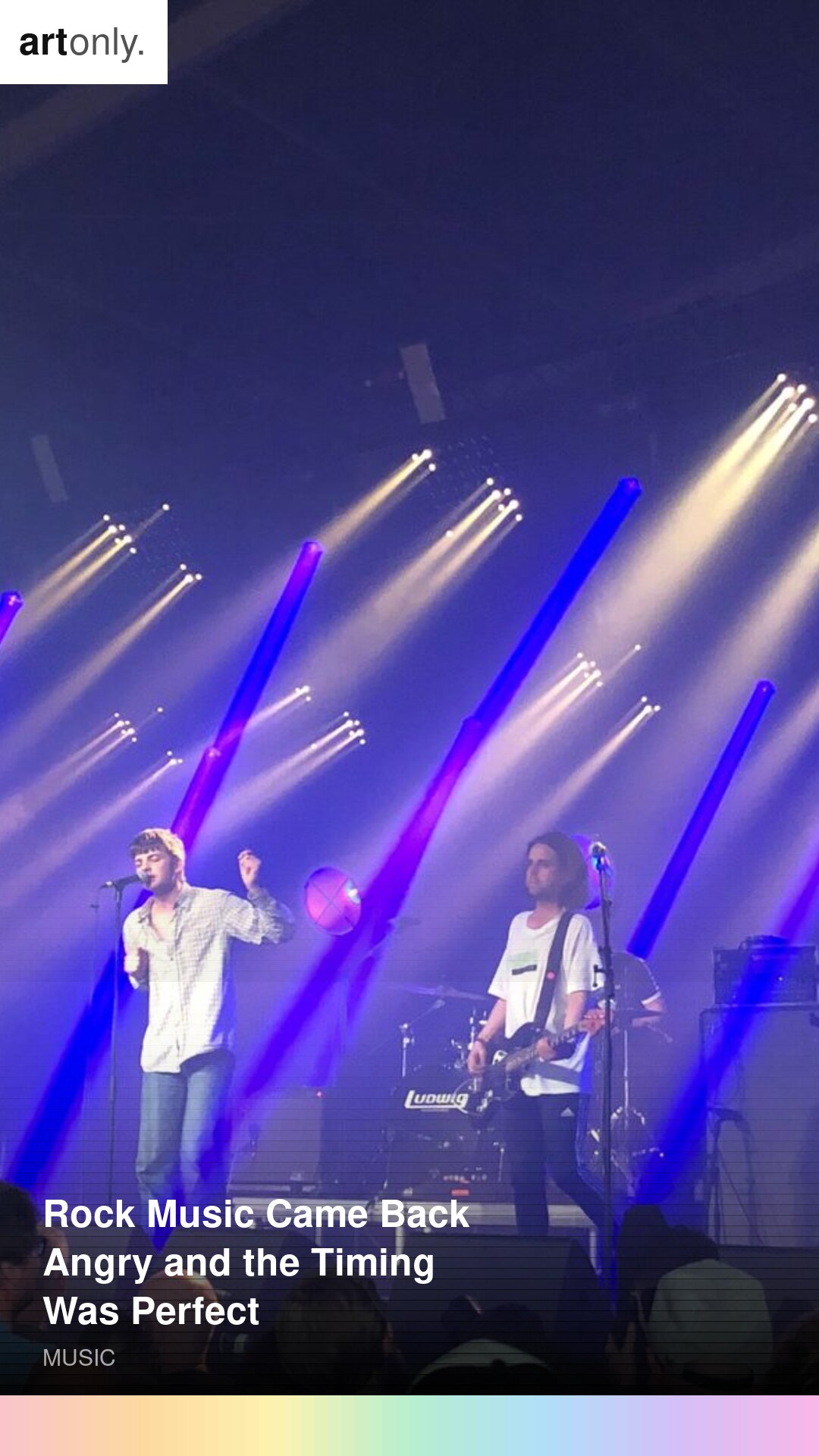
Rock music has been declared dead so many times that the diagnosis has become its own running joke. But through 2023 and 2024, a cluster of bands demonstrated that guitar-driven music was not merely surviving but producing some of the most vital and urgent work in any genre. Fontaines D.C., Turnstile, and Idles led a resurgence that felt less like nostalgia and more like necessity.
Fontaines D.C. and the Irish Reinvention
Fontaines D.C. evolved with startling speed from scrappy Dublin post-punks to one of the most ambitious rock bands on the planet. Their willingness to incorporate electronic textures, cinematic arrangements, and literary ambition into a fundamentally guitar-driven framework produced music that felt genuinely new rather than referential. They proved that rock music could be intellectually serious without being joyless.
Turnstile Broke Every Rule
Turnstile accomplished something that hardcore music had never previously managed: genuine crossover without dilution. Their sound remained rooted in the aggression and communal energy of hardcore punk, but their melodic sensibility and visual presentation opened doors to audiences who would never attend a traditional hardcore show. The result was a band playing festival main stages while maintaining the kinetic intensity of a basement show.
Idles and the Politics of Volume
Idles continued to make music that was simultaneously abrasive, funny, politically engaged, and deeply humane. In an era of careful artistic positioning and algorithmic optimization, their commitment to volume, directness, and emotional honesty felt almost confrontational. Their live shows remained among the most physically intense experiences available in any genre.
Why Now
The resurgence of guitar music in 2023-2024 was not arbitrary. These bands emerged during a period of genuine political and social turbulence, and their music provided something that streaming-optimized pop could not: the cathartic release of collective noise. There is a reason rock music tends to flourish during periods of cultural anxiety. The instrument is loud, the format is communal, and the energy is oppositional. Sometimes that is exactly what the moment requires.
The Structural Argument for Guitar Music's Return
The narrative of rock's death was always partly a story about distribution and algorithmic visibility rather than creative vitality. Guitar-driven music never stopped being made. What changed was the metrics-driven prioritisation of certain sounds by streaming platforms, which rewarded high-skip-rate, high-stream-count music over the kind of sustained engagement that defines how rock audiences relate to their favourite bands. The result was a statistical invisibility that was mistaken for cultural absence.
Fontaines D.C.'s trajectory illustrates this precisely. Their 2019 debut Dogrel was critically acclaimed and commercially modest. Their 2020 follow-up A Hero's Death expanded their reach. By the time Romance arrived in 2024, they were headlining arenas. The audience was not discovered by an algorithm. It was built through years of touring, word of mouth, and the kind of devoted fandom that guitar music has always generated in listeners who find it. The streaming numbers eventually reflected what was happening on the ground, but they lagged behind the reality by years.
What Fontaines D.C. Actually Built
The literary ambition of Fontaines D.C. is worth taking seriously on its own terms rather than simply noting it as a distinguishing characteristic. Front man Grian Chatten has cited Samuel Beckett, Patrick Kavanagh, and Brendan Behan as influences, and the engagement with Irish literary tradition is audible in the band's lyrics in ways that go beyond name-dropping. The tension between aspirational beauty and provincial constriction that runs through much of Irish literature informs songs that are ostensibly about youth and movement but actually about the impossibility of standing still in a culture that rewards either conformity or exile.
This is a recognisable tradition, the artist who leaves in order to write about what they left, but Fontaines D.C. have found a sonic language for it that does not depend on the listener knowing the literary context. The music carries the emotional weight independently, which is what separates the band from acts that perform literary awareness without integrating it into the work.
The Hardcore Crossover Problem
Turnstile's crossover success raised a question that hardcore music has circled without resolving for decades: what does it mean for a genre built on opposition and community to become commercially successful? The typical resolution of this question in previous eras involved the band either retreating from the mainstream to protect their credibility or fully embracing the mainstream and being abandoned by the community that made them.
Turnstile found a third path, and it worked because they never pretended that their music was only for hardcore audiences. The melodic sophistication of Glow On was not a concession to pop taste. It was the band making the best version of what they had always been, and discovering that the best version happened to be accessible to a wider audience than they had previously reached. This is a meaningfully different dynamic from calculated crossover, and the audience could tell.
The same kind of authentic expansion distinguishes Billie Eilish's approach to genre, where the critical move has always been making the personal version of something rather than the commercially optimized version and trusting that the personal version will find its audience. Rock music's anger is most effective when it is genuine rather than performed, and in 2023-2024, the bands leading the resurgence were clearly angry about things that were actually happening. That contextual urgency, the sense that the music is responding to something real rather than operating in an aesthetic vacuum, is what the best rock has always required and what the resurgence bands provided.