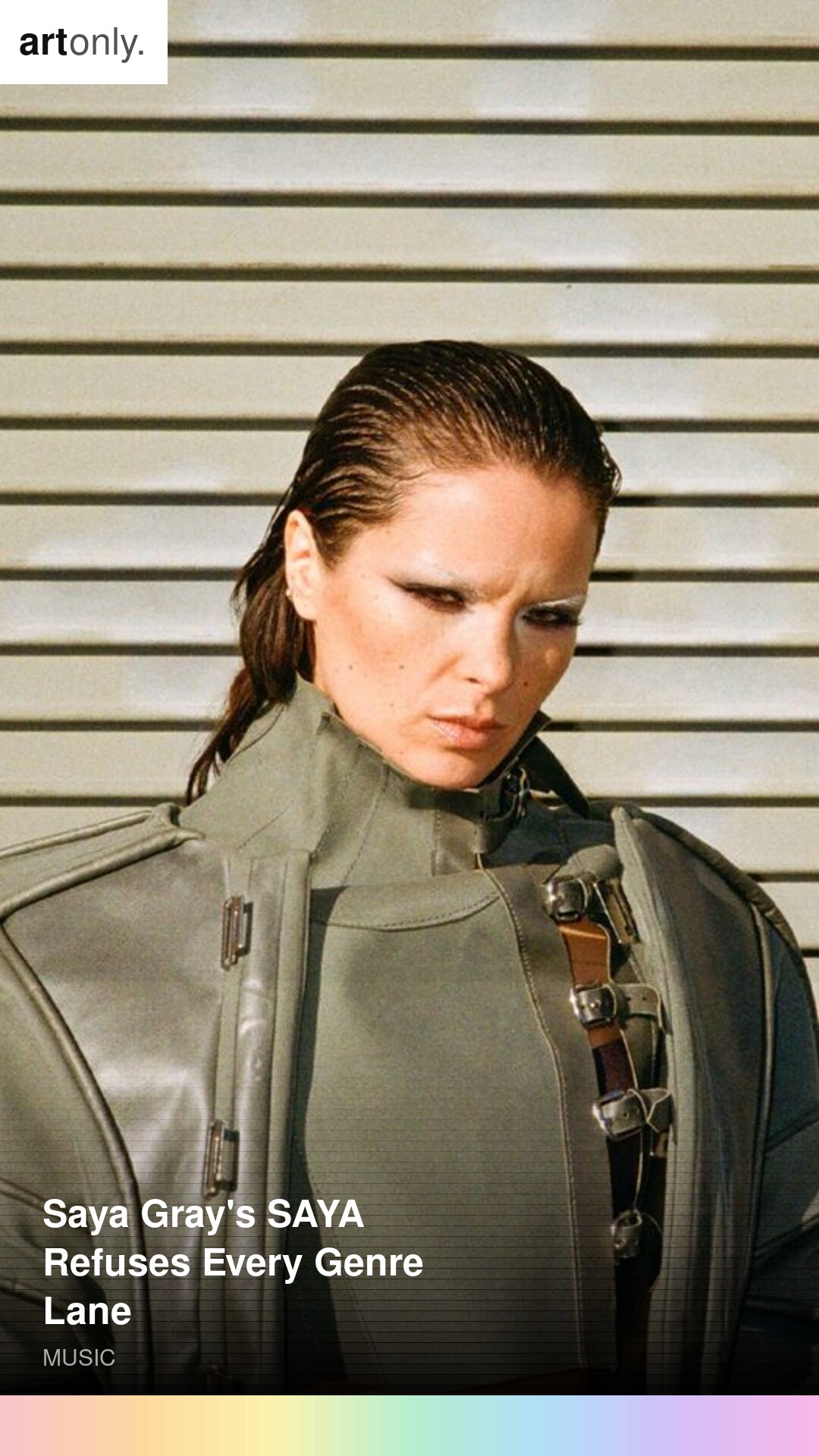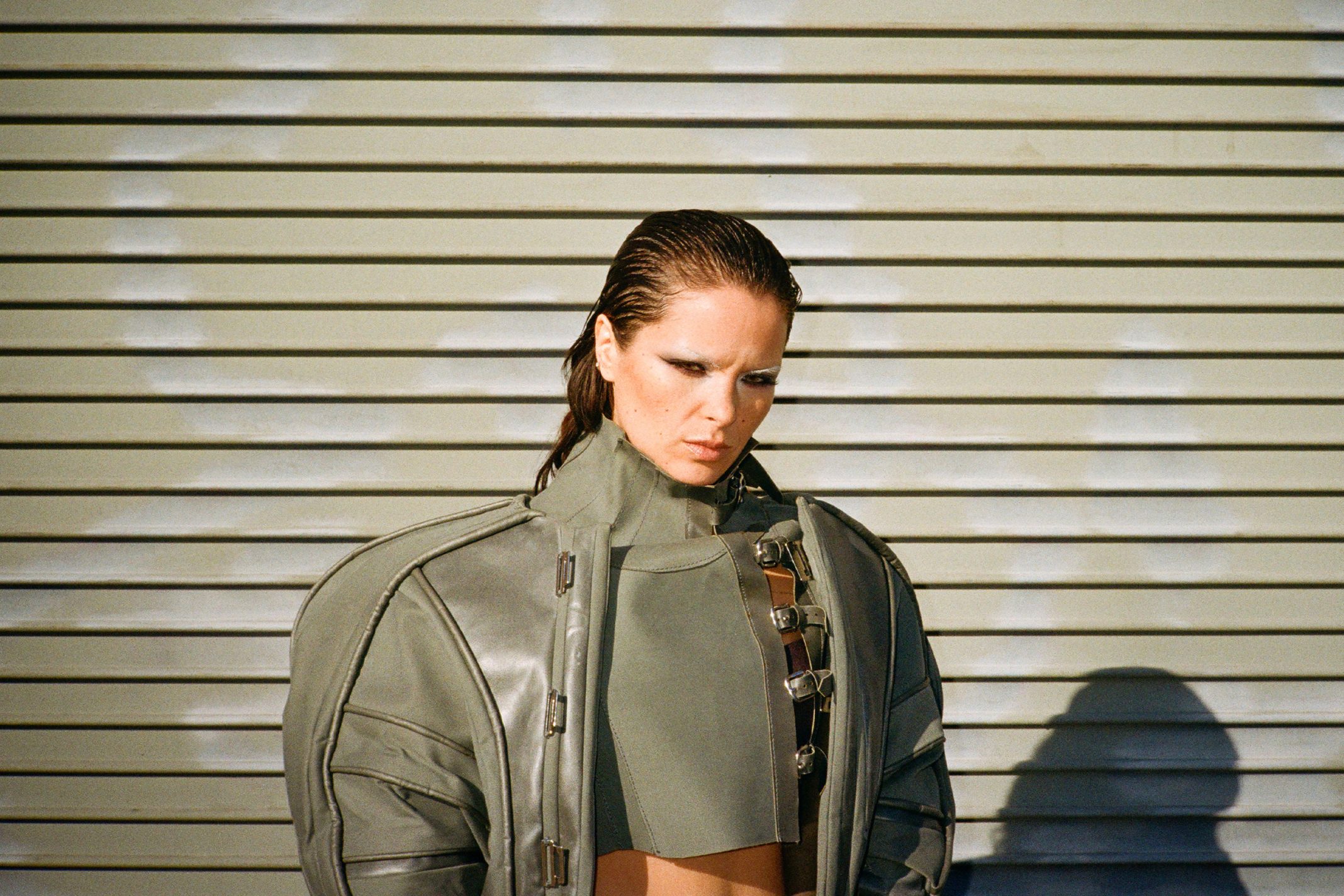
A Toronto Bassist Who Refuses Every Lane
Saya Gray spent years on other people's stages. She played bass for Daniel Caesar on the kind of sold out runs that should have made her a known quantity in Toronto's R&B circles. She served as Willow Smith's musical director, shaping the live arrangements of an artist whose own catalog jumps between metal, folk, and pop without apology. Most musicians who pass through that many rooms end up as a session player, recognized by fellow musicians and largely invisible to listeners. Saya took the opposite route. She started releasing music under her own name, and the thing she made was so resistant to categorization that critics still cannot agree on what genre to put it in.
Her debut full length, SAYA, landed in February 2025 on the British label Dirty Hit. The album was shortlisted for the Polaris Music Prize a few months later, then earned her two Juno nominations in 2026, including Breakthrough Artist of the Year. By Spotify's count she sits at roughly 375 thousand monthly listeners, which feels both correct and absurd for music that includes scraps of bossa, Sade adjacent slow jams, plinking acoustic interludes, and abrupt shifts into something harder.
What SAYA Sounds Like When You Stop Trying To Name It
The temptation with an album this slippery is to reach for the qualifier experimental and call it a day. That label would be a way of saying you have not figured out how to listen to it yet. The record is more accessible than the experimental tag suggests. Songs like SHELL (OF A MAN) and OH, BETTY! open with hooks any pop fan would recognize, and they linger long enough to make a case for themselves before mutating into something else. The trick is the abruptness. A folk passage gets interrupted by a synth crash. A confessional vocal hands off to a sample that sounds like it was lifted from a 1970s film score.
Saya has said in interviews that the album is structured around questions, not answers. She told Dazed that her music is for people who are sitting with the feeling of what is going on, and that quote is a fair description of how the record operates from the inside. The instability is the point. She is not building a world for the listener to settle into. She is building the experience of trying to place yourself in a world that keeps shifting underneath you.
The Beaches Childhood, And Why It Matters
She grew up in Toronto's Beaches neighborhood, the lakeside east end strip that is more known for cafes and runners than for producing artists who get name checked on Anthony Fantano year end lists. Her parents are jazz musicians. Saya has spoken about being raised in a house where the music never stopped, and where the assumption was that her relationship with it would be vocational rather than recreational.
That backstory shows up in the bass playing. Listen to her own records and you can hear someone who learned bass first and then taught herself to write songs around it. The low end on SAYA is not just the rhythmic foundation. It is melodic, almost lead instrument behavior, the way Esperanza Spalding plays bass on her own records. Saya's bass tone tends to be warm and round, and she lets it sit at the front of the mix in places where another producer might have buried it.
Why She Moved To California
She has been based in California for several years now, working out of a home studio she has talked about in print as a deliberately small space. The decision to leave Toronto reads, in interviews, as a creative one rather than a careerist one. She was not chasing a label deal. She was looking for room to make records the slow way. The Dirty Hit deal came afterward, on her terms. The label is best known in North America for The 1975 and Beabadoobee, but it has a track record of letting its artists deliver records that ignore radio formatting, and Saya's deal seems to work along the same lines.
There is a quiet point being made by an artist who passes through R&B Toronto, becomes Willow Smith's MD, and then puts out a record that sounds nothing like any of those rooms. The point is that the genre lanes belong to the industry, not to the musicians. Saya's catalog reads like an argument that you can be a working session player with deep technical credentials and still make solo records that ignore the categories the industry expects you to land in.
Where She Goes From Here
Her tour through 2026 has been steady but not aggressive. She is opening for larger artists in some markets and headlining mid sized rooms in others. The Juno nominations gave her a Canadian boost that she did not strictly need but was happy to take. She has been writing what she calls follow up material in interviews, with no committed release date.
If you have not yet sat with SAYA, the doorway tracks are PUDDLE (OF ME), H.B.W., and EXHALE. None of them is the loudest song on the record, but each one shows you a different angle on what she is doing. Start there, then let the album shuffle on. The thing she made is structured to disorient you, and she is correct that disorientation is a perfectly normal feeling to take into 2026. Saya Gray is the rare new artist who feels like she is asking the right questions in the right key at the right speed. The answers, fortunately, are still under construction.