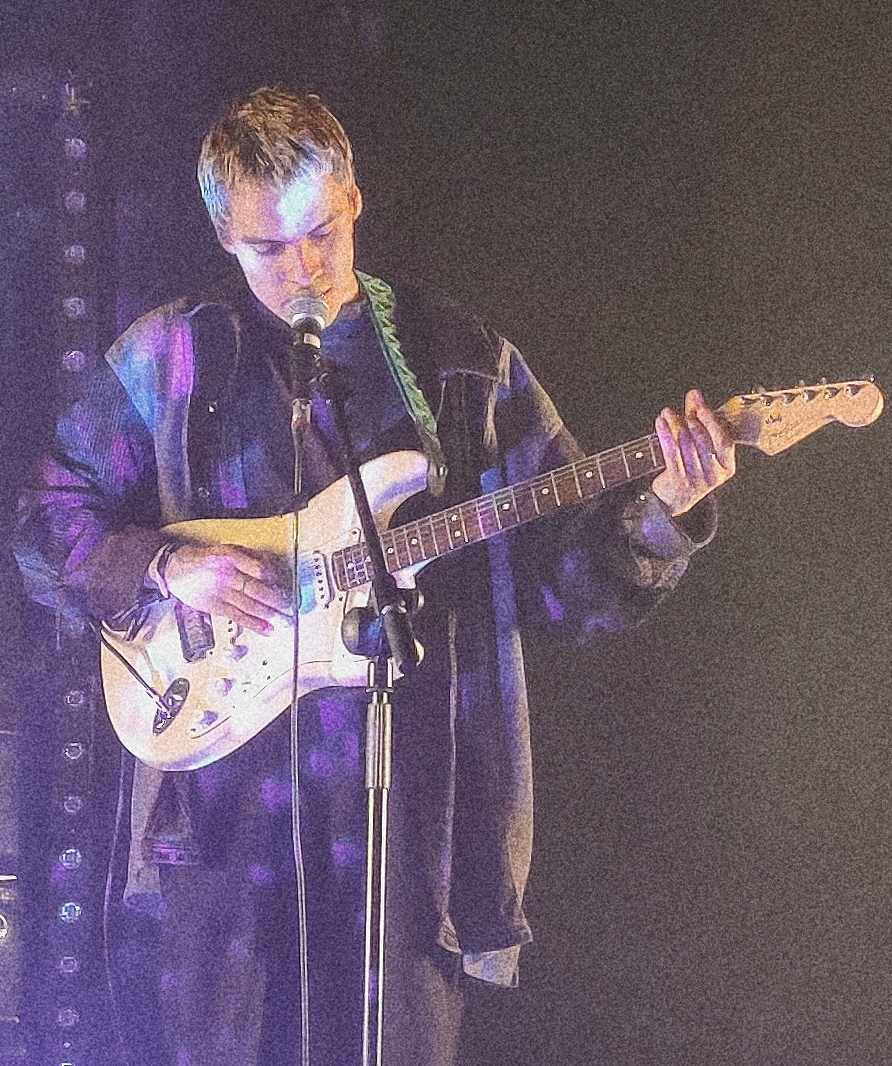
Salvador Navarrete and the Architecture of Noise
Sega Bodega is the project of Salvador Navarrete, a London-based producer, visual artist, and designer whose reputation was built largely behind the scenes, producing for Shygirl, working within the extended network of artists connected to Dazed and the harder edge of UK club culture, before Harold arrived in 2022 and reframed everything.
Harold is not an easy record. It does not offer obvious entry points. It begins mid-thought and ends mid-sentence, and the spaces between tracks feel less like breaks and more like the sound pressure dropping before something lands. To ask "who is Harold" is to ask the right question and expect no clean answer.
The Album as Character Study
Harold is a name, a character, a mood, something between a self-portrait and a person Navarrete invented to carry the weight the music needed. The record operates like a psychological document: tracks like Mandy and PDA move through tenderness and aggression without ever settling, the production simultaneously polished and corroded, vocals processed until they are more sensation than speech.
What makes Harold work is the discipline underneath the apparent chaos. Every abrasive texture, every wall of distorted sound, serves a compositional purpose. Navarrete understands that maximalism is not the same as excess, the album is dense but never bloated, confrontational but never gratuitous.
Production Language
The sonic vocabulary of Harold draws from industrial music, from the harder end of UK club, from hyperpop's willingness to overload the signal, but it does not sit comfortably inside any of those categories. Navarrete's production is tactile in a way that is rare: you can feel the bass frequencies physically, and the high-end processing creates a kind of tinnitus shimmer that stays with you after the music stops.
His collaboration with Shygirl across multiple projects, she features here, represents one of the most interesting creative partnerships in contemporary underground music. Both artists operate at the intersection of club functionality and avant-garde formal experiment, and their instincts for when to push and when to pull back are closely aligned. The Shygirl feature on Harold lands as a genuine duet rather than a cameo, two sensibilities that fit together precisely because they both know where the edges of the sound are.
The NUXXE collective context is part of what produced the conditions for Harold. The network of mutual influence between Navarrete, Shygirl, Oklou, and Coucou Chloe created an aesthetic ecosystem that allowed each artist to push further than they might have alone, because the work was being made in dialogue with peers who understood the shared project. Harold is a product of that dialogue as much as it is a product of Navarrete's individual sensibility.
The Visual Dimension
Navarrete is a designer and visual artist as well as a producer, and Harold reflects that. The record's aesthetic, stark, high-contrast, deliberately uncomfortable, extends beyond the music into artwork, video, and live presentation. The project exists as a complete object, not just an audio release. That coherence of vision is increasingly rare and makes Harold feel like a statement rather than a debut.
The visual language Harold occupies is connected to a strand of contemporary design and art that uses discomfort as an aesthetic value, that treats the viewer or listener's unease as information rather than as a problem to be resolved. The album cover and accompanying visuals do not offer comfort or clarity. They are part of the same project as the music: the project of documenting Harold, whoever and whatever Harold is.
Where Tenderness Lives in Difficult Music
The underrated thing about Harold is how tender it is underneath the noise. The processing and distortion that coat the surface of the record are not a barrier to emotion; they are the form the emotion takes. Several tracks, particularly the quieter ones that appear mid-album, have a quality of exposure that the more aggressive material actually protects. The noise is armor. When it drops away, the vulnerability underneath is more legible for having been surrounded by all that sound.
This is a sophisticated formal choice. Difficult music that has nothing underneath the difficulty is merely difficult. Harold earns its abrasiveness because what it is protecting is real and specific and genuinely moving when you find it.
Why It Matters
Harold arrived at a moment when a lot of underground music was becoming legible, absorbing influence quickly, smoothing out the edges, finding forms that worked for streaming playlists and algorithmic discovery. Harold did the opposite. It got harder to parse the more time you spent with it, more specific in its emotional coordinates, less interested in meeting the listener halfway.
For that reason alone it deserves the attention it received, and continues to receive from producers, DJs, and artists trying to understand how a record can be this precise and this destabilizing at the same time.
Harold is not for everyone. It is, however, exactly what it set out to be.


