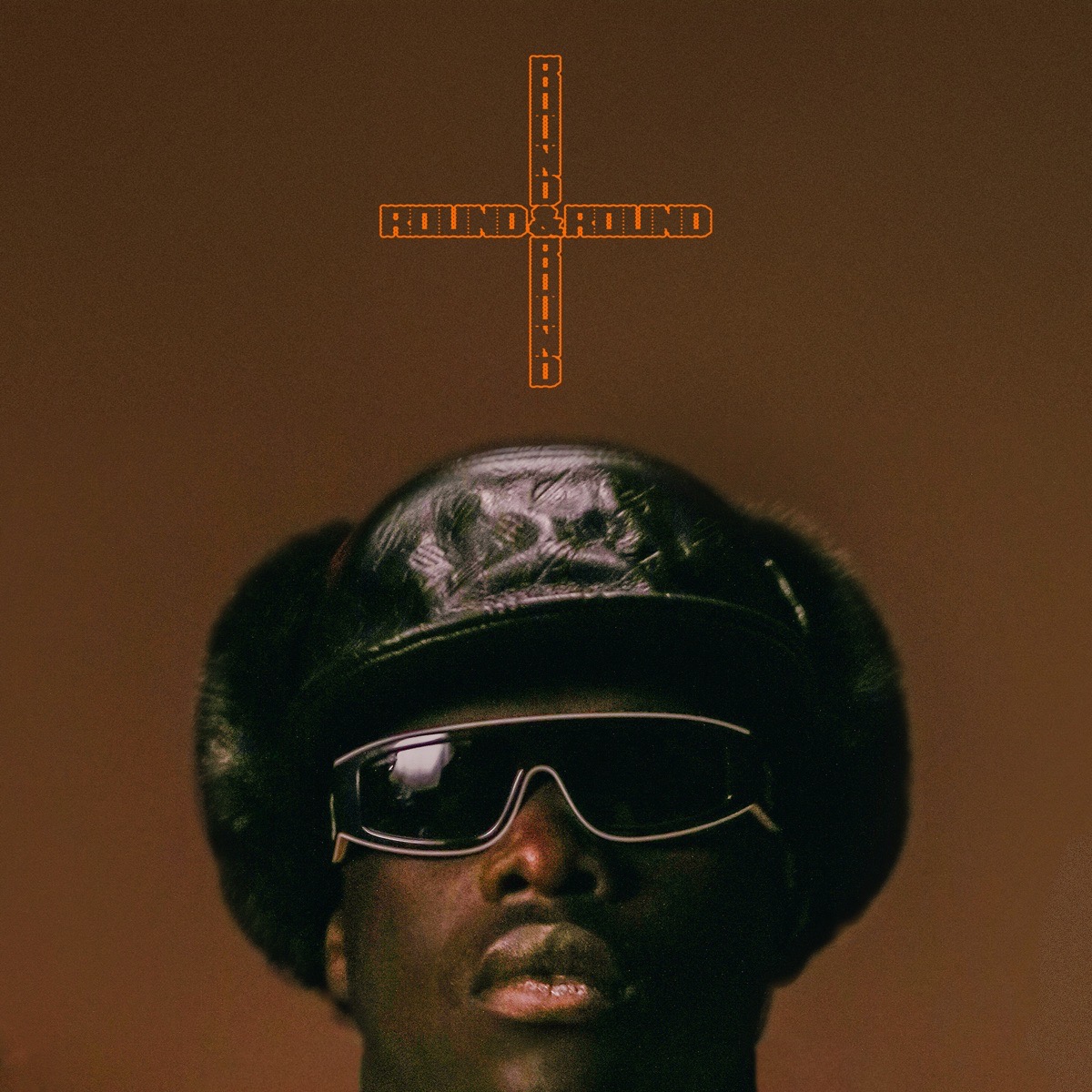
On January 30, 2026, Sam Shackleton released Euphoria Bound on AD 93, a 10-track album mastered and cut by Rashad Becker, with artwork by the German painter Strawalde and design by Yves Jates. It is his first solo record for the label and his most direct set of productions in years.
The First AD 93 Record
Shackleton has released music on Skull Disco, Perlon, Woe to the Septic Heart, and Honest Jon's across a career that began in the early 2000s. Each label change marked a shift in approach. The move to AD 93, the London imprint that has released records by Tirzah, Actress, and Arca, places him in a different curatorial context than his earlier homes on bass music and experimental club labels.
The label stated in the press release for Euphoria Bound that the approach is more direct than his recent releases, with textures that accumulate and disintegrate with renewed urgency. That description holds up. The record is not more accessible than his previous work, but it is more immediate. The patterns arrive faster and hit harder than the slow, sprawling structures of Music for the Quiet Hour from 2012.
Lancashire to Berlin
Shackleton was born in Lancashire, England, and relocated to Berlin in 2008. Berlin changed the context of his music without changing its fundamental concerns. He is not a techno producer, though techno is audible in his rhythmic architecture. He is not a dubstep producer, though his bass weight descends directly from that lineage. His genres, on databases and in reviews, cycle through dubstep, tribal ambient, minimalism, and musique concrete without any of those labels being fully accurate.
His debut full-length Three EPs was released on Perlon in 2009, assembled from three separate 12-inch releases. In 2012, Music for the Quiet Hour and The Drawbar Organ EPs arrived on Woe to the Septic Heart, featuring spoken word from his recurring collaborator Vengeance Tenfold. In 2016, Devotional Songs, recorded with singer Ernesto Tomasini and released on Honest Jon's, earned year-end placements from The Wire, The Quietus, and SentireAscoltare.
Ten Tracks in Fifty-Nine Minutes
Euphoria Bound runs 59 minutes across 10 tracks. The titles give a sense of the thematic territory: Elemental Dream, Philistine Wavelength, Contagious Illusion, Crushing Realities, The Unbeliever's Pulse, When Memory Ceases, The Past Awakening, The Soul of Everything, The Dream in Fragments, and Buried and Irretrievable. These are not ironic titles. Shackleton has always named his tracks with the directness of someone who means what he writes.
Rashad Becker's mastering is worth noting specifically. Becker is the mastering engineer at Dubplates and Mastering in Berlin and has worked on records by Pan and PAN label releases, Burial, and a substantial portion of the European experimental club catalog. His ear for low frequencies and dynamic range is audible in how Euphoria Bound sits in a listening environment. The bass is present without overwhelming the mid and high texture. Strawalde's artwork, from an 84-year-old German painter born Jurgen Bottcher, gives the packaging a visual weight that matches the music.
The Urgency Argument
The case for Euphoria Bound being more urgent than Shackleton's previous records rests on tempo and density. His albums from 2012 onward moved slowly and expanded their structures across long durations. The Quiet Hour was a record you had to sit inside rather than follow. Euphoria Bound is still demanding, but the tracks do not require the same extended submission. They make their structural arguments within more compressed timeframes.
The Quietus reviewed Euphoria Bound and called it a body of left-foot-forward material chiseled specifically for the soundsystem. That framing, soundsystem music, places it in a tradition of bass music designed for physical impact at volume. Shackleton's records have always had that dimension. Euphoria Bound is one where that dimension is more prominently positioned than on his recent work.
This is not a simpler record. It is a more concentrated one.
Skull Disco to AD 93
Skull Disco, the label Shackleton co-founded with Appleblim, ran from 2006 to 2008 and was among the most distinctive operations in the dubstep ecosystem before that word became a genre category. The label released Shackleton's early material in distinctive hand-stamped white label format and generated significant critical and collector attention before closing.
The intervening years saw him build Woe to the Septic Heart as a home for his own output and associated records. The move to AD 93 for Euphoria Bound is not a retreat from independence but a recognition that the right label context can change how a record is received. AD 93's catalog reaches a different set of listeners than Woe to the Septic Heart's core audience.
The Record He Needed to Make
Shackleton has released music consistently since the mid-2000s without following any obvious market logic. He did not pursue the commercial dubstep path when dubstep became commercially viable. He did not position himself as a techno producer when that circuit offered more booking fees. He made increasingly abstract, personal, and long-form records on small labels with devoted audiences.
Euphoria Bound sits differently in that sequence. It is still completely recognizable as his work, with the same rhythmic approach and the same interest in texture as a structural element rather than a decorative one. But it moves more quickly and with more physical urgency than anything he has released in over a decade.
That shift is not a concession to accessibility. It is a change in what he found interesting to make. Twenty years of releasing music without commercial compromise earns someone the right to be taken at face value when the record changes character.