The Space Between Come Here and Stay Away
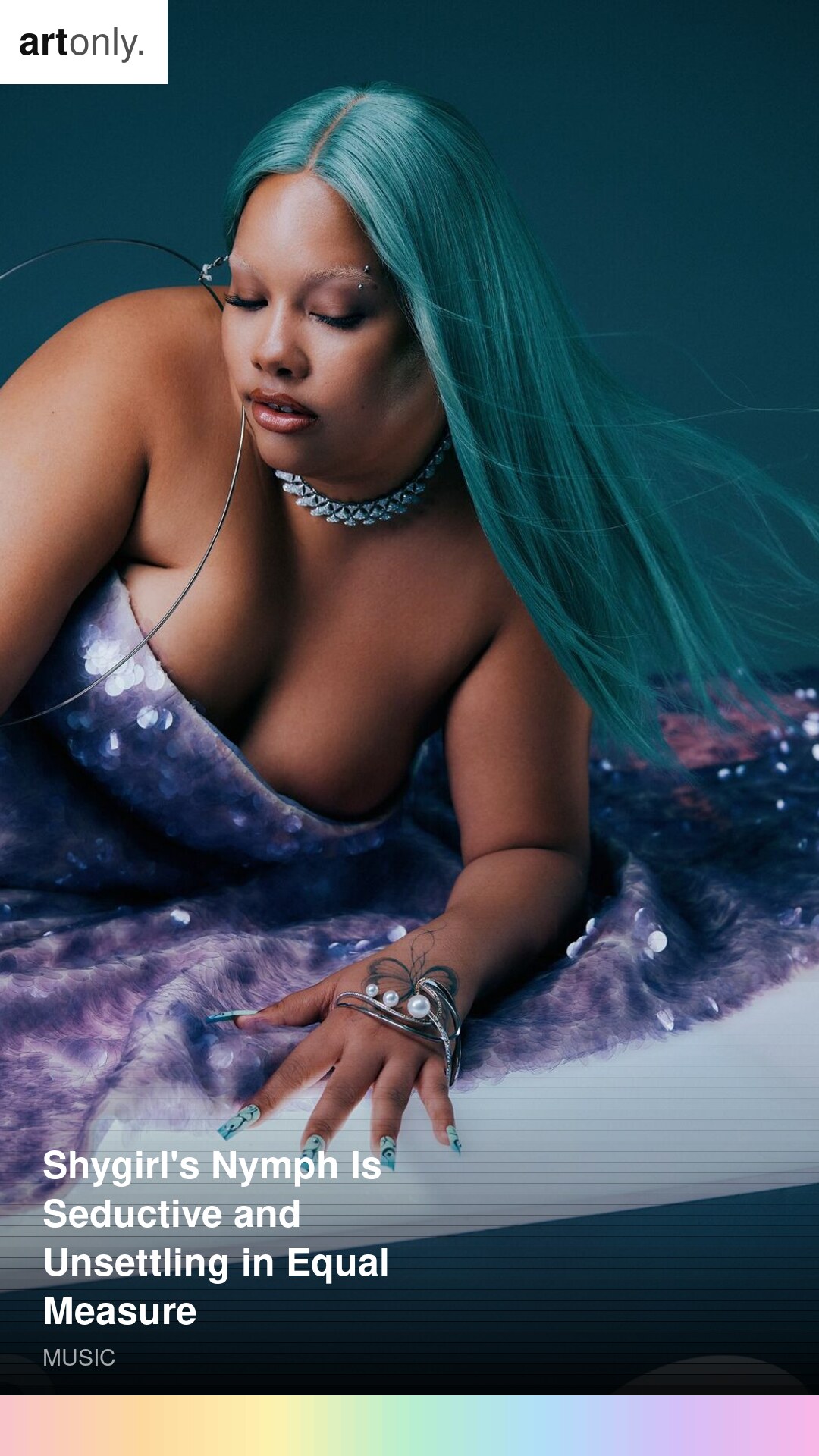
Nymph operates in a specific zone of tension that most music doesn't try to inhabit. The space between desire and threat, between invitation and warning, between the erotic and the disquieting. Blane Muise, who is Shygirl, has been exploring this territory across a series of increasingly confident releases and Nymph is where the exploration becomes a full command.
She emerged from the experimental club music scene around Nuxxe, the London collective she co-founded, and the production aesthetic that comes from that world, a certain kind of bristling, bass-heavy electronic music that sounds beautiful and slightly dangerous, is present throughout Nymph, but transformed by the addition of songwriting ambition. This is not just a club record. It is a pop album that the club can handle.
The production involves multiple collaborators, Arca, SOPHIE collaborators, producers from across the experimental pop landscape, and the variety of approaches across the record never fragments into incoherence. Shygirl's voice and perspective bind it together. There is a consistent emotional intelligence in the writing that holds the formal variety in place.
What Desire Sounds Like Without Apology
Most pop music about desire either sentimentalizes it into romance or distorts it into fantasy. Nymph does neither. The desire in this music is complicated, self-aware, aware of its own power and its own vulnerability, aware of the historical weight of a Black woman's desire being subject to particular kinds of distortion and control.
Shygirl is writing about wanting and being wanted in ways that do not surrender agency. She is both subject and object in this music, both the one doing the desiring and the one being desired, and the navigation of both positions simultaneously is done with a sophistication that you feel before you intellectualize it.
The vocal performances are extraordinary. She uses her voice across a wider range than most electronic-adjacent artists permit themselves, whispered, belted, processed, unprocessed, emotionally exposed in moments that contrast with the cool surface of the production. Wildfire is where all of this reaches its fullest expression: a track where the production and the vocal are in genuine conversation, where the emotional content shifts across the song's runtime in ways that make listening feel like experience rather than consumption.
The opening of Nymph announces what the record is doing before you have time to adjust. The sonic palette is immediately distinctive: synthesizers with a bitten-off, almost serrated quality, bass that hits low enough to feel physical, rhythmic elements that are precise without being mechanical. This is production as environment. You are inside it before you decide to enter.
Nuxxe and the Community That Made This Possible
The scene that produced Shygirl matters to understanding what she has done with Nymph. Nuxxe, the collective she co-founded with Coucou Chloe, Oklou, and Sega Bodega, represents a particular strand of British experimental pop that draws from UK bass, club music, avant-garde electronics, and pop song structure simultaneously. The collective's output has been consistently interesting but Shygirl is the member who has moved most decisively toward a mainstream register without losing what made the underground work vital.
That transition requires something specific. Underground aesthetics are partly defined by their resistance to legibility, their refusal of the conventions that make pop music easy to process. Moving toward the mainstream means finding ways to make the work accessible without removing the difficulty that gives it meaning. Shygirl does this by anchoring the formal experimentation to emotional content that is immediately recognizable. You might not be able to name what the synthesizer is doing, but you know what it feels like. The feeling is the entry point.
Sega Bodega's production work on parts of this album represents the Nuxxe aesthetic at its most fully developed. His ear for a certain kind of brittle, pressurized sound has been central to how this whole scene presents itself, and on Nymph the pressure is precisely calibrated. Nothing here sounds accidentally harsh. The harshness is chosen.
The Scene That Made Her
I keep thinking about the scene that produced Shygirl, the world of experimental UK club music, of UK bass and grime and the various hybrid forms that emerged from that substrate, of the specific community around Nuxxe and its allied labels and collectives. This scene has been producing remarkable work for years, much of it not widely discussed in mainstream music criticism, and Nymph feels like it is taking something from that world and bringing it into a space of greater visibility without losing what made it worth paying attention to.
That is a difficult thing. The transition from underground to something more visible almost always costs something, some roughness, some strangeness, some of the specificity that made the work vital in the first place. Nymph does not pay that cost. It keeps all the strangeness and adds polish to the parts that needed polish. That balance is the record's major achievement.
Seductive and unsettling. Both at once. Not alternating. Both.
I want to say something about the live experience because Shygirl in performance is a different argument for this music than the recordings alone make. The presence she brings to a stage, the command of it, the way the performance enacts the record's central tension between invitation and power, clarifies what the album is doing. You leave a show understanding something you could not entirely access from headphones alone.
Where This Leads
Nymph is the beginning of something, not its conclusion. The formal problems she has identified, how to make pop music that carries this specific emotional and political content without sacrificing either the pop or the content, are ongoing problems, and the solution she is working toward is still in process.
The record's final moments are not resolution but suspension. She leaves the tension in place, refuses the catharsis that pop music conventionally delivers at the end of the journey. This is a deliberate choice that some listeners will find frustrating and that others will find the most honest thing the record does. Desire without resolution. Tension maintained. The zone of seduction and threat preserved until the last note.
The next record will tell us more. This one established the terms.