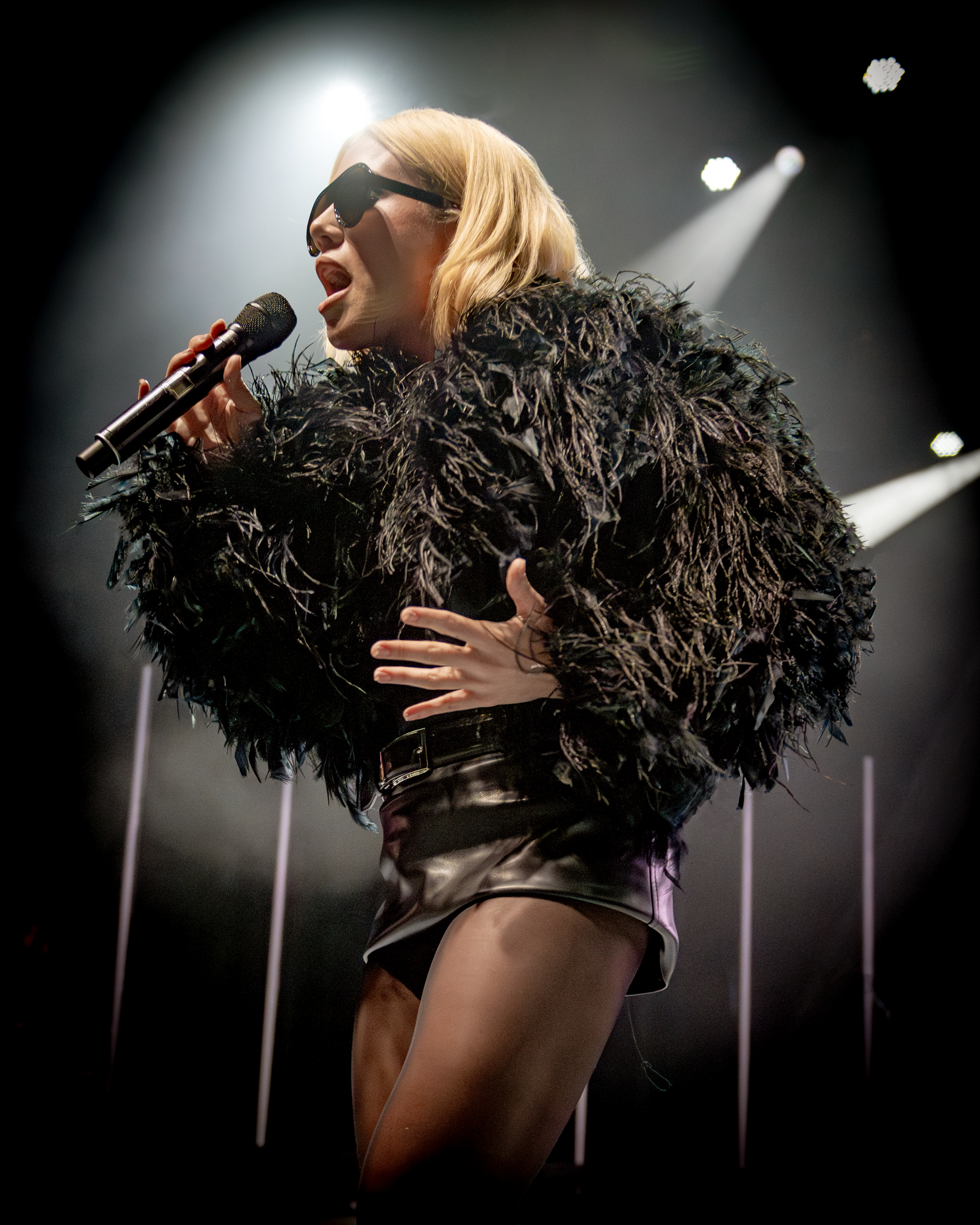
From Catholic School in Missouri to SoundCloud Stardom
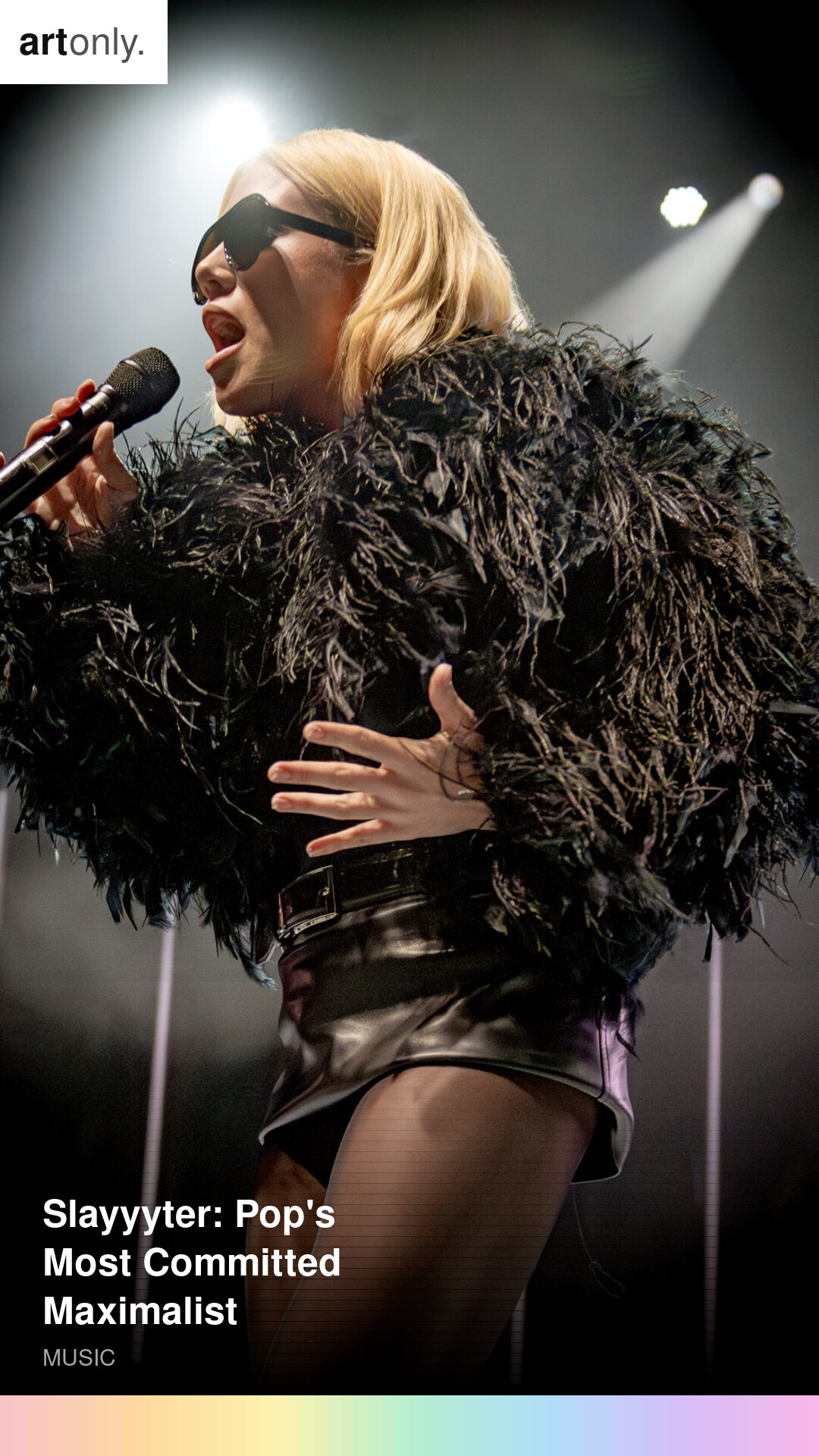
There is something very American about the Slayyyter origin story, and she knows it and leans into it. Catherine Grace Garner was born on September 17, 1996, in Kirkwood, Missouri, attended Catholic school in St. Louis where her family could not afford tuition and enrolled for free, grew up feeling constrained by the church's definitions of acceptable selfhood, and left for the University of Missouri before dropping out to make music full time. That arc, from midwestern Catholic girl to internet pop provocateur, is not incidental to what she makes. It is the material.
She started on SoundCloud under the name Slater, releasing lo-fi material with an eighties-inflected aesthetic that was already distinct from what most people her age were doing. In 2018 she adopted the Slayyyter alias and released "BFF" with Ayesha Erotica, a track that circulated through the corners of the internet where hyperpop and early SoundCloud rap overlapped. It announced something: an artist with a very specific vision of pop music as spectacle, as excess, as a form that could absorb kitsch and irony and genuine emotion without choosing between them.
The Self-Titled Mixtape and 100 Million Streams
The 2019 self-titled mixtape Slayyyter is where she found her audience at scale. Tracks like "Daddy AF" and "Mine" generated over 100 million streams combined, numbers that are significant for any artist but especially for one operating without major label infrastructure at that point. The mixtape drew on the production aesthetics of early 2000s pop, the maximalist, compressed, hook-saturated sound of early Britney Spears and Xtina records, but filtered through a contemporary internet sensibility that made it feel knowingly excessive rather than nostalgic.
The early 2000s reference is central to understanding what Slayyyter is doing, but it requires some precision. She is not making music that sounds like 2002 because she lacks awareness of what came after. She is making music that sounds like 2002 because that era's pop production has qualities she finds useful: the unapologetic loudness, the emphasis on physical pleasure, the willingness to be completely obvious about what the song is trying to do. She uses those qualities as tools, not as nostalgia.
Troubled Paradise and the Debut Album
Troubled Paradise, released in June 2021 through Fader Label, was her formal debut album and arrived with collaborations from producers including Wuki and Gupi. It was a different kind of statement from the mixtape, more considered, more emotionally varied, working through the themes that would define her career: desire, performance, the exhaustion and pleasure of maintaining a pop persona, the gap between the person and the image.
The album demonstrated that Slayyyter was not simply a provocateur with good taste in production. She has genuine songwriting instincts, an ear for melody that persists beneath the maximalist surface, and a quality of commitment to the material that distinguishes artists who mean what they are doing from those who are performing sincerity as an aesthetic choice. She means it.
Starfucker and Chart Arrival
With Starfucker, released September 22, 2023, something shifted in terms of how broadly her music was being received. The album debuted at number 17 on Billboard's Top Dance/Electronic Albums chart and peaked at number 10, her first charting album, a commercial benchmark that reflected a growing audience outside the SoundCloud and hyperpop circles where she had built her initial following.
The title is a provocation, but the music behind it is more nuanced than the name suggests. Starfucker engages with celebrity culture, with the mechanics of fame and desire and the transactional quality of being both producer and product in the entertainment economy. These are not new themes in pop music, but Slayyyter approaches them with the perspective of someone who has actually navigated that economy from an outsider position, building an audience through sheer force of creative will rather than industry machinery.
Wor$t Girl in America and What 2026 Looks Like
Her 2026 album Wor$t Girl in America continues her engagement with American identity and its contradictions, the same territory she has been mapping since she started making music in Missouri. The title's ironic self-deprecation is classic Slayyyter: she is simultaneously claiming the designation and undercutting it, occupying the space between the pop star who is too much and the artist who is making pointed commentary about what too much means culturally.
Slayyyter has pushed back against the hyperpop label, and the resistance is understandable. Hyperpop as a category implies a specific kind of conceptual distance from the pop conventions being referenced, a knowing irony that keeps the emotional investment at arm's length. What Slayyyter actually does is more committed than that. She wants to be heard as a pop vocalist, and she should be, because the vocal performances on her records are genuinely strong, not just competent-within-genre but emotionally expressive in ways that work across generic contexts.
A Figure Who Arrived Before the Category
One of the interesting things about Slayyyter's career is that she was doing what she does before the critical vocabulary for it fully existed. The hyperpop discourse, the mainstreaming of SoundCloud aesthetics, the critical rehabilitation of early 2000s pop production, all of these conversations developed in part because artists like her were making the work that required them.
She built a fanbase, she found her sound, she developed a visual identity, all before any of those broader cultural conversations were in place to contextualize what she was doing. That is what it looks like to arrive with a vision. The category catches up to you rather than the other way around. Slayyyter is what pop music sounds like when someone with genuine conviction and a very specific idea of what they want to make is given the tools to make it. That is rarer than it should be.