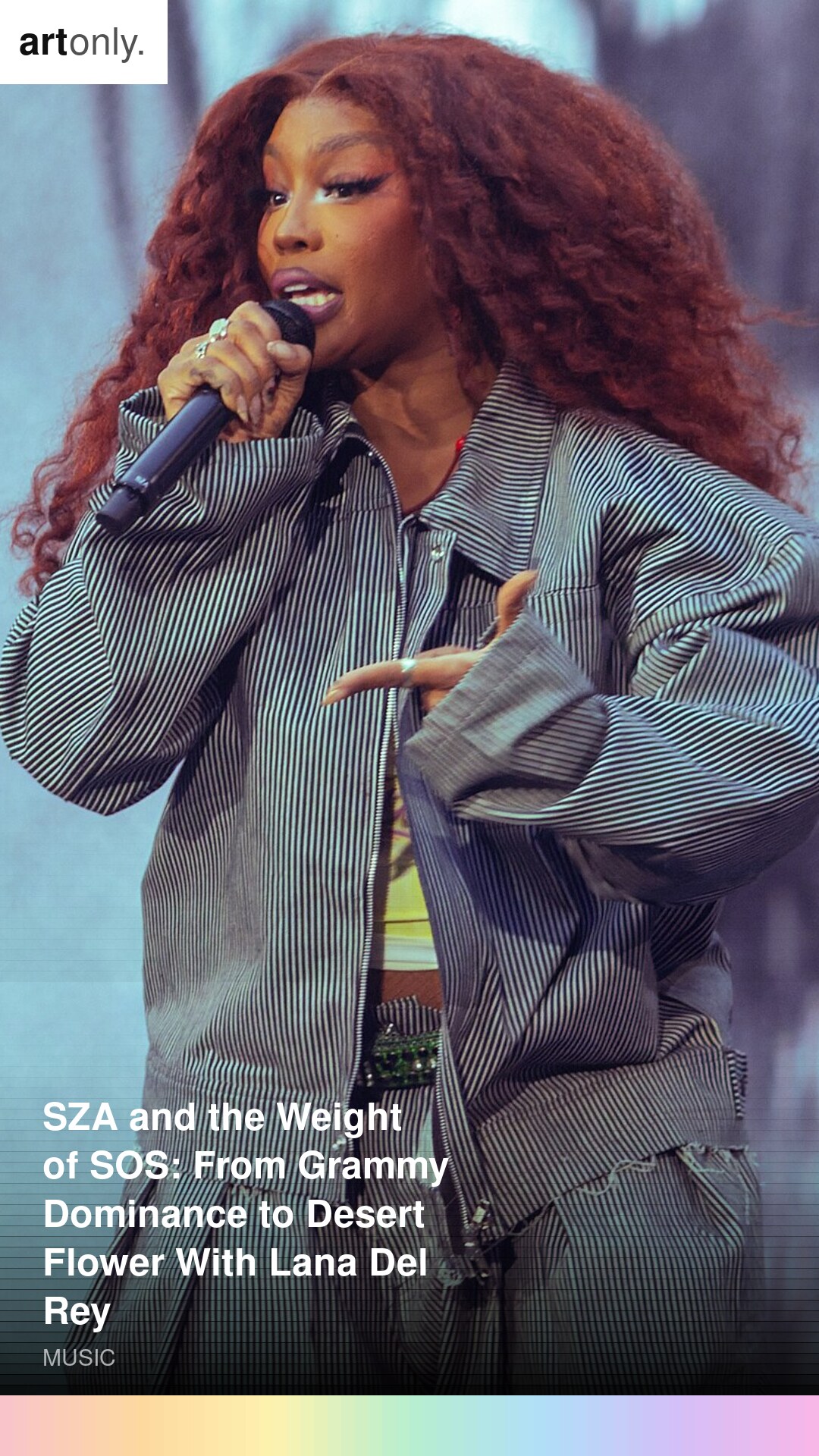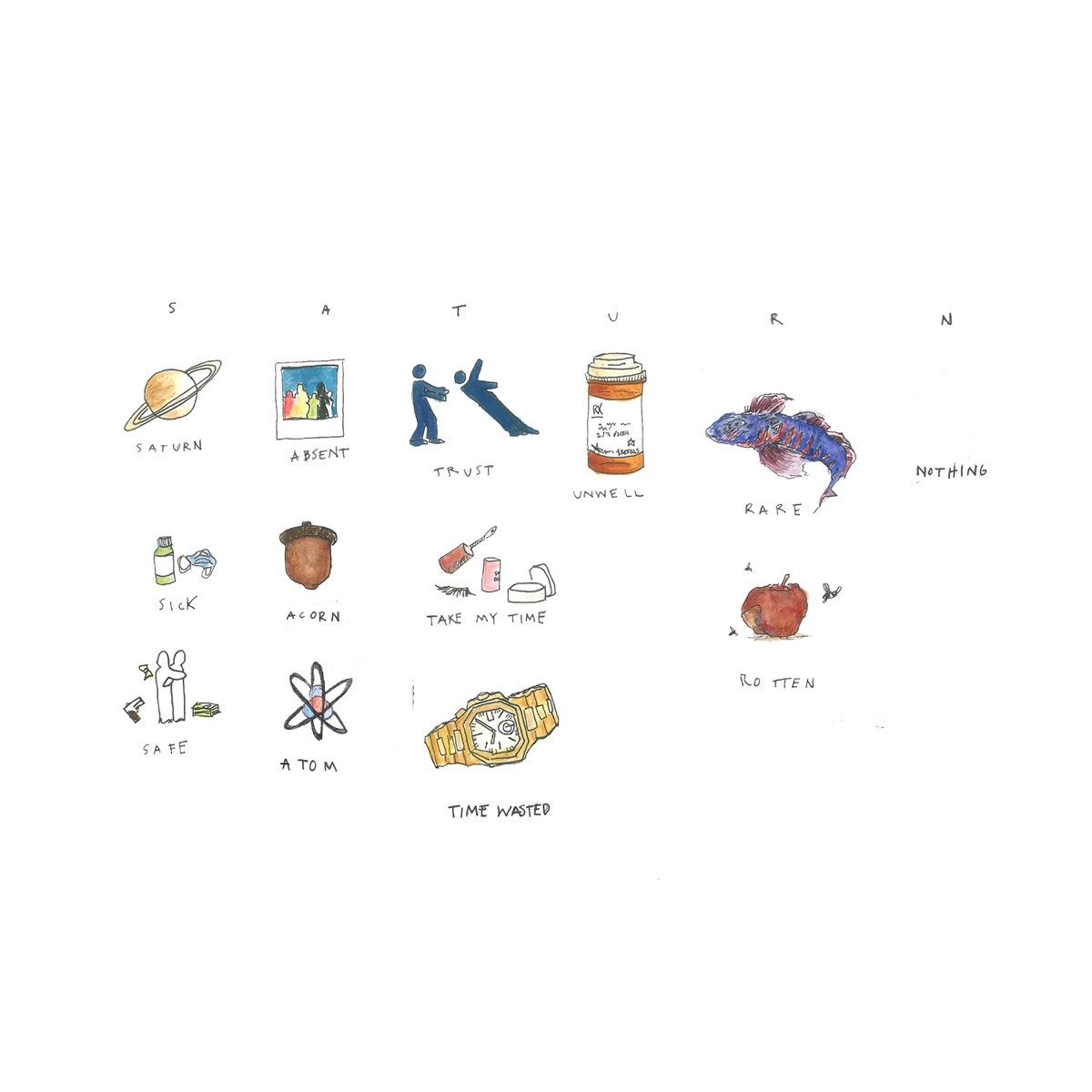
SOS was released in December 2022 and it did not stop. It dominated 2023. It dominated 2024. It became the kind of album that rewrites the rules of what a campaign can look like in the streaming era, where music is supposed to be disposable and attention spans are measured in weeks.
SZA refused to be disposable.
The Numbers
Three Grammys at the 2024 ceremony: Best Progressive R&B Album, Best R&B Song for Snooze, Best Pop Duo/Group Performance. Another Grammy at the 2025 ceremony: Best R&B Song for Saturn. A multi-leg tour across North America and Europe that ran through 2023 and 2024. Streaming numbers that continued to climb months and then years after release.
SOS was not just a successful album. It was an event that refused to end.
The chart run was historic by any standard. SOS became the longest-charting album by a solo female artist in Billboard 200 history, spending over two years in the top region of the chart. Individual songs from the album, Kill Bill, Snooze, Saturn, Good Days, cycled through cultural relevance at different times for different reasons, meaning the album never had a single moment of peak attention but instead accumulated impact continuously. The strategy, if it was a strategy, was simply to make something so complete that there was always more to find.
What SOS Actually Is
SOS is a 23-track record, which is not the kind of project that invites casual engagement. You have to decide to listen to it. And within those 23 tracks there is a range of emotional register and sonic texture that is not the kind of thing that gets resolved in a single sitting.
SZA writes about romantic failure with a specificity that has no interest in maintaining dignity. She writes about being the difficult person, the one who wants too much, the one who holds on past the point of sense. She writes about self-doubt in a register that refuses to perform self-awareness as a protective layer. The album is not about having survived these experiences. It is inside them, staying inside them, and asking the listener to stay too.
The production, which involved Metro Boomin, DJ Dahi, and Carter Lang among others, matches this emotional register with a range of approaches: spare acoustic moments, trap-influenced beats, elements borrowed from alternative rock, ballads that lean into an orchestral scale. The variety is not incoherence. It is the shape of an album that is tracking emotional states across a long period, and emotional states do not stay in one sonic register.
The Deluxe
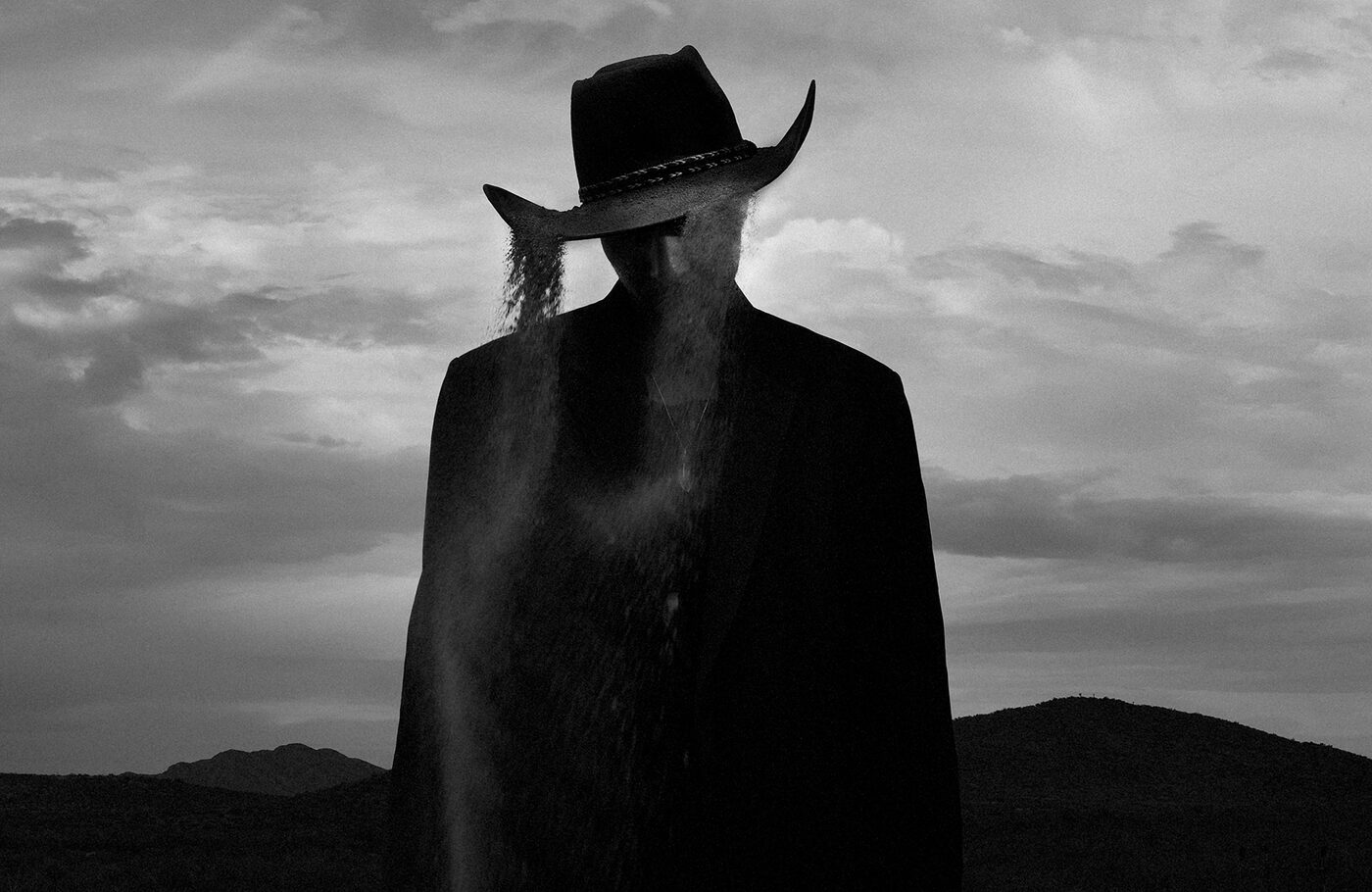
In December 2024, SZA released SOS Deluxe: Lana, an expanded edition that included new material and, most notably, a duet with Lana Del Rey called Desert Flower. The collaboration was one of the most anticipated pairings in recent memory, two artists whose emotional registers are profoundly different but whose commitment to artistic honesty is identical.
Desert Flower delivered. SZA's vocal intensity against Lana's atmospheric detachment created a dynamic that neither artist could have achieved alone. It was a reminder that the best collaborations are not about similarity but about productive contrast. Lana brings a quality of languor to everything she touches, a refusal of urgency that SZA's urgency could work against rather than simply confirm.
Lana Del Rey and What the Pairing Means
Lana Del Rey has built one of the most distinctive aesthetic identities in contemporary pop over the past fifteen years. The American mythology, the cinematic production, the vocal quality that sits somewhere between performance and confession, all of it adds up to something immediately recognizable that no one else has managed to replicate. What makes the SZA collaboration interesting is that both artists share a quality that is harder to name but easy to hear: the willingness to stay in difficulty without resolving it.
SZA's difficulty is more agitated. Lana's is more still. But both are forms of refusal, refusals of the easy resolution that pop music conventionally offers. Desert Flower earns its runtime by holding both versions of that refusal simultaneously.
What SOS Means
SZA made an album about heartbreak, self-doubt, rage, and the exhausting work of being a woman in a world that wants you to be smaller than you are. She made it without compromise, without softening the edges, without performing the kind of palatable vulnerability that the industry rewards. And it became one of the most successful R&B albums in history.
The scale of what SZA accomplished with SOS is clearer in retrospect than it was in real time. An R&B album, a genre that the industry has consistently treated as a commercial platform rather than an artistic one, becoming a two-year cultural event, changing the conversation about what R&B can be and who it can reach. The commercial success created space for the next artist willing to make something this complete and this uncompromising. That is the secondary achievement. The primary one is the music itself: 23 tracks that earned every minute of the attention they received.
Her Grammy record speaks to critical and industry recognition. The chart history speaks to sustained popular engagement. But neither metric fully captures what makes SOS significant. What it did was demonstrate that an audience of millions would return to a single piece of work, repeatedly, across two years, in a media environment designed to ensure they never stayed with anything that long. The sustained engagement was the argument. It was an argument that won.
The lesson is not subtle: audiences do not want to be protected from complexity. They want to be trusted with it. SZA trusted them, and they responded by making SOS inescapable for two years and counting. Every artist who releases a 23-track album and refuses to cut it down for fear of losing attention owes something to what SOS proved possible. The album was not a bet. It was a statement of fact about the audience, made before the audience confirmed it. The confirmation arrived in the streaming numbers, the Grammy wins, the sold-out tour dates, and in the way the record never quite stopped being present in cultural conversation long after it should have peaked. SOS did not peak. It accumulated.