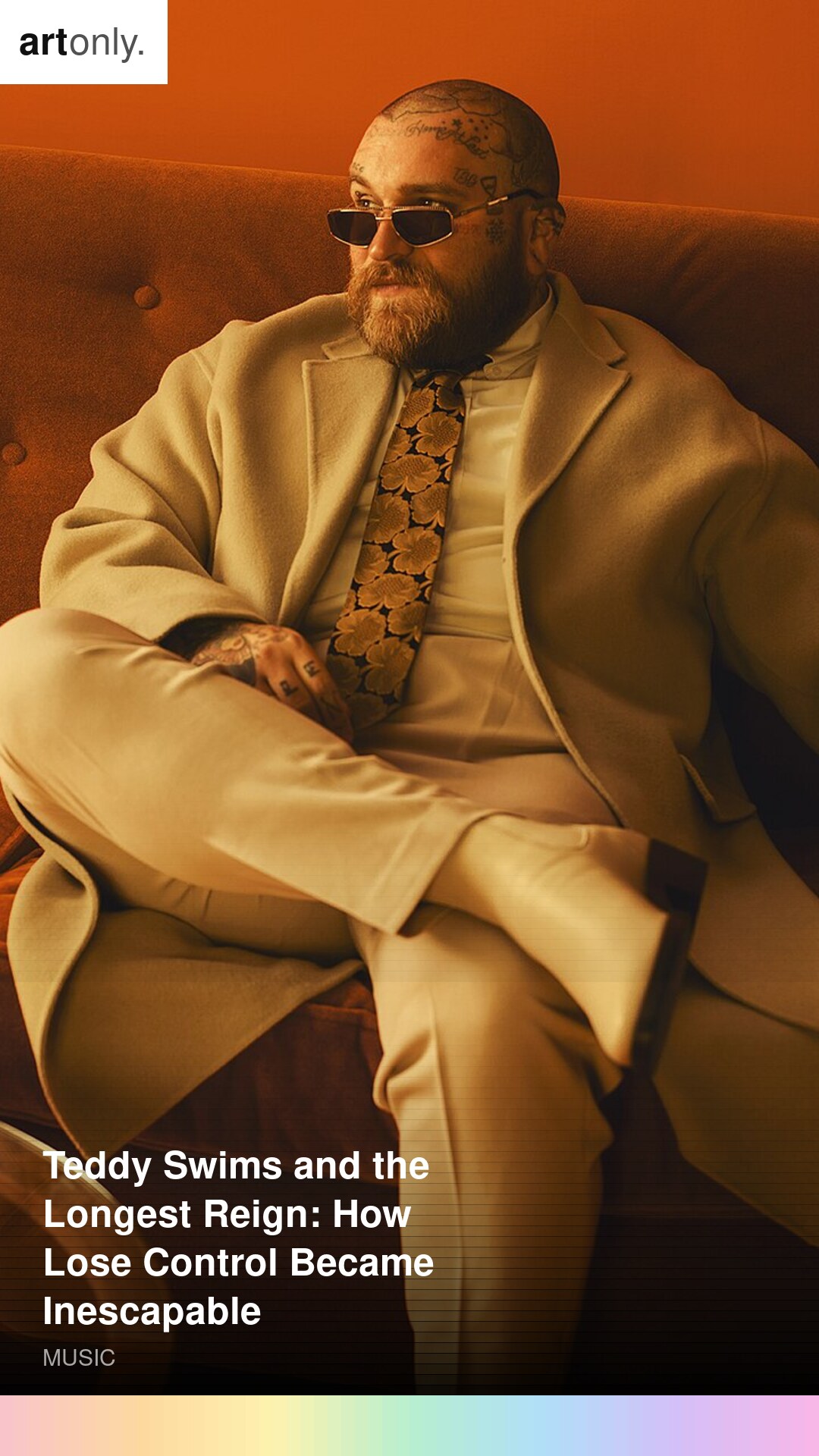
There are songs that chart. There are songs that go viral. And then there is Lose Control by Teddy Swims, a track that did something neither of those descriptions captures: it simply refused to leave.
Lose Control hit number one on the Billboard Hot 100 in 2024 and then proceeded to set the record for the longest-running top-ten song in Hot 100 history, spending over seventy weeks on the chart. It went Diamond certified. It was nominated for Best New Artist and Best Pop Vocal Album at the 2025 Grammys. And it did all of this without a single gimmick, viral moment, or algorithmic trick.
The song succeeded because of the voice.
The Voice
Teddy Swims, born Jaten Hodge, possesses one of the most extraordinary vocal instruments in contemporary popular music. His tone is rich and gravelly, capable of moving from a whisper to a roar within a single phrase. He sings with the kind of physical commitment that makes you believe every word is being extracted from somewhere deep and real.
Lose Control is a showcase for that voice, but it is not a showpiece. The production is restrained enough to let the vocal do its work without getting in the way. The melody is simple enough to sing along to and complex enough to reward close listening. The emotional arc of the song, from vulnerability to desperation to release, unfolds naturally rather than being imposed by structural convention.
What makes the performance so effective is the specific way Swims handles the dynamics. He does not save his best for the chorus. He gives everything from the first line, which should feel reckless and instead feels generous. Most pop singers ration their intensity, building toward a peak that justifies the buildup. Swims starts at the peak and keeps climbing. The fact that he can do this without the performance collapsing into overselling is the technical achievement that separates him from imitators.
The Song Itself
The production on Lose Control, spare piano and strings giving way to a fuller arrangement in the second half, makes a deliberate choice to stay out of the vocal's way for as long as possible. That kind of restraint is harder to execute than maximalism. Every element has to justify its presence precisely because there are so few elements.
The lyric operates in the space that the best soul writing has always occupied: specific enough to feel personal, universal enough to feel like your own experience described back to you. Lose control. The phrase is both instruction and admission. It captures the paradox of emotional surrender, wanting to let go, being afraid of what that means, doing it anyway.
The Come-Up
Swims built his audience the old-fashioned way: by being undeniably talented on the internet. His cover videos, spanning genres from R&B to rock to country to hip-hop, demonstrated a versatility that most singers spend careers trying to develop. The covers served multiple functions. They proved the voice could handle anything. They built a community before there was an original catalog to anchor it.
His debut album I've Tried Everything But Therapy (Part 1) arrived in 2023, followed by Part 2, which received the Grammy nomination. The project title was not irony. Swims has been open about using his music as a form of emotional processing, which explains why the vulnerability on Lose Control does not read as performance.
The path from YouTube covers to Diamond certification is not unprecedented, but it is rare, and it requires something that no marketing budget can manufacture: a voice that makes people stop what they are doing and listen.
The Record
Seventy-plus weeks in the top ten. That number deserves to be repeated because it is genuinely difficult to comprehend. Songs are not supposed to stay that long. The streaming economy accelerates consumption and shortens cycles. The fact that Lose Control held its position for over a year and a half suggests that its appeal is not trend-dependent but fundamental.
Radio programmers have a concept called burnout, the point at which a song has been played so often that listeners actively change the station. Most hits burn out within months. Lose Control defied that mechanism. Stations kept playing it. Playlists kept including it. The song has a quality of inexhaustibility, the sense that each play delivers what the previous one delivered without diminishing returns.
The Diamond certification tells a related story. A Diamond single requires ten million units, a threshold that combines streams and sales. Bohemian Rhapsody is Diamond. Old Town Road is Diamond. Lose Control is Diamond. These are songs that went beyond the charts and embedded themselves in the cultural substrate.
The demographics of Lose Control's audience also matter. It crossed every age group and genre preference. Country listeners found something in the rawness. R&B listeners found the vocal technique undeniable. Pop listeners found the chorus irresistible. Swims described something universal more precisely than most people manage in conversation, let alone in a three-minute song.
The Staying Power
Some songs are of their moment. Lose Control is simply a great song, and great songs do not need a moment. They create their own. The question Swims now faces is what comes after a cultural artifact of this scale. The catalog he has built gives a partial answer. The writing is strong, the voice is intact, and the audience is real. Those three things together are a foundation, not a ceiling.
The Live Dimension
Swims's live performances have been the other side of the Lose Control story. Audiences who encountered the song as a streaming artifact arrived at shows expecting something polished and received something rawer and more visceral. The voice that sounds extraordinary through headphones sounds extraordinary in a room, which is not guaranteed at all. The vocal technique holds at volume. The emotional commitment that reads through a recording reads even more clearly in a live context, where there is no studio to blame or credit.
That live quality matters for what happens next. Artists who build careers on one inescapable song tend to face skepticism about whether the catalog can sustain an audience that arrived for a single moment. Swims's live reputation gives him a different kind of credibility. People who saw him perform before the song broke, and there were many, describe the same voice and the same commitment. The song did not create the artist. It just finally made him visible.