An Era Defined by Excess
By 2023, it was clear that the SoundCloud rap era had not so much ended as collapsed under its own weight. The movement that had given us some of the most exciting and chaotic music of the late 2010s had devolved into a cautionary tale about what happens when an entire subculture is strip-mined for content and then abandoned by the industry that profited from it.
What It Was
At its peak, SoundCloud rap represented a genuine democratization of hip-hop. The platform allowed artists with no industry connections, no studio budgets, and no traditional skills to reach audiences directly. The aesthetic was deliberately lo-fi, the energy was frenetic, and the barriers to entry were nonexistent. For a brief window, this produced genuinely exciting music that challenged every assumption about what rap could sound like.
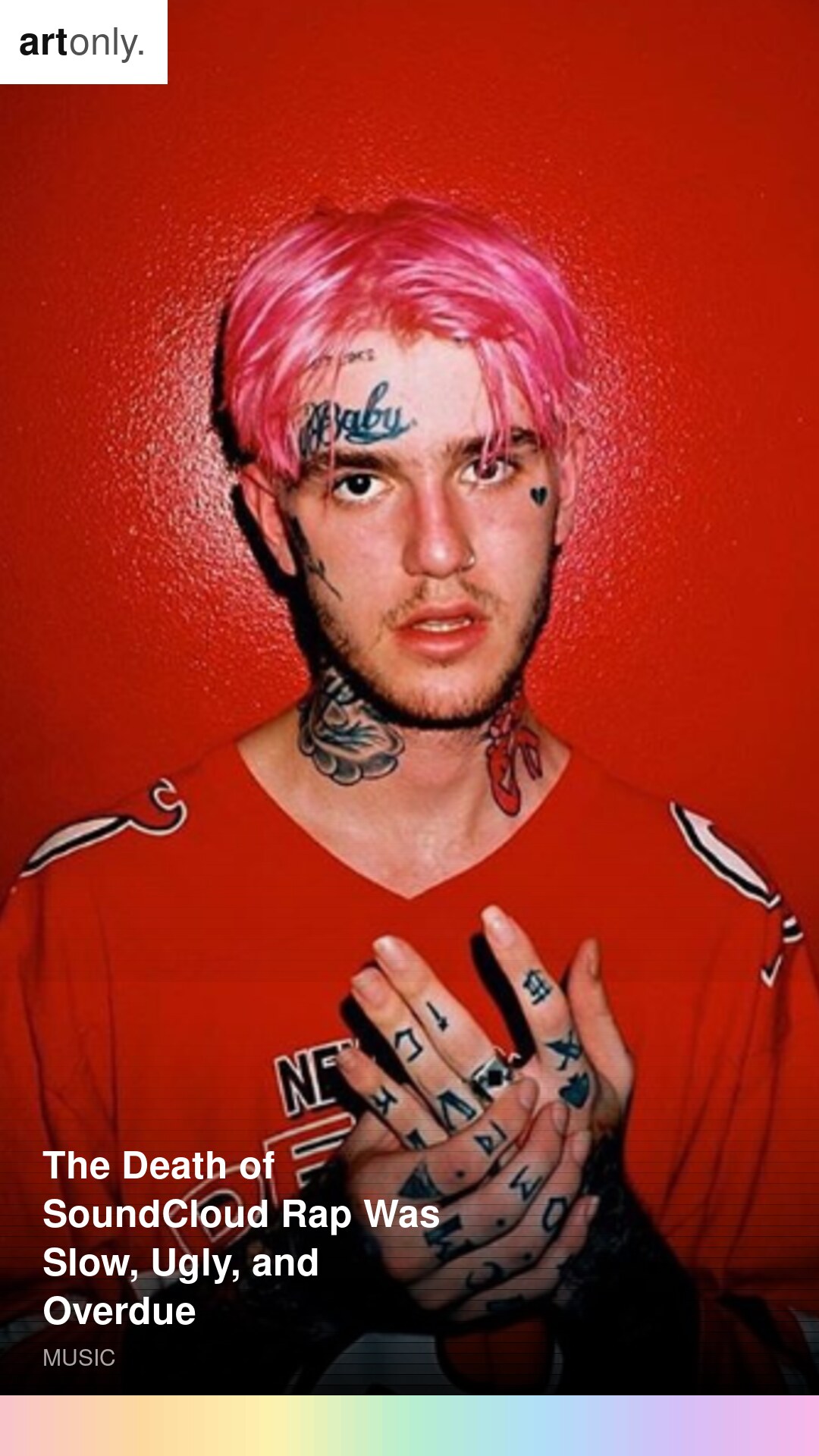
The sonic vocabulary of the scene was its most interesting contribution. Producers like Ronny J, Smokeasac, and Rob Holladay built beats that were simultaneously abrasive and melodic, distorted 808s underpinning vocal performances that treated pitch correction not as a corrective tool but as an expressive instrument. XXXTentacion layered his voice into something approaching texture. Lil Peep merged emo guitar with trap architecture in ways that influenced artists who would never admit the debt. Juice WRLD turned melodic improvisation over aggressive production into a genuine art form. These were innovations made by young people with limited resources and unlimited time, operating outside the gatekeeping structures that had previously controlled what rap was allowed to sound like.
The scene also broke the consensus on what a rap career needed to look like. You did not need a label. You did not need radio. You needed a SoundCloud account and something that made people stop scrolling. That structural shift changed the industry's understanding of how audiences could be built.
What It Became
The problems were always visible to anyone willing to look. The scene attracted predatory managers, exploitative label deals, and a culture of substance abuse that the industry treated as aesthetic rather than crisis. Young artists with enormous followings and no support systems were handed large advances and left to navigate fame without infrastructure. The human cost was staggering and well-documented.
The deaths accumulated with a speed that should have forced a reckoning. Lil Peep died of an accidental fentanyl overdose in 2017 at twenty-one. XXXTentacion was shot dead in 2018 at twenty. Juice WRLD died of an accidental seizure induced by codeine and oxycodone in 2019 at twenty-one. The ages are the point. These were children, operating inside an industry that was monetizing their suffering while publicly performing concern about it.
The substance abuse was not incidental to the music. It was woven into the lyrics, the visuals, the interviews. Labels and managers saw engagement data and called it authenticity. The fact that authenticity was killing the artists who produced it did not register as a systemic problem. It registered as individual tragedy, which conveniently placed the responsibility on the artists themselves.
The Aftermath
By 2023, the survivors of the SoundCloud era had largely moved on, matured, or been absorbed into more traditional career paths. The artists who defined the movement's peak had either evolved beyond its aesthetic limitations or been consumed by them. The platform itself had become an afterthought, its cultural relevance transferred to TikTok and other short-form discovery mechanisms.
The music that remains is genuinely interesting as a body of work. The best of it, Peep's Come Over When You're Sober albums, Juice WRLD's Goodbye and Good Riddance, XXXTENTACION's 17, holds up as documents of a specific kind of adolescent pain described with unusual precision. That the makers of those documents did not survive to develop beyond them is the tragedy.
Lessons Unlearned
The most dispiriting aspect of the SoundCloud rap retrospective is how few lessons the industry actually absorbed. The same dynamics that defined that era, the discovery of raw young talent, the rapid extraction of commercial value, the abandonment when trends shift, continue to operate with different aesthetics and different platforms. The machine did not break. It just found new fuel.
The response to the deaths was almost entirely performative. Record labels posted tributes. Streaming services created memorial playlists. The structural conditions that produced those deaths, the absence of mental health infrastructure, the glorification of self-destructive behavior, the financial arrangements that gave young artists access to wealth without support, were unchanged.
SoundCloud rap deserved better than it got, and the people who profited most from it have the least to say about what went wrong.
The artists who built the scene from nothing, who figured out how to reach millions of listeners without infrastructure or industry support, who invented new sonic vocabularies in their bedrooms and uploaded them to a free platform, demonstrated something real about what music can be when the barriers to entry collapse. The tragedy is not that the scene existed. The tragedy is what was extracted from it and who paid the price.
Looking back from 2023, the most honest assessment is that the SoundCloud era was both a genuine creative flowering and a systemic failure. Both things are true at the same time, and collapsing either one into the other does a disservice to the artists who lived through it. The music is worth preserving and studying. The conditions that produced it are worth condemning.
The genre's influence on subsequent music is unmistakable. The vocal production techniques pioneered in SoundCloud rap's peak years now saturate mainstream pop and R&B. The DIY distribution model it normalized became the template for every independent artist who followed. The emotional rawness it brought to rap opened a door that has not closed. The genre died. Its consequences did not.
The scene also produced a generation of producers whose fingerprints are everywhere in current music and who have received almost none of the retrospective credit. Ronny J's distortion techniques are standard now. The melodic trap vocabulary that originated in SoundCloud bedrooms is the foundation of a dozen current subgenres. That debt goes largely unacknowledged, which is consistent with how the industry treated those artists when they were alive.