A Stadium Spectacle Beyond Comparison
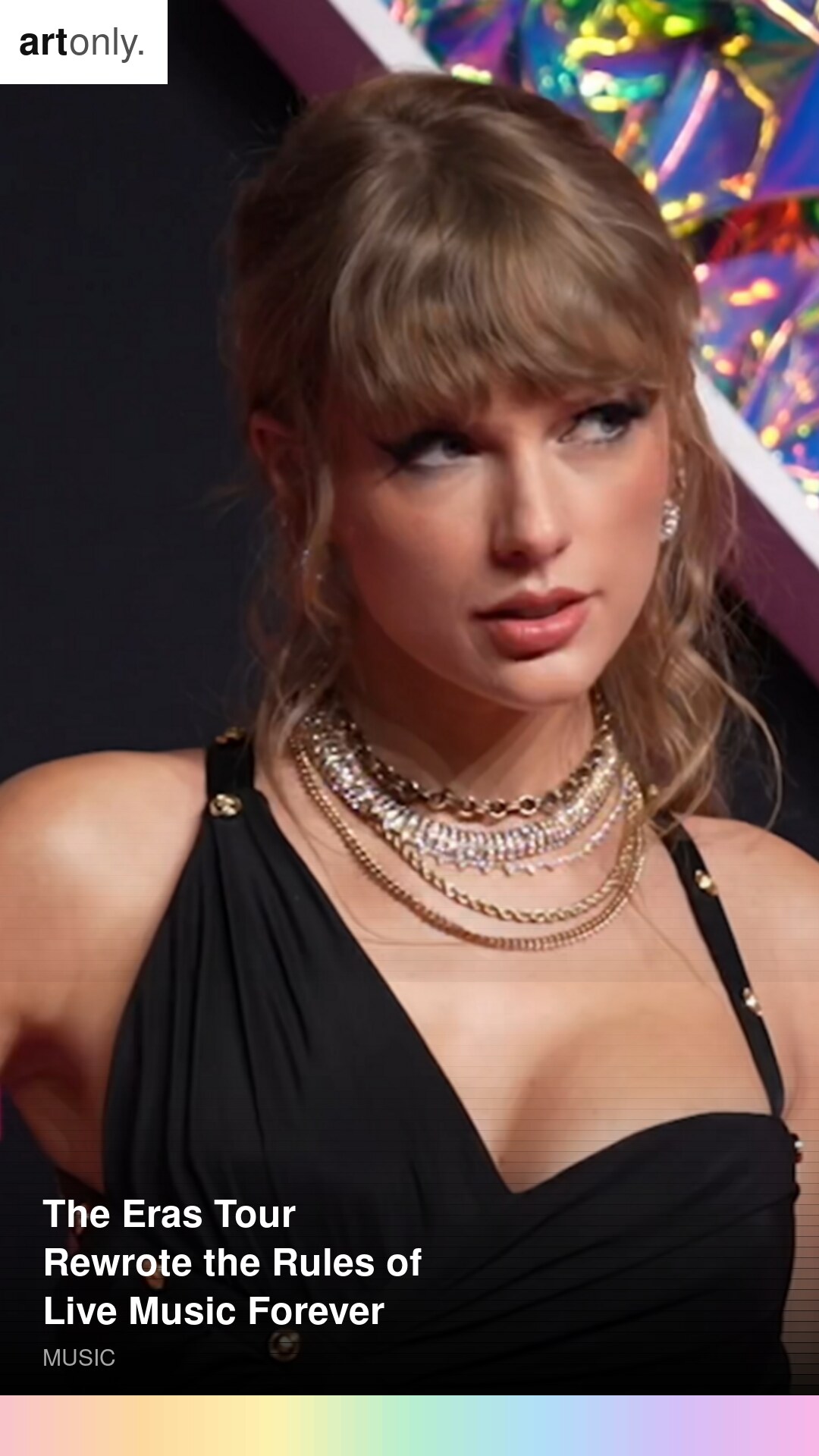
There is no precedent for what Taylor Swift accomplished with the Eras Tour. Not Madonna. Not the Stones. Not Beyonce. When the numbers finally settled, the tour had grossed over two billion dollars, making it the highest-earning concert run in the history of recorded music. But reducing this phenomenon to its revenue feels like describing the ocean by its salt content.
The Cultural Weight
What made the Eras Tour genuinely significant was its function as a generational gathering point. In an era of algorithmic isolation, where music consumption has become an intensely private act conducted through earbuds and recommendation engines, Swift created something aggressively communal. Friendship bracelets became a currency. Entire cities saw measurable economic surges on show dates. Hotels sold out weeks in advance. Local restaurants created themed menus.
The tour operated as a traveling referendum on fandom itself. Each three-hour-plus performance moved through Swift's entire discography, treating every album as a distinct aesthetic chapter. The staging was relentless, the costume changes theatrical, and the setlist was a masterclass in pacing that most arena acts could never sustain.
What this required technically is worth appreciating. Staging a show that moves coherently through multiple distinct aesthetic worlds in a single evening demands a production design flexible enough to transform without losing coherence. The lighting rigs, screen configurations, and stage architecture were designed to accommodate that range. Most arena tours have one visual mode. The Eras Tour had ten.
The Friendship Bracelet Economy
The bracelet phenomenon was not engineered by Swift's team. It emerged from the fanbase and was then incorporated into the culture of the shows. The trading rituals that developed around shows were peer-driven, horizontal, built on the logic of fans connecting with each other rather than performing their fandom for a brand. The bracelets became artifacts of specific shows, specific cities, specific moments.
This kind of organic communal behavior is not something any touring apparatus can manufacture. It required a fanbase with enough investment to create its own traditions, and it required a performer whose relationship with that fanbase made those traditions feel earned rather than cynical.
The Setlist as Autobiography
What made the Eras Tour structurally different from any other stadium run was the setlist architecture. Swift organized the show around album eras rather than chronology or radio hits. Each album section had its own visual identity, its own staging configuration, its own emotional register. The crowd moved between grief and euphoria and nostalgia within a single evening.
This approach required the audience to be literate in the full discography, and they were. The fans who filled those stadiums knew every word to the vault tracks from Taylor's Version re-recordings, songs that had existed for less than a year before being performed in arenas. That level of collective engagement with deep catalog material is unprecedented at this scale.
The surprise songs she played each night, two per show from the catalog, chosen differently at every date, created an additional layer of specificity. No two shows were identical. Each audience received something nobody else would receive. That scarcity of experience drove a secondary culture of recording, sharing, and cataloguing that extended the tour's reach beyond the people in the seats.
Beyond the Music
The Eras Tour also became a case study in economic power. Economists genuinely debated whether one artist's concert schedule was influencing national inflation figures. Ticketmaster's catastrophic presale failures sparked congressional hearings and renewed antitrust conversations that had been dormant for years. Swift exposed the rot at the center of live music's ticketing infrastructure.
The film release of the tour, through AMC Theatres, broke records for concert film grosses and demonstrated that the audience for the experience extended beyond those who could afford or access live tickets.
The Lasting Impact
Critics can debate the artistic merit of any individual Swift album, but the Eras Tour transcended that conversation entirely. It demonstrated that live music at its most ambitious can still function as a mass cultural ritual. In an entertainment landscape fractured into a thousand streaming niches, Swift proved that monoculture is not dead. It just requires someone willing to build a world large enough for everyone to inhabit.
The tour also changed expectations. Artists planning stadium runs in the years after the Eras Tour now operate in its shadow. The question is no longer whether a tour can be profitable. It is whether a tour can mean something.
The honest answer is that replication at this scale is probably not possible. The conditions that made the Eras Tour possible, a catalog spanning fifteen years and ten distinct aesthetic phases, a fanbase built through two decades of genuine relationship, and a performer capable of sustaining four hours of live performance at arena scale, cannot be replicated on demand. They accumulate. The Eras Tour was not a production. It was a culmination.
The Production Scale
The physical scale of the Eras Tour production deserves its own accounting. Staging a show that moves coherently through ten distinct visual identities in a single evening requires not just creative vision but logistical infrastructure at a level that most touring operations never approach. The set trucks numbered in the dozens. The crew reached into the hundreds. The staging required custom rigging solutions at each venue, because arenas built for basketball and hockey were not designed to support what the Eras Tour needed to do.
The lighting and video design by Baz Halpin and his team involved rigs that took entire nights to load in. The stage extensions that pushed into the floor meant sightlines had to be reconsidered at every venue. None of this happened spontaneously. It was planned years in advance, refined through the early shows, and executed with a consistency that meant the experience in Santiago was recognizably the same experience as in Seattle.
Swift's production team built a traveling infrastructure that had no template. The closest comparisons, U2's 360 tour, Michael Jackson's HIStory world tour, were single-aesthetic productions. The Eras Tour changed visual identity ten times in one night, at this scale, reliably, for nearly two years. That is an engineering achievement as much as an artistic one.