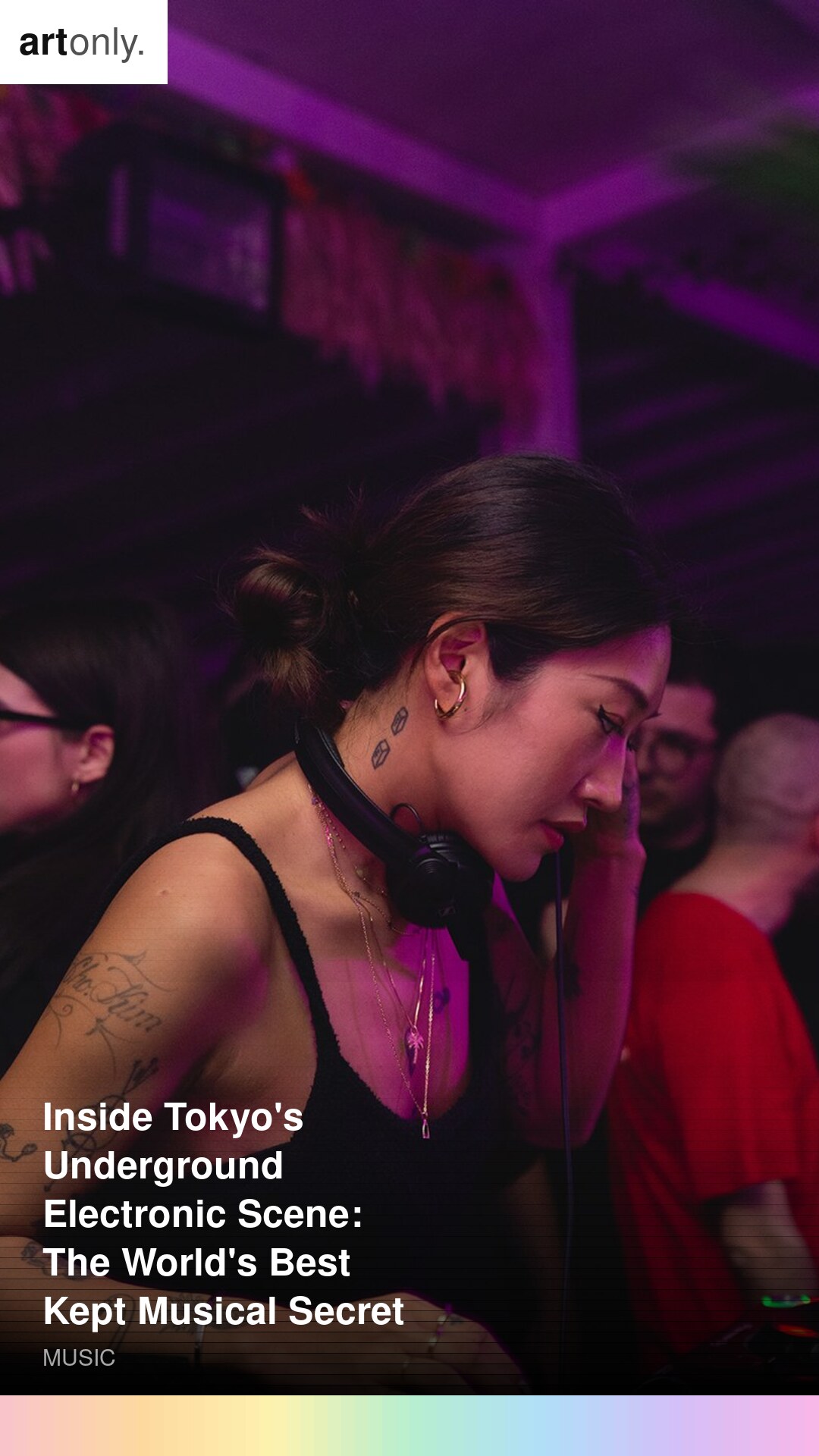
Tokyo's electronic music scene operates on a different frequency than the rest of the world. Literally and figuratively.
In a city where noise ordinances are strict, venues are small, and cultural norms favor precision over chaos, the electronic music community has developed a sound and a culture that is utterly distinct. It is meticulous where Berlin is raw. It is intimate where London is massive. It is patient where New York is urgent.
The Venues
The geography of Tokyo's electronic scene is defined by its venues. Clubs like WOMB, Contact, and Pipe occupy spaces that would be considered tiny by European or American standards. Capacity limits are measured in dozens, not thousands. This intimacy is not a limitation. It is the defining feature.
In a room that holds eighty people, the relationship between DJ and audience is fundamentally different than in a space built for two thousand. Every decision the DJ makes is felt immediately. Every transition is audible in detail. The music is not experienced as a wall of sound but as a conversation.
WOMB in Shibuya has been operating since 1999 and has maintained a reputation for booking that prioritizes artistic coherence over commercial draw. Contact in Daikanyama, which opened in 2015, became the venue that international DJs cited most consistently when describing where they wanted to play in Tokyo. The combination of technical setup, acoustic quality, and strict no-photography policy created conditions for sustained collective attention that most venues cannot achieve.
The Sound
Tokyo's producers draw from a wider palette than most electronic scenes. The influence of Japanese traditional music, of city pop, of noise, of ambient, of the country's deep history with synthesizers and electronic instruments, creates a foundation that no other city can replicate.
The result is electronic music that is texturally rich in a way that surprises listeners accustomed to Western conventions. A Tokyo techno track might incorporate field recordings from a temple. A house track might borrow melodic ideas from enka. An ambient piece might use silence as aggressively as any noise artist.
This textural richness reflects Japan's specific relationship with synthesis. The country produced many of the instruments that defined electronic music globally, Roland's TR-808 and TR-909 drum machines, the TB-303 bass synthesizer, the Korg MS-20. Japanese producers grew up with these machines as domestic objects rather than imported novelties, and that familiarity produced a fluency with their capabilities that extends into the current generation.
The Producers
The names that define the scene in 2026 are less internationally recognized than they should be. Takkyu Ishino, one of the founders of Denki Groove, has been making electronic music since the late 1980s and continues to evolve. DJ Nobu, based in Nagano and now playing internationally, makes techno with a patience and spatial depth that has earned him comparison to the best producers working in Berlin and Detroit. These artists are not underground figures within Japan. They are simply not yet adequately known outside it.
The Community
What makes Tokyo's scene particularly special is its commitment to curation. Club nights are programmed with an attention to sonic coherence that would make a museum curator envious. A night at a Tokyo venue is not a random collection of DJs. It is a curated experience with a beginning, middle, and end.
This curatorial rigor extends to the audience. Tokyo clubgoers listen with an intensity that is almost scholarly. They are there for the music, not for the social performance. The dancefloor is quiet between tracks. Phones are rarely visible. The cultural norms around club attendance produce a different quality of listening experience than is available in most cities.
The Global Moment
Tokyo's electronic scene has operated in relative international obscurity for decades, content to develop its own ecosystem without seeking outside validation. That isolation has produced something remarkable: a fully formed musical culture that owes nothing to anyone.
In 2026, as the global appetite for electronic music from outside the Euro-American axis grows, Tokyo is positioned to receive attention that is long overdue. The question is whether that attention will change the scene or whether the scene will change the attention. Based on Tokyo's track record, the smart money is on the latter.
The concern is legitimate. Every scene that has been discovered by the global music press has undergone transformation. Tokyo's protections against this transformation are structural. The language barrier limits casual cultural tourism. The cultural norms around club attendance are strong enough to resist dilution. The venues are small enough that capacity pressure will not produce the stadium equivalents that have changed scenes elsewhere.
The artists and DJs who have defined Tokyo's sound have been consistent in maintaining the integrity of what they do, turning down bookings that would require compromises, preserving the conditions under which the music works. That discipline has survived everything that came before international attention. There is reason to think it will hold.
The best version of international discovery for Tokyo is the one where the scene's own terms set the conditions of engagement. Not Tokyo producing music for global consumption, but global audiences coming to understand a music that was never made for them and finding it worth the effort. That is a different kind of influence, and it is more durable.
The Diaspora Effect
Tokyo's scene has a global diaspora of expatriate enthusiasts who carry its sensibility into their home cities without fully replicating it. A DJ trained in Tokyo brings different instincts to a set in Berlin or New York: different assumptions about what a crowd needs, different tolerances for silence and negative space, different relationships to the archive of records that define a set's range. Those inflections spread through cities' scenes slowly and often without attribution.
The specific contribution of Japanese producers to global hardware culture is also worth naming. The Roland TR-808 and TB-303 were both Japanese instruments that were initially considered commercial failures and became the foundations of hip-hop and acid house respectively. The relationship between Japanese manufacturing culture and global electronic music is structural, not coincidental. The sensibility that produced those instruments, the attention to the detail of the machine, the precision of the circuit, is the same sensibility that runs through Tokyo's club culture. It is a city that listens carefully, and it builds music accordingly.