The Evolution Continues
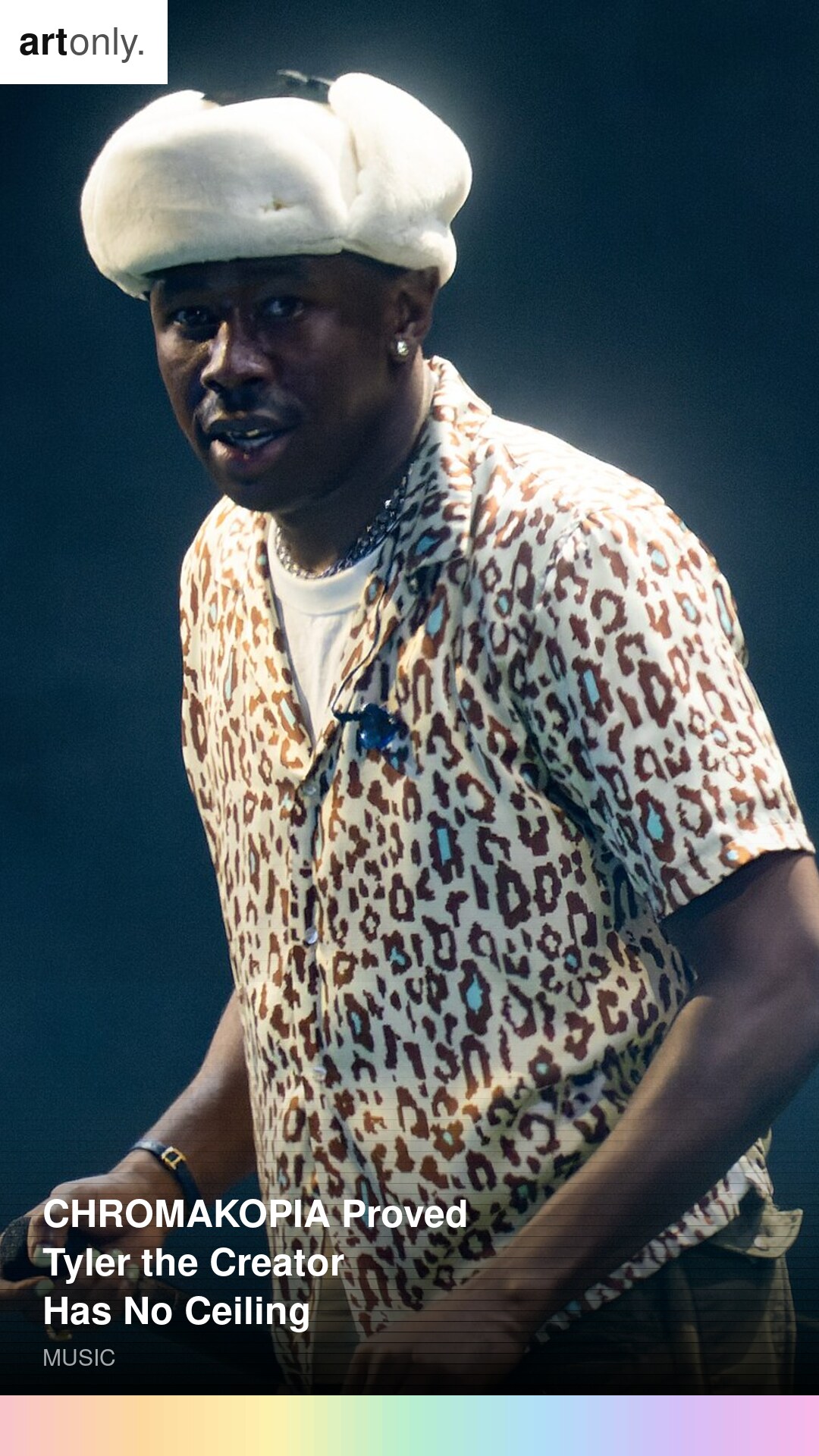
Every Tyler the Creator album since Flower Boy has represented a distinct creative identity, and CHROMAKOPIA continued that pattern with an ambition that somehow still managed to surprise. After the lush maximalism of CALL ME IF YOU GET LOST, Tyler pivoted again, delivering a record that felt both deeply personal and sonically adventurous in ways his audience had not anticipated.
The arc from Bastard and Goblin through Wolf, Cherry Bomb, Flower Boy, IGOR, CALL ME IF YOU GET LOST, and now CHROMAKOPIA is one of the most sustained runs of artistic reinvention in contemporary music. Each record reset the premise so completely that returning listeners had no reliable map. Most artists at Tyler's commercial level would have found a formula by now and applied it repeatedly. He has done the opposite, using the leverage of each success to fund the next left turn.
What makes this pattern unusual is that it has not cost him his commercial standing. Each reinvention has been met with genuine audience interest rather than confusion or rejection. That is partly a function of how Tyler has managed his relationship with his listeners over time, through social media, through OF, through the Golf universe, but it is primarily a function of the quality of the work itself. People follow because the work earns it.
Sound as Architecture
CHROMAKOPIA operates like a built environment. The production choices are spatial, layered, and intentional in a way that rewards headphone listening. Tyler has always been a skilled producer, but this album demonstrated a maturity in arrangement that positioned him alongside artists working in entirely different traditions. The way he constructs sonic space, leaving room for silence, building tension through texture rather than volume, showed an artist thinking about music as a three-dimensional experience.
The palette here is warmer and more acoustic than CALL ME IF YOU GET LOST, which leaned into sample-based maximalism. CHROMAKOPIA feels more live in its instrumentation, more spatially considered. The drums sit differently in the mix, and the bass is more present without being aggressive. These are not accidental choices. Tyler has been his own producer since the beginning, and the craft has compounded with each record. What he is doing technically on CHROMAKOPIA, the way he layers vocal harmonies, the use of live strings against synthetic textures, is work that would be impressive from any producer regardless of where they started.
Thematic Depth
The album grappled with themes of legacy, parenthood, and the weight of creative success with a directness that Tyler had previously approached only obliquely. There is a vulnerability on this record that feels earned rather than performed. When he addresses the complexities of growing into adulthood while maintaining the restless creative energy that defined his earlier work, the result is writing that resonates beyond its genre.
The mother's voice that recurs throughout the album provides a structural and emotional anchor. Her presence as both a literal voice and a thematic focal point gives CHROMAKOPIA a frame that his earlier records, even the emotionally rich Flower Boy and IGOR, did not have. It is the difference between an artist exploring their feelings and an artist locating the source of those feelings and addressing it directly. The transparency costs something. It also gains something that no amount of craft can substitute.
The visual identity of the album, the masked promotional imagery, the color palette, the accompanying short films, extended the thematic concerns into a complete artistic package. Tyler has always understood that an album is more than its tracklist, and CHROMAKOPIA represented his most cohesive vision to date. The masks, which created an instantly recognizable iconography before a single note had been heard, carried the themes of identity and performance into the marketing without requiring explanation. The work spoke for itself.
The GOLF Ecosystem
It is worth noting that CHROMAKOPIA arrived as part of a broader creative infrastructure that Tyler has built over the past decade. Golf le Fleur, the clothing and fragrance brand, and GOLF Media, the content platform, represent an artist who has constructed a self-sustaining creative economy. The album was not released in isolation. It was released into an ecosystem that Tyler controls, which means the rollout, the visual identity, the merch, and the media narrative were all products of a single vision.
This matters because it changes the economics of creative risk. When you control the surrounding ecosystem, you can afford to make a record that does not optimize for radio play or streaming metrics. The financial floor is elsewhere. That freedom is visible in the music. CHROMAKOPIA sounds like a record made by someone who does not need permission from a label, a format, or an audience expectation. It sounds like someone making the thing they want to hear, confident that the people who have been paying attention will meet them there.
Critical and Commercial Reception
The album debuted at number one, continuing Tyler's streak of commercial relevance. But the more telling metric was the critical response. Publications that had spent years trying to categorize him finally seemed to accept that he operates outside conventional genre boundaries. CHROMAKOPIA was reviewed not as a hip-hop album or a pop album but as an artistic statement, which is exactly what it is.
The Grammy nominations and wins that have followed Tyler through his career since Flower Boy have created an interesting dynamic. The Recording Academy, not historically quick to recognize artists who resist genre categorization, has had to develop a framework for work that does not fit existing categories. Tyler has not adjusted to the framework. The framework has adjusted to him.
Tyler the Creator at this stage of his career is one of the most consistently inventive artists working in any genre. CHROMAKOPIA did nothing to challenge that assessment and everything to reinforce it. The record sits comfortably alongside the best work of his peers and above most of it. The fact that he made it while running a fashion brand, a media company, and a live touring operation is almost beside the point. The work is the work. Everything else is context.