Shoegaze had its revival, and Wisp is what arrived next
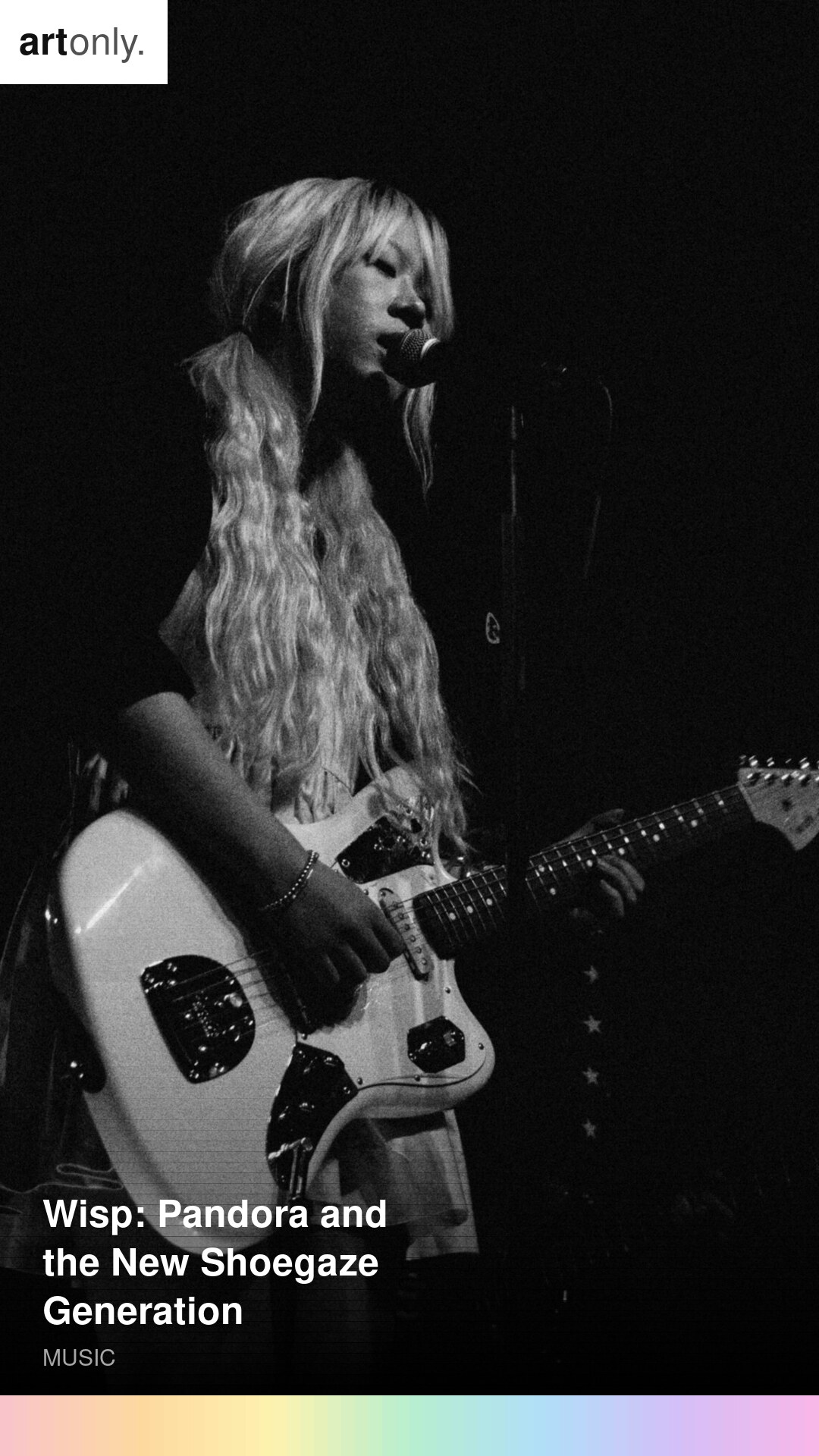
The last two years of guitar music have been dominated by a single argument. Shoegaze is back. The argument is true, mostly, but it has been told in the wrong direction. The story is not that My Bloody Valentine got vindicated by TikTok or that Slowdive finally got their flowers. The story is that a teenager from California named Natalie Lu, who records as Wisp, decided to make a song called Your Face, posted a clip of it online in 2023, and ended up with the kind of viral moment that almost never produces a real artist but in this case produced one.
The Pandora EP, released April 2024 through Interscope, was the proof that Wisp was not a one-track novelty. Six songs, less than twenty minutes long, and almost every one a strong argument that shoegaze in its current form has more to say than the genre's nostalgic gatekeepers might have predicted.
Pandora as a debut that knows what it is
What is striking about Pandora is how little it sounds like an artist trying to figure herself out. The songs arrive with a clear aesthetic position. There is the wall of guitar, but it is not just the Loveless template recycled. There is the sweetness of pop melody underneath the distortion, but it is not just Lush without the bite. There is the rhythmic propulsion of certain heavy nineties bands like Hum and Failure, applied to songs that are more interior than either of those reference points.
The title track Pandora opens with a shimmer of clean tone before the song collapses into the heavier mix. See You Soon carries the EP's most propulsive moment, a chorus that lifts without losing the haze. Mimi, written about Lu's grandmother, is the emotional heart of the EP, and it earns the sentiment by refusing to clean itself up. Even at its most direct, Pandora keeps the layers of texture that distinguish good shoegaze from mere loud guitar.
Why this is not just nostalgia
The instinct, when a young artist arrives playing a thirty-year-old style, is to dismiss it as throwback. That instinct is wrong here, for two reasons.
The first reason is the production approach. Wisp does not record like a band emulating the analog warmth of nineties tape. She records like an artist who grew up on Have a Nice Life and Sadness and Deafheaven, on bedroom shoegaze made by isolated kids using plug-ins and Reaper sessions and the modern toolkit. The textures of Pandora are warm and abrasive in equal measure, but the warmth is digital. There is no fetish for the old gear.
The second reason is the lyrical perspective. Classic shoegaze tended to obscure the lyric, partially because the lyric was often vestigial. The mix buried it because there was not much to surface. Pandora does the opposite. The lyrics are buried in the way the form requires, but they are doing actual work underneath. They are about real things. Mimi is about death and grandmothers. See You Soon is about the specific dread of a relationship that has been ending for months. The songs do not need to translate the lyrics for them to register, because the emotional contour comes through.
TikTok did its job and then got out of the way
The TikTok moment for Your Face was, depending on which industry person you ask, either the best or worst thing that could have happened to shoegaze. The truth is more interesting. The viral moment introduced a generation to the genre. It also introduced Wisp to a label infrastructure that was prepared to develop her properly. Interscope did not push her toward pop. They let her make the EP she wanted to make and trusted that the audience that found her would stay.
This is rare. The path from viral track to actual artist is littered with cautionary tales. Lil Nas X managed it. Most others did not. Wisp's transition has been smoother than most, and the reason is that she had a real aesthetic before she went viral. The song that hit was already representative of the music she would have made anyway.
Pandora as a doorway, not a destination
The right way to think about Pandora is as a doorway. It is short. It is consistent. It does not over-promise. The follow-up album, the one that has been hinted at across her interviews, is where the real test will come. Shoegaze is a genre that punishes consistency over time. The bands who survived past the first two records were the ones who figured out how to add new vocabulary without abandoning the core. Slowdive did it. Ride mostly did not. My Bloody Valentine chose silence.
Wisp's interviews suggest she is aware of this. She has cited a wide range of influences, including artists outside shoegaze entirely. She has talked about classical training on violin and the way she thinks of guitar tone as orchestration. The signs point to a second record that pushes outward, not inward.
Why Pandora is the most important shoegaze EP in years
There have been other strong shoegaze releases in the last few years. Glixen, Knifeplay, They Are Gutting a Body of Water, and others have done good work. What separates Wisp is scale. Pandora has reached an audience that the rest of the shoegaze ecosystem has not. That mainstream reach matters because it changes what is possible for the genre. Labels are now signing shoegaze artists they would not have looked at three years ago. Festivals are booking shoegaze slots they would not have booked. The infrastructure is being rebuilt, slowly, around the assumption that the audience exists.
Wisp did not do that alone, but she is the single most visible figure in it. Pandora is short, focused, and good. It is also the most influential six-song debut shoegaze has had in over a decade, and the next album will determine whether the revival becomes a continuation.