Reception Problems
I have tried to play Yeule's music for people who do not already know it and watched their faces do something complicated, a flicker of confusion, maybe discomfort, occasionally a kind of bewilderment that tips into curiosity. It does not land the same way for everyone. Softscars, her third record and probably her most direct, still requires something from the listener that not everyone wants to give.
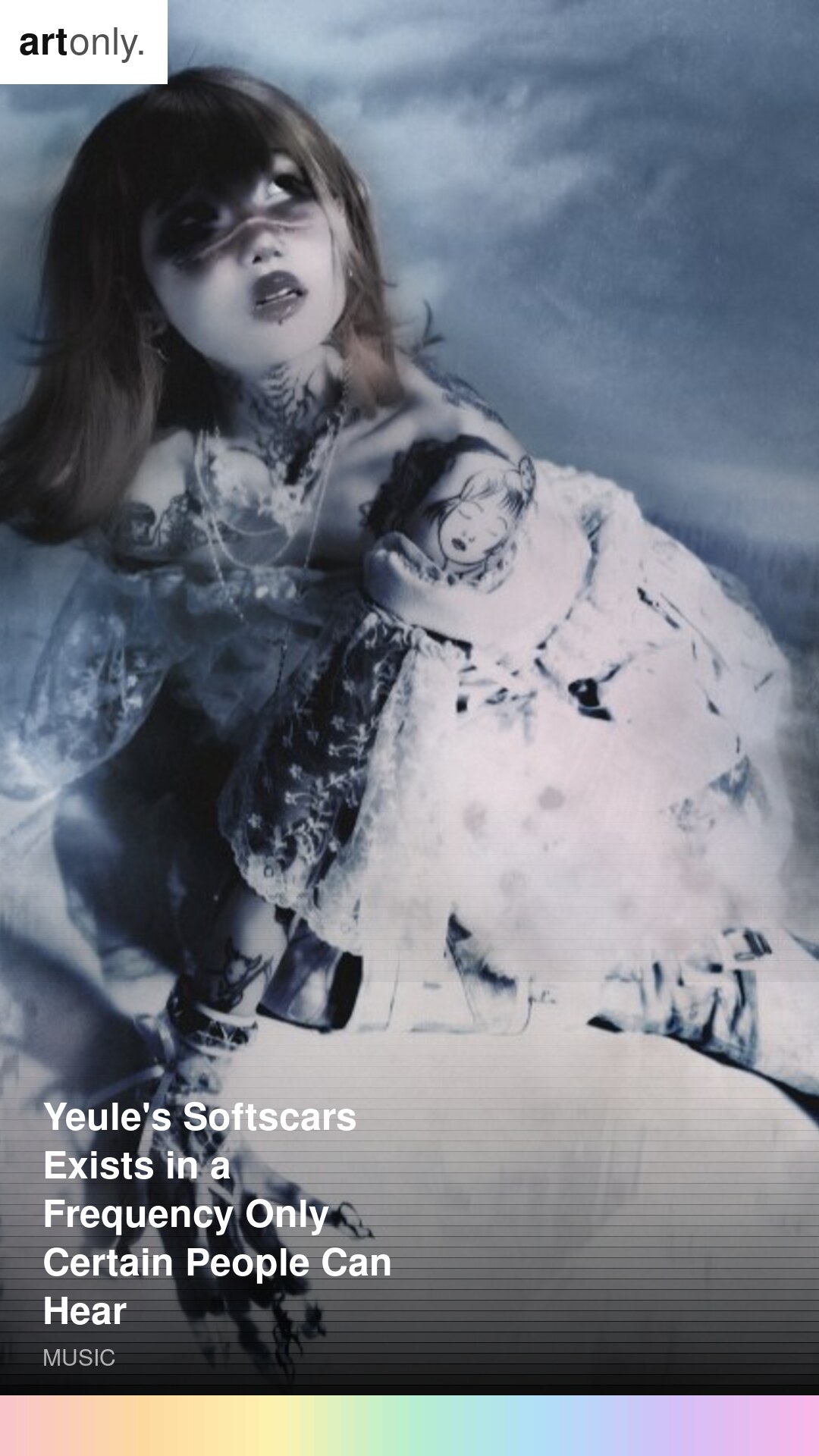
Yeule, Nat Cmiel, based in London and originally from Singapore, makes music somewhere between shoegaze, hyperpop, and something that does not have a name yet. Her vocals are processed and layered until they become more texture than voice, but the emotional content is never obscured. If anything the processing intensifies it, makes the vulnerability of the lyrics feel more exposed rather than protected. That is a counterintuitive move and it works completely.
Softscars is her hardest record. Not hard as in difficult, though it is that, but hard as in aggressive, distorted, willing to be abrasive in service of something. There are guitars here that sound like something collapsing. The title track is one of the more emotionally overwhelming things I heard all year: a song about self-harm and recovery that does not make either comfortable, that holds both the damage and the survival without resolving them neatly into lesson or warning.
The Question of Sincerity
Something has happened in indie music over the past few years where sincerity has become aesthetically complicated. Expressing real emotion directly risks feeling naive or uncool. Ironic distance has calcified into a default mode. Yeule is doing something that cuts directly against this. The emotional stakes on Softscars are real and visible and sometimes almost unbearably so.
The line between confession and performance in this music is worth thinking about. The aesthetic elements, the processed vocals, the distortion, the visual world she has built around the record, do not insulate the personal content. They make it more present. There is a Japanese concept, mono no aware, sometimes translated as the pathos of things, a sensitivity to impermanence tinged with both sadness and appreciation. Yeule's music carries that quality. The beauty and the damage are inseparable.
The production on Softscars involves contributions from various collaborators but Yeule's fingerprints are everywhere. The record sounds expensive in its ambition but not slick. It has a rawness that survives all the layers, an essential quality that the production serves rather than obscures. That is a delicate balance and it holds throughout.
What the Record Is Actually Doing
Softscars was recorded at a period when Yeule was processing significant personal difficulty, including experiences with illness that she has discussed in interviews with precision and care. The album's emotional texture reflects that. It is not a record about suffering in an abstract sense. It is a record about specific kinds of damage and specific kinds of survival, and the specificity is what gives it its force.
The track sequencing is not arbitrary. The album opens with relative accessibility and moves progressively into more difficult territory, so that by the time you reach the most demanding material you have been prepared for it, not by reassurance but by accumulation. You have been shown what the record is capable of before it asks you to receive its most serious content. This is compositional intelligence applied to emotional experience, and it is what distinguishes Softscars from records that are merely confrontational without purpose.
The shoegaze influence is real but the comparison only goes so far. Classic shoegaze used sonic density as a form of protection, wrapping feeling in noise in a way that made the vulnerability deniable. Yeule uses sonic density as amplification. The noise makes the feeling louder rather than safer. The effect is the opposite of a protective wall, and the courage required to make that choice is not incidental to the record's quality. It is the source of it.
Who This Is For
There is a specificity to Softscars that suggests a particular listener, someone who has spent time in their own head in ways that are not always comfortable, who recognises something in the texture of the music before processing the lyrics. Yeule has spoken about her own experiences with illness and mental health in ways that are careful and precise, not performing damage but not hiding it either. The music reflects that precision. It knows exactly what it is doing with the most difficult material. Nothing here is gratuitous.
I find myself returning to this record in late evenings when the light has gone and the city has gone quiet. It fits that specific time in a way I cannot fully explain, something about the frequency, the way the sound moves between soft and harsh, the way Yeule's voice sits in the mix like something overheard rather than performed. There is a privacy to it that is genuinely comforting even when the content is anything but comfortable.
Softscars is not an album I recommend casually. It requires something, it costs something, it gives back in ways that are not immediately comfortable. This profile of experience is exactly what distinguishes art from entertainment, and I am not using those terms pejoratively. Entertainment is valuable. Pleasure is valuable. Softscars is doing something else, something that requires the kind of engagement you give to things that matter.
Certain people will find it. The frequency is specific. If you are one of those people, you will know within the first few minutes. I knew immediately. I have been returning ever since.
The record also demonstrates something important about the relationship between the underground and the mainstream in contemporary music. Softscars received significant critical attention from publications that cover both experimental and mainstream music, because the work is too specific to ignore even for critics whose usual frame is more commercial. The emotional precision of the record cuts through genre expectations in a way that demands engagement. You may not know what to call it, but you know what it is doing to you while you listen. That is a rarer achievement than good musicianship or technical proficiency, and it is the thing that makes Softscars matter beyond the communities that already understood Yeule's work.