Blood Cultures is a deliberately anonymous project. No face. No biography. No origin story. Just music that sounds like it was transmitted from a dimension adjacent to ours, where everything is slightly softer, slightly warmer, and slightly out of focus.
Phospholipid, from the album Happy Birthday, is the purest distillation of what Blood Cultures does. Three minutes and thirty-three seconds of washed-out synths, muffled vocals, and a rhythmic undertow that pulls you forward without ever letting you feel like you are moving fast. It is a vibe in the truest, least overused sense of the word.
The Sound of Nostalgia for Something That Never Existed
There is a specific emotional register that Blood Cultures operates in, and Phospholipid occupies its center. The song sounds nostalgic, but not for any particular era or place. It sounds like remembering a dream that was pleasant enough to leave an impression but too vague to describe. The synths are warm but distant. The vocal is present but obscured, as if sung through a curtain or from another room.
This aesthetic choice is not accidental. Blood Cultures uses lo-fi texture not as a limitation but as a language. The grain, the haze, the deliberate imperfection, these are compositional decisions as precise as any orchestral arrangement. The song sounds this way because it is supposed to sound this way.
Happy Birthday
The album that houses Phospholipid is a collection of similar atmospheres, each track occupying a slightly different coordinate within the same emotional territory. It is the kind of record that works best as a continuous listen, where the individual songs blur into each other and the album becomes a single, extended state of being.
This is not music that demands attention in the way that a hook-driven pop song does. It invites attention. It creates a space and waits for you to enter it. If you do, the reward is a kind of sustained, low-level euphoria that is increasingly rare in a musical landscape designed for immediate impact.
Happy Birthday arrived in 2017 as twelve tracks of psychedelic pop, electropop, and chillwave that refused to announce itself. No tour, no press cycle built around a personality, no manufactured moment. The record simply existed. Its arrival was preceded only by the 2015 single Scenes from a Midnight Movie, which gave listeners a signal of what was coming without fully preparing them for how complete the finished record would feel. Twelve tracks, a consistent atmosphere, no filler, no pivot toward accessibility.
The Anonymity
Blood Cultures' refusal to attach a face or a narrative to the music is itself a statement. In an era where artist identity is often more visible than the art itself, where parasocial relationships between musicians and fans drive engagement more than songs do, choosing anonymity is an act of radical trust. It says: the music is enough. Listen to it or do not. But if you do, bring nothing to it except your ears.
Phospholipid rewards that trust completely.
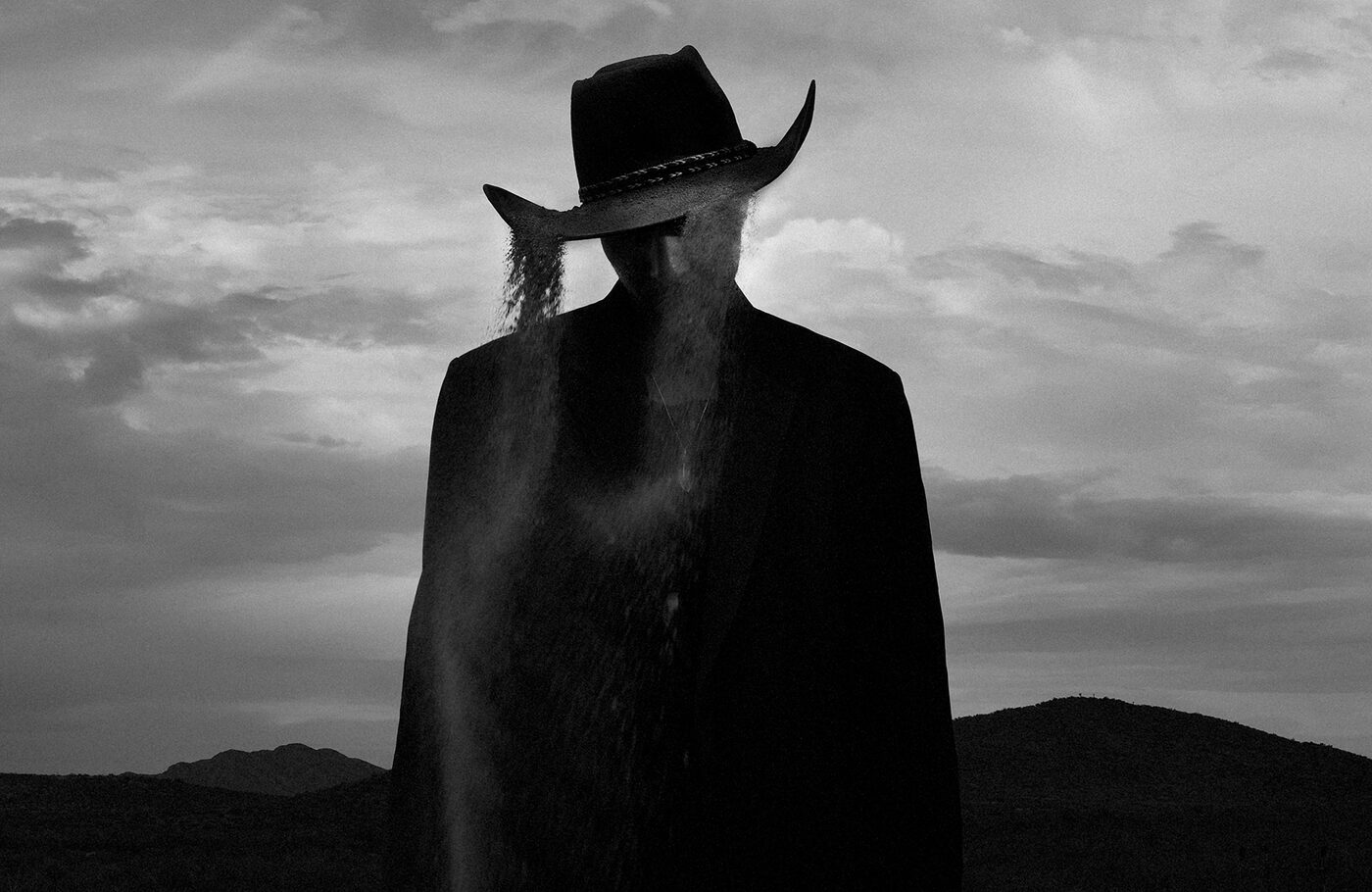
The project is based in New Jersey, and the members obscure their faces with black hoods in the few photographs that exist. That is the entirety of the visual identity. It is a costume that is also a philosophy. The stated aim is to keep the relationship between the listener and the music as pure as possible. That sentence is doing a lot of work. It acknowledges that biographical knowledge contaminates listening, that knowing where someone grew up or what they look like or what they said in an interview changes what you hear when the music plays. Blood Cultures removes all of that. What remains is just the sound.
The Ancestry of Deliberate Obscurity
Blood Cultures did not invent the anonymous music project. The tradition runs through artists who built entire aesthetic identities around concealment: Burial, who kept his identity secret for years while producing some of the most influential electronic music of the 2000s; The Caretaker, whose work as James Leyland Kirby on Everywhere at the End of Time created the template for using degraded audio as an emotional medium; and more recently, the various anonymous SoundCloud producers who built cult followings without ever revealing who they were.
What connects these projects is not aesthetic similarity but philosophical alignment: the belief that the music should be encountered without the mediating presence of a biographical narrative. When you know who made something, you hear it through that knowledge. When you do not, you hear it on its own terms. Blood Cultures makes music that is better heard on its own terms.
The Lo-Fi Tradition and What It Actually Means
Lo-fi as a production aesthetic gets misunderstood constantly. The popular conception, lo-fi hip-hop study beats, the YouTube streams with the anime girl at a desk, has made the term synonymous with a very specific, very mild, commercially optimized background music format. That version of lo-fi is the opposite of what Blood Cultures does.
The lo-fi tradition that Blood Cultures belongs to is about using recording imperfection to communicate emotional states that perfect recordings cannot convey. Tape saturation, room noise, the compression artifacts of cassette recording, these are not flaws to be corrected but qualities to be chosen. Phospholipid uses this language with precision: the muffled vocal is not muddy, it is filtered. The washed-out synths are not poorly mixed, they are placed at an intentional remove. Every apparent flaw is a decision.
This connects to a broader conversation about what production quality means and who it serves. The streaming era's loudness wars, the constant compression that makes everything equally loud and equally fatiguing, are the industrial version of the problem Blood Cultures is solving by going the opposite direction entirely. Where the mainstream pushes everything forward, Blood Cultures pulls everything back.
The specific language Blood Cultures occupies within lo-fi is worth naming: warm lo-fi guitars, wobbling synths, washed-out percussion, and auto-tuned cut-and-paste vocals drenched in maximum reverb. That description fits the genre broadly, but Blood Cultures applies it with a precision that separates the project from producers who use the same tools less intentionally. The reverb on Phospholipid is not a coating. It is a structural element. The distortion does not blur the song. It gives the song its shape.
Why Phospholipid Specifically
Among the tracks on Happy Birthday, Phospholipid stands out for the precision of its emotional target. The song is not trying to make you happy or sad. It is trying to put you in a specific state, somewhere between memory and anticipation, between presence and absence. The rhythmic undertow creates forward motion without urgency. The vocal creates intimacy without clarity.
Mi Amour's work in a similar emotional register, the anonymous artist whose 2025 sound was described as having no adequate category, suggests that this particular corner of the emotional landscape is being explored by multiple producers simultaneously. Not as a trend, but as a genuine response to a cultural moment that offers too much stimulation and not enough quiet.
Phospholipid is three minutes and thirty-three seconds of quiet that earns every second of your attention.
Listen on Spotify