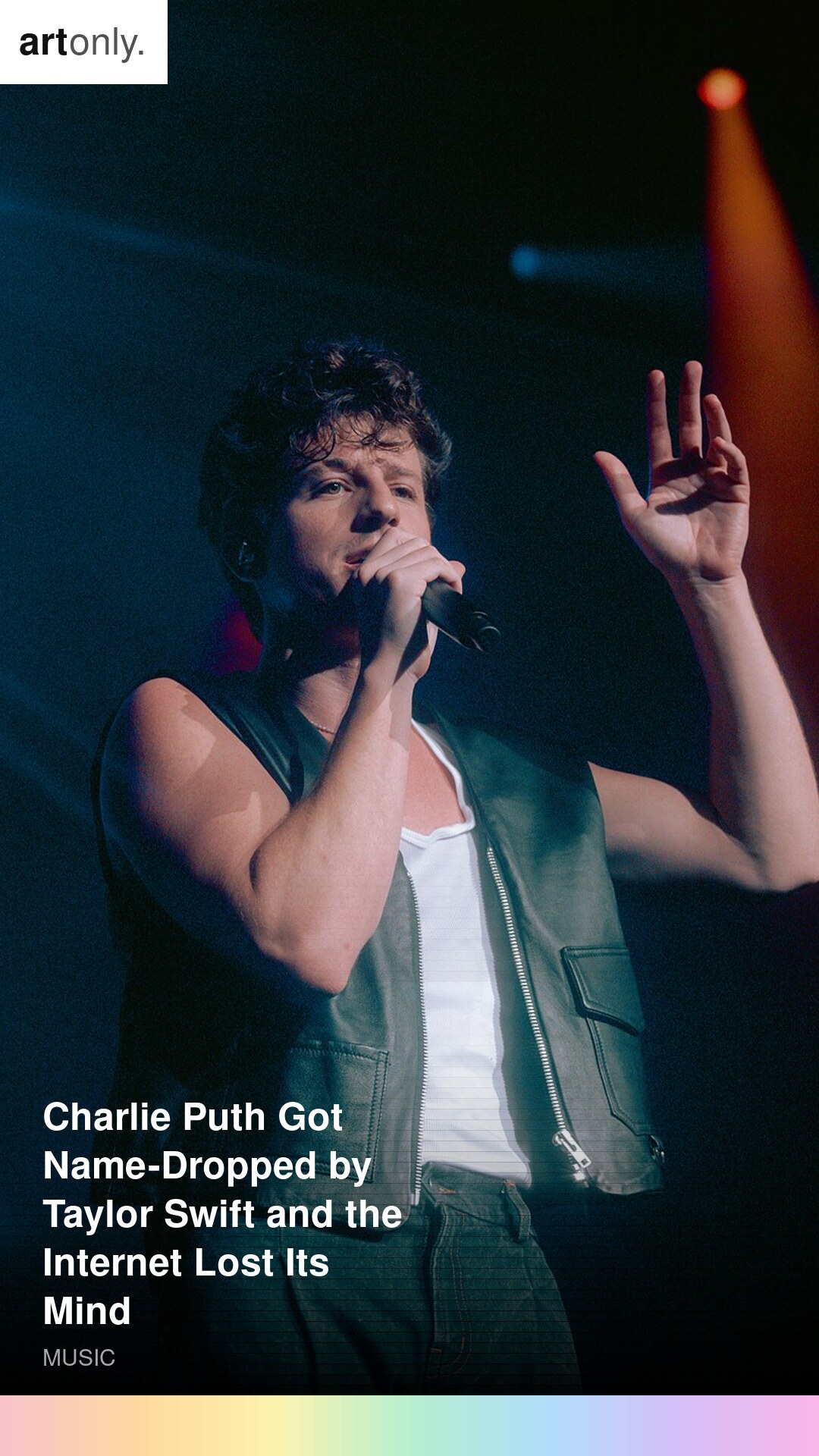
In 2024, Taylor Swift released The Tortured Poets Department and somewhere in the tracklist was a line about Charlie Puth, expressing the sentiment that he deserved to be bigger than he is. The internet, as it does, immediately turned the mention into a cultural event.
Puth responded with the single Hero in May 2024, capitalizing on the visibility with a track that channeled the sudden attention into something musically substantive. It was a savvy move from an artist who has always understood the mechanics of virality better than most of his peers.
The Paradox of Charlie Puth
Charlie Puth occupies a strange position in pop music. He is genuinely, almost absurdly talented. His ear is perfect, literally. He can identify any note by hearing it once. His production skills are conservatory-level. His understanding of melody, harmony, and song structure is more sophisticated than virtually any of his chart contemporaries.
And yet. Despite hit singles, despite viral TikTok moments where he demonstrates his musical abilities to millions of viewers, despite collaborations with everyone from Stray Kids to Dan and Shay to Sabrina Carpenter, Puth has never quite achieved the cultural stature that his talent suggests he should occupy.
Swift's name-drop articulated something that Puth's fans have always felt: the gap between his ability and his recognition is one of the strangest in pop music.
What Is Next
A new album, Whatever's Clever!, was announced for March 2026 with a lead single Changes arriving in October 2025. If the album delivers on the promise of his best work, the combination of Swift-generated visibility and genuine musical substance could finally close the recognition gap.
Or it might not. Charlie Puth's career has always been defined by the tension between extraordinary talent and a cultural positioning that somehow undersells it. That tension makes him one of the more interesting figures in pop, even if the industry has not always treated him that way.
The Perfect Pitch Problem
Charlie Puth's perfect pitch is simultaneously his greatest asset and a complicating factor in how the public perceives him. When he demonstrates it on social media, identifying chords by ear, constructing melodies in real time, breaking down the harmonic structure of other people's songs, the reaction splits predictably. Musicians are awed. Non-musicians are sometimes alienated by the display of technical ability, which can read as showing off rather than sharing.
This is a specifically modern problem. Before social media, most listeners had no idea what a musician's technical abilities were. They heard the finished product and formed their impression from that. Now, Puth's technical demonstrations are part of his public identity in a way that can paradoxically undermine the emotional directness that his best songs require. You cannot simultaneously be the guy who tells you exactly how a song works and the guy who makes you forget that songs are constructed at all. The best pop songs create that kind of amnesia. Puth's transparency about the machinery makes the amnesia harder to achieve.
The Career Trajectory in Detail
The commercial history is legitimately impressive and also confusing. Marvin Gaye with Meghan Trainor was a number one hit. We Don't Talk Anymore with Selena Gomez was massive. Attention had a TikTok moment that introduced him to a generation born after his debut. Yet none of these moments translated into the sustained cultural relevance that comparable hits have produced for other artists.
Part of the answer is genre ambiguity. Puth has never fully committed to a sound in the way that builds an identity around consistency. His records move between piano-pop, dance-pop, eighties-influenced production, and contemporary R&B without establishing a home. Sabrina Carpenter's 2024 breakthrough demonstrated what happens when an artist with years of pop credentials finally commits to a specific sonic identity, the clarity is commercially decisive. Puth has the skills for that kind of commitment. Whether Whatever's Clever! represents it remains to be heard.
The TikTok Ecosystem
Puth's relationship with TikTok deserves separate analysis because it is genuinely anomalous. He is one of the few established artists who uses the platform not for standard promotional content but as a production diary, making songs in real time, inviting suggestions from comments, showing the process from melody concept to finished track. The audience for this content is enormous, regularly reaching millions of views per clip.
This is content that should convert directly into fans and streams. The fact that it does not convert at the rate his talent should produce is the central mystery of his career. The broader question of how digital presence translates or fails to translate into musical career sustainability runs through a lot of contemporary music industry analysis, but Puth's case is unusually stark: maximum visibility, genuine demonstrated ability, and a commercial profile that still sits below where both should place him.
Swift saw it. Said it out loud. Now the album has to make the rest of the world catch up.
The Musical Ability That Demands Better
Charlie Puth at the piano is one of the more remarkable things available to anyone with an internet connection. His ability to hear a piece of music once and reproduce it, to identify complex harmonic progressions by ear, to construct a melody from a comment in real time, these are abilities that most professional musicians spend decades developing and that Puth makes look easy because, for him, they apparently are.
The frustration in his fanbase is not irrational. When you watch someone this gifted operating at this level of technical mastery, the gap between their ability and their cultural recognition becomes genuinely difficult to explain. The songs have been there. The talent has been there. The work ethic has been there.
What Whatever's Clever! needs to do is answer the positioning question that has dogged his career: what kind of artist is Charlie Puth, specifically? Not what can he do, the answer to that is almost everything. But what does he want to say, and how does he want to say it? The artists who break through from respect to dominance are usually the ones who can answer that question with the clarity of someone who has figured out not just how to make music but why they are making it. The talent was never the question. The direction is what matters now.