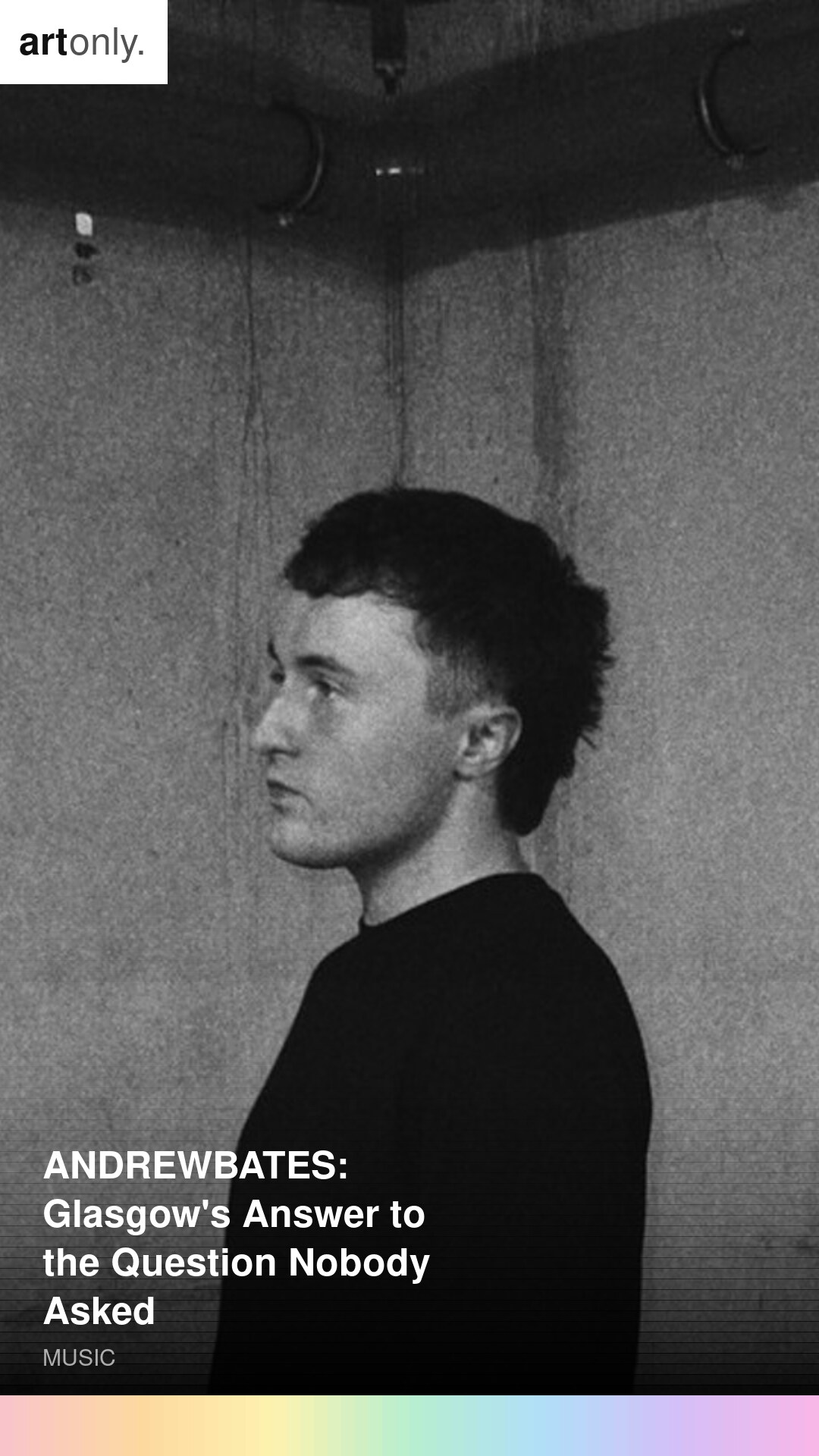
The trajectory of ANDREWBATES reads like a blueprint for how electronic artists build careers in 2025. Based in Glasgow, operating without a major label, releasing singles with the consistency of someone who understands that momentum is built one track at a time.
Since 2023, the output has been relentless. Burn in 2023. Do It to Me and Idk Why in 2024. Then a cascade in 2025: Headlock, White Ferrari, Shining, Bruises, and a cover of Teenage Dirtbag that somehow made the nineties alt-rock staple sound like it belonged in a Glasgow basement club at three in the morning.
DJ Mag named him in their emerging artists list in January 2026. Magnetic Magazine put him on their Artists to Watch list for 2025. The recognition is arriving at the exact pace it should: fast enough to matter, slow enough to be earned.
The Glasgow Factor
Glasgow has always been a city that produces music disproportionate to its size. From post-punk to indie rock to the current wave of electronic producers, the city's output suggests a creative infrastructure that nurtures artists without coddling them. ANDREWBATES fits into this tradition, an artist whose sound is polished enough for international playlists but retains the raw energy of a local scene that values authenticity over perfection.
What Sets Him Apart
The production is clean without being sterile. The tracks move without being frantic. There is a confidence in the pacing that suggests an artist who knows exactly how long a groove needs to run before it needs to evolve. This is not a skill that can be taught. It is developed through hundreds of hours behind decks and in studios, learning when a room wants more and when it wants less.
ANDREWBATES is not yet a household name. He does not need to be. He needs to keep doing exactly what he is doing: releasing music that justifies the attention it receives, building an audience that discovers him through the work rather than the hype.
The rest will follow. It always does for producers this good.
The Teenage Dirtbag Cover as Strategy
The cover of Teenage Dirtbag deserves its own analysis. Covering a song with that much cultural baggage is either an act of complete confidence or complete recklessness, and the only way to tell the difference is in the execution. ANDREWBATES executed. He did not try to deconstruct the song or make a knowing ironic comment on the original. He simply took it somewhere else entirely, stripped of its guitar rock center, rebuilt as something that could function in an entirely different context, while somehow preserving the emotional core that made the original stick.
This is a specific skill. Many electronic producers can take a recognizable song and bury it in production. Fewer can take it somewhere genuinely new while respecting what made it work. The fact that the cover circulated beyond his existing fanbase suggests he achieved exactly that balance.
The Independent Architecture
ANDREWBATES operates without a major label, which in 2025 is not the disadvantage it would have been a decade ago. The infrastructure for independent release, distribution platforms, Spotify playlist pitching, TikTok virality, direct audience building through social media, is robust enough that a dedicated artist can build genuine reach without signing anything away. What it requires is consistency, and ANDREWBATES has demonstrated that in abundance.
The release cadence he has maintained is not accidental. In the electronic music space, where DJ bookings and live show opportunities are driven by an artist's perceived momentum, maintaining regular releases is as much a business strategy as an artistic one. Labels notice consistent output. Promoters notice consistent output. The algorithm notices consistent output. ANDREWBATES understands this and has behaved accordingly.
What the Glasgow Scene Offers
The Glasgow scene that produced ANDREWBATES has specific characteristics that shape the music coming out of it. The city's club culture runs deep and serious, venues like Sub Club and SWG3 have historically booked artists on the basis of musical credibility rather than social media metrics, which creates a local competitive environment that forces quality. An artist who can hold a Glasgow room has been tested in ways that artists from less demanding scenes have not.
The comparison to Sinjin Hawke's underground credibility-first approach is instructive. Both artists operate in scenes where the approval of a discerning local audience matters more than algorithmic validation, and both carry that standard into everything they release publicly. Fred Again.. built a similar reputation through authenticity before scale arrived, the clubs before the arenas, the believers before the crowds.
ANDREWBATES is early in that trajectory. The DJ Mag recognition and the industry lists are the beginning of a conversation, not the conclusion of one. The music is good enough to go further. The only question is how far he wants to take it.
The Release Cadence as Creative Philosophy
The volume of ANDREWBATES' output since 2023 is worth examining not just as a marketing strategy but as a creative philosophy. In the electronic music world, the relationship between production volume and quality is often adversarial, the more you release, the harder it becomes to maintain the standard. ANDREWBATES has not found that trade-off. Each release justifies its existence. Nothing sounds like padding.
This is rarer than it sounds. Many independent electronic artists who maintain high release volumes are essentially demoing in public, releasing work that is interesting enough to keep an audience engaged but that represents process rather than completion. The ANDREWBATES releases feel complete. They have an internal confidence that suggests tracks held back until they are ready rather than pushed out to feed the algorithm.
The combination of genuine quality control and genuine consistency is the thing that makes industry attention meaningful rather than just timely. DJ Mag does not list emerging artists out of charity. They list artists who are already doing something that warrants attention. ANDREWBATES earned the listing.
What Glasgow Sounds Like in 2025
The city's current electronic output represents a specific blend that is hard to locate elsewhere: deeply informed by club culture's functional requirements, tracks that work at volume in dark rooms, but with a melodic sensibility that makes the music emotionally engaging on headphones at home. This dual utility is Glasgow's gift to its electronic producers, and ANDREWBATES carries it into every release.
The artists who succeed in this environment tend to build careers that are more durable than those built on festival spectacle alone. The underground-first credibility that Sinjin Hawke has maintained offers one model. The question for ANDREWBATES is how to grow without losing the quality that made the growth possible. Every indication is that he already knows the answer.