The Phenomenon
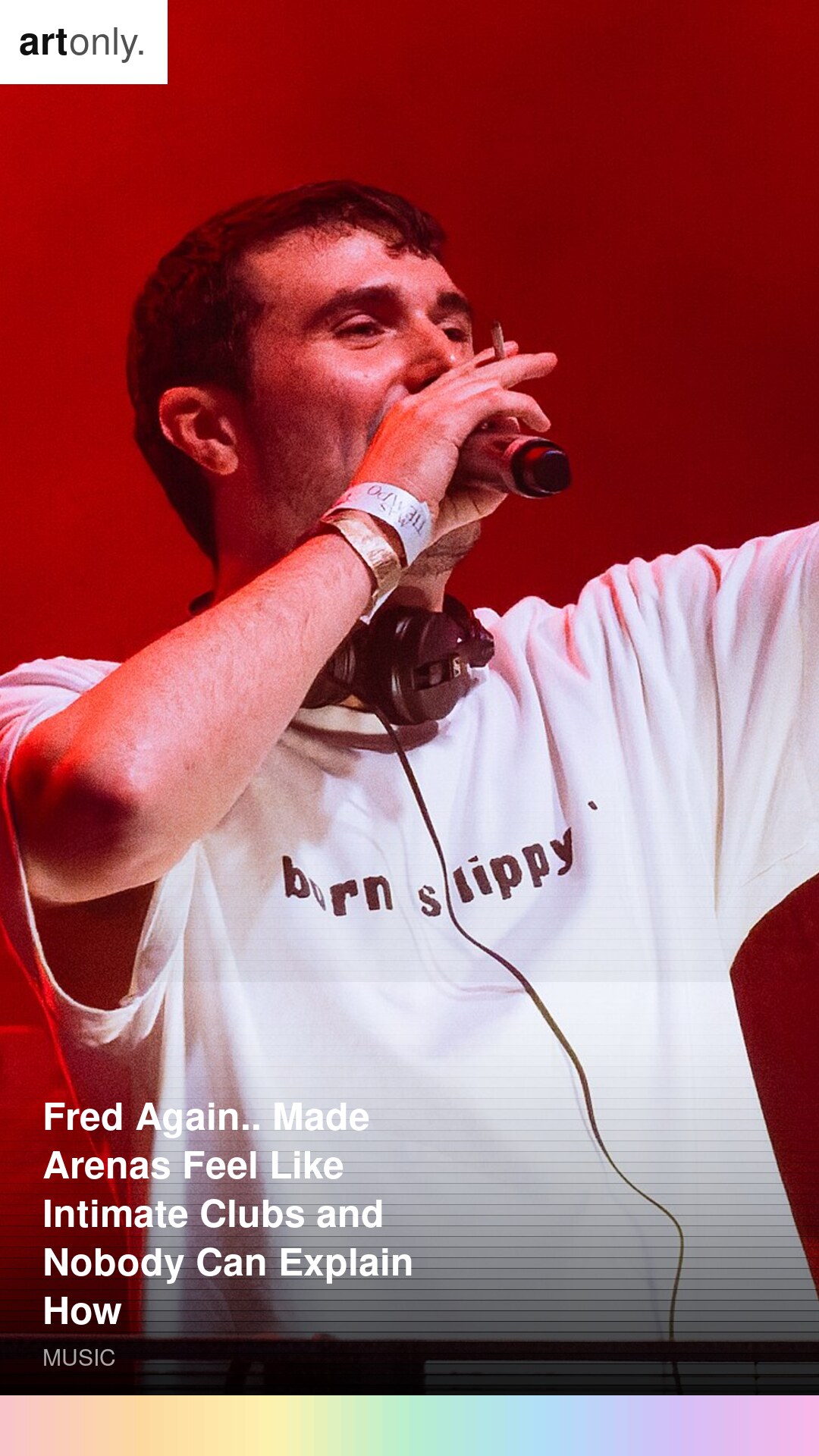
Fred Again.. should not work as a stadium act. His music is built from voice memos, phone recordings, and sampled fragments of everyday conversation. The productions are intimate, textured, and deeply personal. And yet, throughout 2023 and 2024, he filled the largest venues on the planet and generated the kind of ecstatic audience response that most electronic acts can only fantasize about.
The Live Translation
The key to understanding Fred Again..'s live success is recognizing that his performances are not DJ sets in the traditional sense. They are emotional constructions, built in real time from loops, samples, and improvisations that transform studio intimacy into collective catharsis. He plays instruments. He manipulates samples visibly. He reacts to the crowd with a transparency that eliminates the distance between performer and audience.
Emotional Architecture
What Fred Again.. understood, perhaps better than any electronic artist of his generation, is that the emotional content of music matters more than its technical complexity. His tracks are not particularly complicated in production terms. What they are is devastatingly effective at creating emotional states, specifically the bittersweet combination of joy, nostalgia, and communal belonging that defines the best moments in dance music.
The Boiler Room Moment
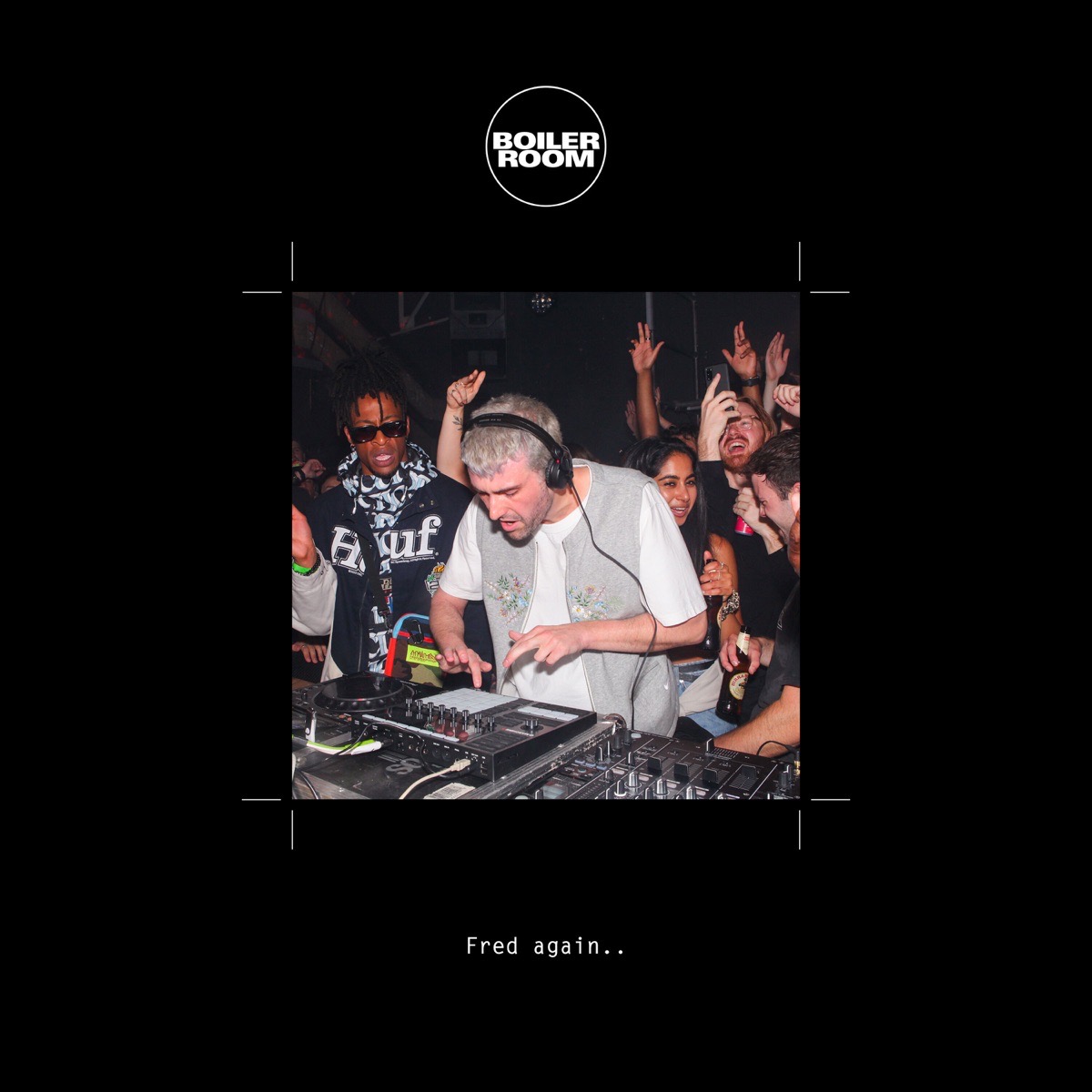
His Boiler Room set became one of the most viewed DJ performances in internet history, and watching it reveals the mechanics of his appeal. The camera catches faces in the crowd experiencing something beyond entertainment. People are moved in a way that transcends the usual festival euphoria. There is recognition happening, the sense that someone has captured a feeling you have experienced but never heard articulated.
What It Means
Fred Again.. represents a possible future for electronic music that prioritizes emotional communication over technical display. His success suggests that audiences are not simply looking for beats to dance to. They are looking for shared emotional experiences that validate their interior lives. Whether this model is replicable or whether it depends entirely on one artist's singular emotional intelligence remains to be seen. For now, the arenas keep filling.
The Path That Made It Possible
Fred Gibson's trajectory from session musician and songwriter to global electronic act was not accidental. He spent years writing and producing for other artists, a formative education in understanding what makes people respond to music, before pivoting to a project built entirely on his own emotional experiences. The Actual Life trilogy, released across 2021 and 2022, established the framework: real people, real moments, real feelings captured in production that felt immediate and unpolished in all the right ways.
The trilogy's emotional specificity, naming tracks after the people whose voices appeared in them, with permission, was a radical act of personalisation in an industry that typically abstracts the human out of pop music. The result was music that listeners experienced as if it were about them, because the emotional specificity was so precise it paradoxically became universal.
The Brian Eno Lineage
Fred Again..'s approach to production has clear antecedents in a tradition of British artists who prioritised atmosphere over arrangement. Brian Eno's ambient work established the template for music as environment rather than event. Four Tet, with whom Fred Again.. has performed and collaborated, extended that template into dance music contexts. Fred Again..'s contribution is to take both strands and route them through the emotional directness of pop songwriting, creating something that functions in clubs, in arenas, and in headphones on public transport with equal effectiveness.
This lineage matters because it locates Fred Again..'s work not as a novelty or a trend but as part of a continuous tradition of British electronic music that consistently finds new ways to make personal experience feel collective. The same impulse that drove Justice to build monolithic productions designed to overwhelm drives Fred Again.. to build intimate ones designed to draw you in. Both approaches achieve the same end: music that feels larger than its technical components.
What No One Can Replicate
The uncomfortable truth about Fred Again..'s success is that it is not a formula. It depends on a specific kind of emotional literacy that either exists in an artist or does not. The recordings are personal because they are genuinely personal, and audiences can tell the difference between manufactured intimacy and the real thing. This is why countless producers have absorbed his aesthetic without replicating his impact. The sound is reproducible. The sincerity is not.
The electronic landscape has been shaped in recent years by producers like Kaytranada who prioritise groove and technical mastery, and by ambient architects like Sinjin Hawke who prioritise texture and spatial design. Fred Again.. operates in neither camp with any consistency, which is precisely what makes him interesting. The arenas keep filling because he has found something those other approaches cannot provide: the feeling that the music was made specifically for the person listening to it.
The Production Language
The specific sonic palette Fred Again.. employs deserves technical acknowledgment. The use of pitched and time-stretched vocal samples as melodic elements, the deliberate compression that makes recordings feel simultaneously intimate and expansive, the way layers are introduced and removed in live settings to create the impression of a song being built and rebuilt in real time, these are production choices that required years of development to execute convincingly.
What makes them work in an arena context is the paradox they contain: the more intimate the source material, the more universal the reception. A room full of strangers hearing a recording of someone's phone call from a specific moment in their life responds not with alienation at the specificity but with recognition of the emotion underneath it. That paradox is Fred Again..'s essential contribution to how electronic music can function in large spaces, and it connects his work directly to the tradition of Justice and other producers who have understood that the most effective large-scale electronic music is also, paradoxically, the most personal.